

Unsettling Reasons You Should Never Plant These 6 Trees In Your Yard
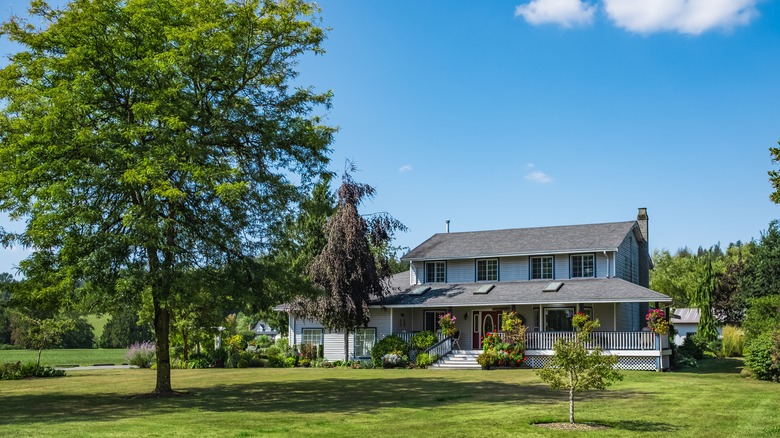
Whether you are a keen gardener or simply appreciate attractive landscaping, the idea of planting a tree in the backyard is an appealing idea. They create shade and privacy, and the right tree can make a garden look wonderful. Choosing the correct tree is crucial though, since there is more to be considered than simply aesthetics.
Many trees look attractive but can cause serious issues when planted near property. A grand oak tree may look majestic at your local park, but it doesn't mean that it is the best option for planting in your residential garden. Root systems can grow widely and aggressively, and if you choose a tree without researching thoroughly, you could end up with damage to patios, driveways, and even the house foundations.
From weeping willows to silver maple, there are many popular trees that you need to carefully consider before taking the plunge. Let's explore the reasons you should never plant these six trees in your yard.
Weeping willow
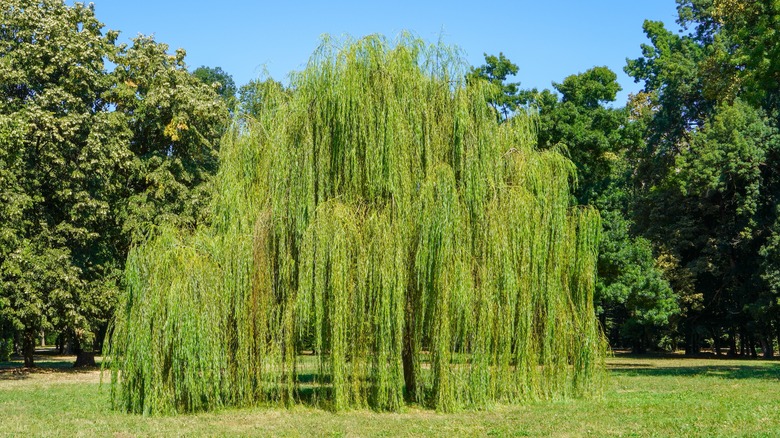
Weeping willows are graceful, elegant trees that you may have thought would look great in your backyard. However, they are not a practical choice, and could cause havoc in your garden when fully grown.
The Latin name for the weeping willow is salix babylonica, and the tree is an excellent option for pollinators such as bees and butterflies. However, it needs a lot of water to grow, meaning its root system is extensive and doesn't let anything stand in its way. Patios, pipes, and driveways will not deter the weeping willow's roots in their quest for water, which can lead to cracking or damage over time.
You may also have spotted that the weeping willow is not the smallest of trees. Once fully grown, they can reach more than 40 feet in height, making them difficult to manage. Since the weeping willow has a short life expectancy, money invested in keeping the tree trim and healthy may be a short-lived investment. They are particularly prone to fungal diseases such as black canker and willow scab, which can shorten the lifespan, especially when both diseases are present. While a weeping willow may be beautiful to gaze at, unless you have an enormous space to grow them, and the patience to treat them regularly, you should look elsewhere for your perfect garden tree.
Oak
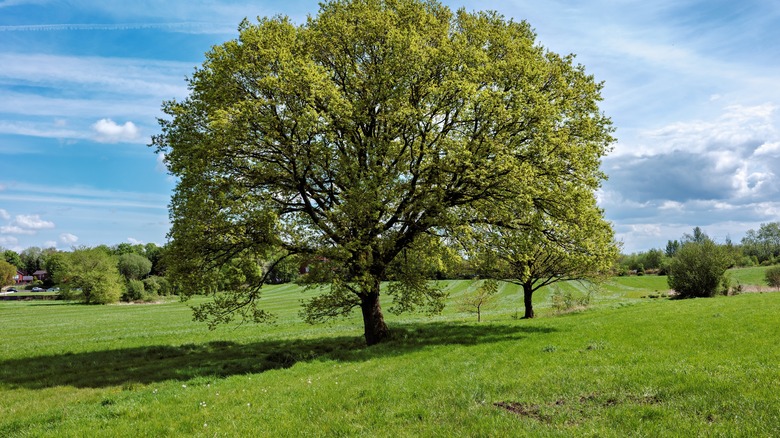
The mighty oak tree may seem like the ideal place to shade from the sun and enjoy a spot of quiet reading. But if you are thinking of planting one in your garden, this idyllic scenario may turn into more of a nightmare.
The oak tree, Latin name quercus, is an incredibly large specimen at full size. They can grow well beyond 100 feet in height and have a trunk diameter of up to 6 feet, though the width of the crown at the top of the tree can be nearly as wide as its height. For a tree of that size to thrive, there needs to be strong and incredibly long roots to support it, and if the tree is anywhere near your house, it could spell trouble. The roots will spread wherever they need to, including under driveways and buildings, and in extreme cases can cause subsidence. The roots can absorb so much water from soil — particularly clay — that they can cause it to shrink and create movement within the foundations of a house.
The massive size of the tree also means potential damage or injury in stormy weather, and managing loose branches or damaged sections is never going to be an easy task with a fully grown oak. If you need a robust tree to sit under on a sunny day, head to your local park, but don't plant one of these mammoth specimens in your back garden.
Silver maple
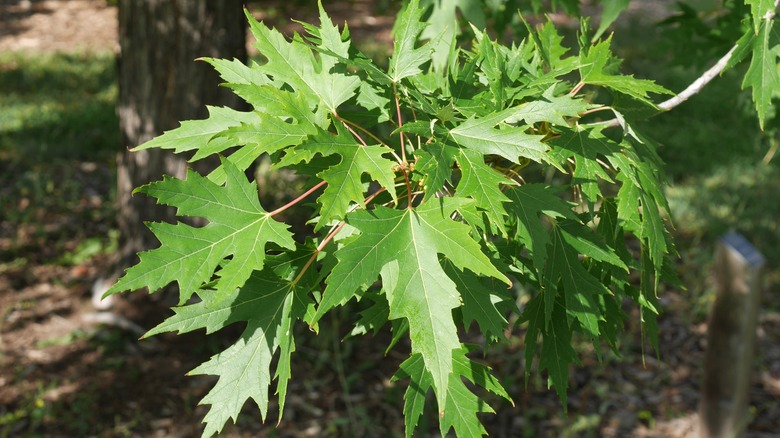
The silver maple is an attractive tree that grows quickly, allowing you to create useful shade in your garden. Its Latin name is Acer saccharinum, and it can grow to almost 40 feet in height and more than 25 feet wide over the course of 10 to 20 years.
However, if you are thinking of planting one near your house, there are a few caveats to consider. One of the main issues is its durability, and the possibility of breakage. Like many other fast-growing trees, the wood of the silver maple is brittle, and over time, the structure is likely to weaken. If you have one growing close to your house, the chances of it breaking in a storm and causing damage to your property is higher than with many other species of tree. There is also the possibility that large branches could weaken over time and fall to the ground even when the wind is not significant. This poses a danger if the silver maple is growing in a residential garden where people may be relaxing or children are playing.
In addition to the brittle wood, the silver maple has an extensive, shallow root system that could cause problems for your lawn. Since the roots are close to the surface, they could poke through to the surface of the lawn and look unsightly. It can also be difficult to mow your lawn, trying to avoid the network of roots that extend from the base of the tree.
Ash
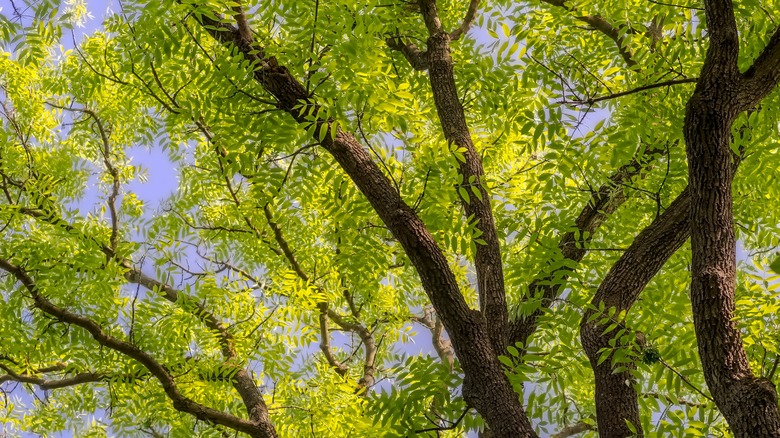
The ash tree is an attractive tree that, in theory, would look great in your back yard, but if you are considering planting one, there is one major issue that will likely put you off. Ash trees have been devastated in recent decades by an invasive pest that's been wreaking havoc, killing billions of them across America.
An infestation of the emerald ash borer beetle will require the tree to be regularly treated to prevent it from dying after just a few years. The beetles were native to Asia, but have now reached North America and Europe and are beginning to cause similar devastation in the latter. They kill ash trees by burrowing into the wood to feed on it, and blocking the movement of water and nutrients over time. It is thought that the spread of the beetle in the U.S. has been accelerated by the movement of firewood, and there is now a quarantine in certain states to prevent further movement of infected wood. The constant treatment that would be required if an ash tree were to fall foul of this invasive pest means that planting one near your home is probably not a good idea.
Mulberry
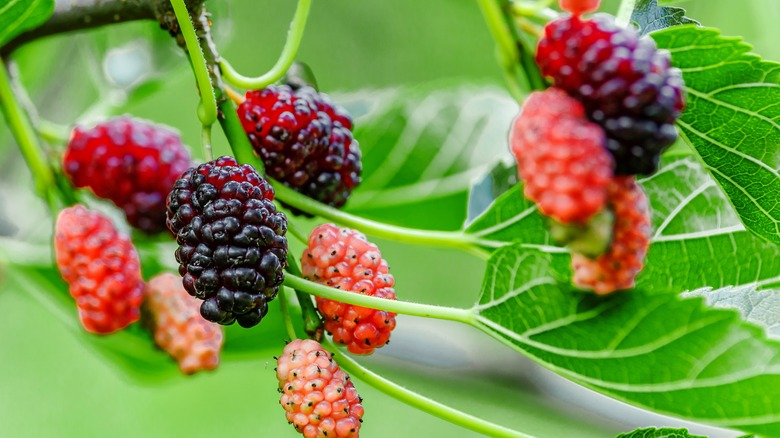
Mulberry trees, with their vibrant fruits that can be pink, dark purple, black, or even white, are attractive to look at and may have you thinking about planting one in the garden. The fact that they bear delicious fruits that have a sweet and slightly tart flavor is a big plus, but unfortunately, there are a few reasons that they are not a great choice.
The fruits themselves are a big part of the problem. Most of them have a deep, dark color, which is due to the anthocyanins in the berry. While these powerful antioxidants are incredibly healthy, they are less good for patios, driveways, and any other part of your property you don't want stained permanently. The pigments from these dark berries are used in food colorings, meaning if you accidentally trod on some that have fallen from the tree, you'll have a hard time getting rid of the sticky marks they leave around the yard. The fact that the fruits fall off easily is a big benefit when gathering berries to eat, but increases the chances of them ending up underfoot.
Mulberry trees are also known for spreading easily, even if you don't want them to, and the white mulberry tree, Morus alba, is considered an invasive species and is illegal in certain areas. The attractive, tasty berries exacerbate the problem, since birds devour them then excrete the seeds, leading to the trees quickly taking over an area. Add their substantial roots that are known to cause damage to concrete into the equation, and you can see why the mulberry tree is best avoided.
Mimosa
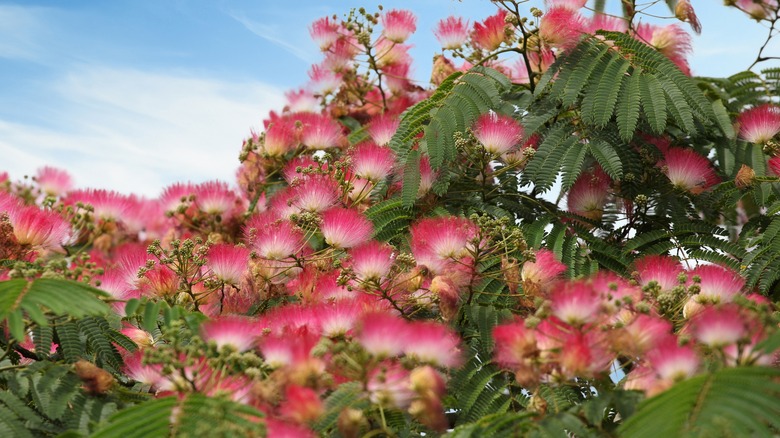
In early summer, the mimosa tree, Latin name Albizia julibrissin, looks beautiful with its fluffy pink flowers and delicate leaves, not to mention its attractive perfume. However, its looks only last a few weeks, and for the rest of the year, you will be left dealing with the numerous problems that come with planting a mimosa in the yard.
The first issue is the mess caused by the flowers that make it so appealing. The seed pods of the mimosa tree — which are toxic to animals — fall onto grass or soil and germinate easily, meaning that miniature mimosas will begin to sprout in your garden and need to be weeded regularly. The pink flowers can also cause a mess on patios, outdoor furniture, and driveways when they fall from the tree and are trodden on.
In addition to aesthetic issues, the quick growing nature of the mimosa tree — it can grow up to 5 feet in a season — leads to wood that is brittle and easily broken, especially in winter or stormy weather. A 25-foot tree breaking and falling near your property is not what you need to be dealing with in the depths of winter, long after the cute, puffy mimosa flowers have vanished from your memory.