

Scientists Say This Popular Cooking Oil Could Increase Your Obesity Risk
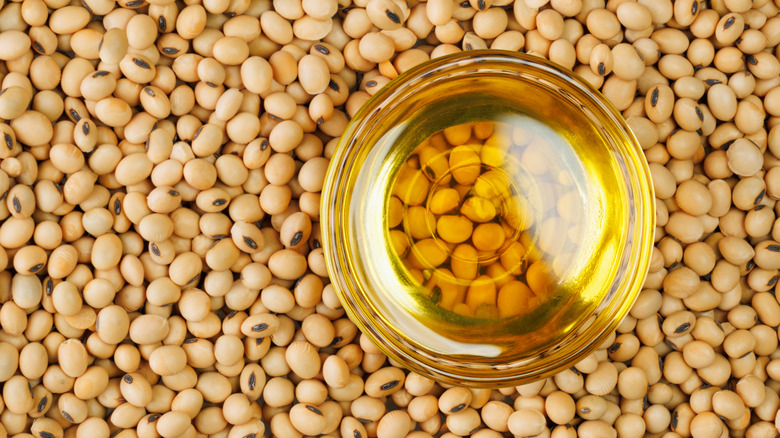
Soybean oil saturates the American diet. Grab a random snack off the supermarket shelf, and there's a solid chance that it contains soybean oil. But the fatty legume isn't just used in processed snack foods. In fact, soybean oil has been estimated to make up 54% of the vegetable oils consumed in the United States, surpassing corn, canola, palm, and all other oils combined. That makes it the most popular cooking oil in the United States — good news for the soybean industry, and bad news for Americans' health.
A new study published in the Journal of Lipid Research has discovered a possible genetic link between the consumption of soybean oil and obesity. The University of California Riverside (UCR) researchers fed a control group of mice a diet of soybeans, and (unsurprisingly) the high-fat diet caused most of the rodent subjects to become obese. Then, the team fed the same diet to genetically-engineered mice that were bred to produce different liver enzymes, allowing them to metabolize the soybean fats differently. The modified group consumed the same amount of soybean oil as the control group, but they didn't become obese.
While the experiment focused on mice, not people, its findings likely demonstrate the biological mechanism that leads some people to gain weight and others to stay slim when consuming soybean oil. As suspected, it all boils down to metabolism. And, unfortunately, most Americans appear to metabolize soybean oils like the control group and not like the genetically-engineered group of mice. Indeed, obesity rates have recently surged in the United States, and soybean oil likely has a heavy hand in the trend.
How soybean fats can turn into body fat
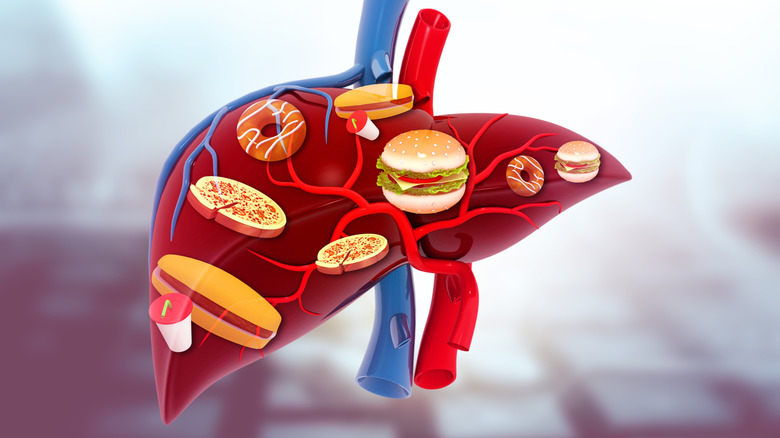
Soybean oil contains high amounts of linoleic acid, an omega-6 fatty acid. Linoleic acid is actually essential for a number of vital functions, such as vitamin absorption, and the human body doesn't produce it on its own. Fortunately, linoleic acid is present in a vast range of foods, including many nuts, grains, seeds, and meats. However, when we consume large quantities of the stuff, such as we do through our love affair with soybeans, weight problems can start to arise.
Our bodies send omega-6 fatty acids (like linoleic acid) all over the body to serve different roles. For example, sometimes they're sent to the brain to help with chemical signaling, sometimes they're sent to the lungs to build cell membranes, and sometimes they're sent to the liver to be used for energy. In most cases, the omega-6 fatty acids are converted to something called oxylipins upon arrival. And, according to the new UCR study, it's oxylipins in the liver that indicate the greatest risk of obesity.
Our livers produce specialized enzymes to metabolize linoleic acid, but they're not sufficient for avoiding weight gain. According to the study, different liver enzymes produce different results. The genetically-engineered mice had the perfect cocktail of liver enzymes to ward off weight gain, while the control group ended up with high levels of oxylipins in their livers and, consequently, obesity. We humans are most like the control group. It seems our livers are simply not equipped to process the vast amounts of soybean oil that we consume. If you're looking to control your weight with exercise, maybe cutting out the soybean oil will help, too.