

The Fascinating Reason Scientists Are Giving Cockroaches Tiny, High-Tech Backpacks
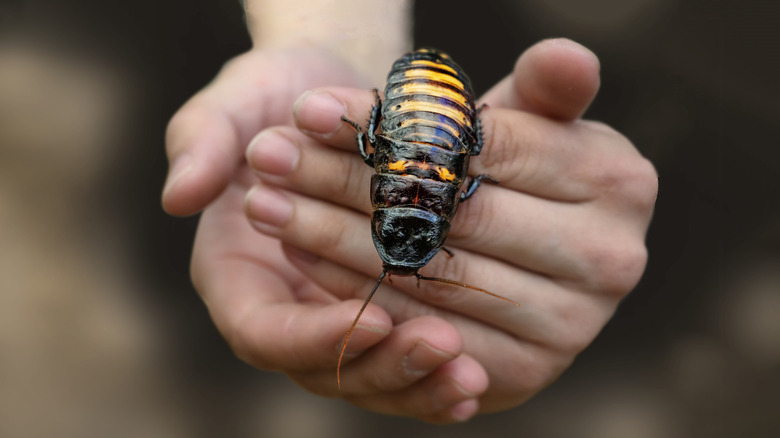
Futuristic technology has been promised to us over decades of science fiction and popular speculation; laser weaponry, jetpacks, and flying cars are the subjects of great hype, but did anyone see remote-controlled espionage cockroaches on the horizon? For the founders of SWARM Biotactics in Germany, the answer is a resounding yes, with the company generating significant buzz (no pun intended) this year for spy technology that seems almost too fanciful to be true. As the German government seeks to strengthen its military capabilities in response to Russia's invasion of Ukraine, SWARM and its CEO, Stefan Wilhelm, have a proposal to turn cockroaches into intelligence agents by strapping them with tiny backpacks full of miniature surveillance equipment.
SWARM was founded in 2024 and it is squarely focused on one objective: harnessing insects for intelligence gathering. The reasoning is simple: insects are able to access areas humans cannot, such as the ruins of structures destroyed by military strikes or natural disasters and restricted access areas where human intelligence officers would be at great risk operating. They plan to experiment with several insect species, but they're starting with the Madagascar hissing cockroach due to the species' famously resilient nature and the fact that they have already been heavily researched by biologists. A year after its founding, SWARM was already giving test displays of their spy insects in action, but while all the focus is on their potential military use, it's worth asking what is actually happening to the bugs themselves.
SWARM harnessed cockroach biology to control their movements
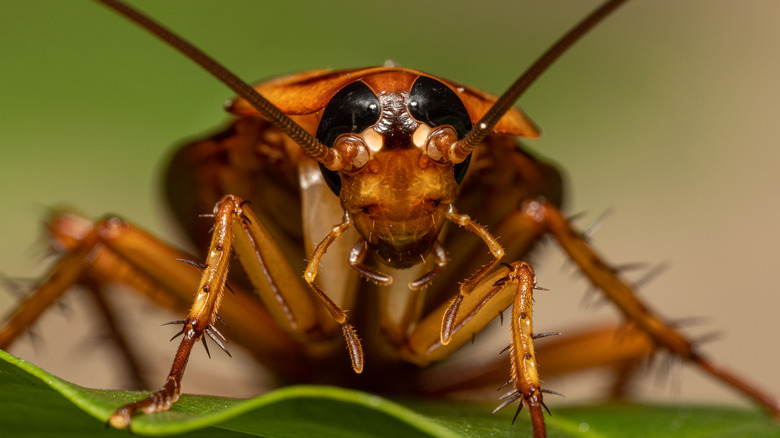
Madagascar hissing cockroaches are highly resilient to things that would kill or seriously sicken a human, including extreme heat, radiation, and a number of toxic chemicals. The insects are also able to carry massive amounts of weight, and can even survive being crushed under a hydraulic press. Their strength alone makes them seem like ideal candidates for this high-stakes military objective, but there's another reason that insects like the cockroach are at the center of SWARM's work: they have a biological feature that essentially allows scientists to hack into their bodies.
Antennae are iconic insect features, and incredibly important to the animals' lives. Cockroaches use their antennae to navigate, detecting obstacles like walls that they have to move around. The team at SWARM took advantage of this fact by including a pair of electrodes on their spyware backpacks that attach to the cockroach's antennae. By passing signals through these electrodes, the scientists are able to stimulate their natural navigation instincts to direct them in certain directions. This can be done with a remote control, piloting the bug like an RC car, but the company is also working on algorithms for autonomous directions, which would allow them to control an entire swarm of cockroaches, each with different technologies built into their backpacks, such as cameras, microphones, GPS, and communication equipment. In a CBS interview, Wilhelm stated that SWARM's cockroaches could see a large-scale deployment in 2027, but a great deal of skepticism still surrounds this technology.
How feasible are espionage insects, really?
This is far from the first time that humans have tried to harness animals for espionage. The Cold War era saw the CIA's notorious "Acoustic Kitty" project, which involved a microphone implanted in the ear of a domestic cat that was tragically killed by a taxi when it wandered off course. Just a few years ago, a beluga whale was accused of carrying Russian surveillance equipment, showing that the fascination with animal spies persists. Insects seem more promising than cats or whales due to their ability to enter almost any space, but there are still a lot of concerns being raised about SWARM's work. The first among them is whether this process is humane. Using a remote control to take over an animal's movements is understandably controversial, and while SWARM insists that the antennae electrodes are painless, nobody really knows how the insects feel about it. Pain aside, the mere fact that an animal's free will has been taken poses a moral conundrum.
There are also concerns to be raised about how productive insect spies would actually be. The prototype backpacks that SWARM has displayed are bulky and very obvious to the eye. If covert espionage is the goal, a bug walking around with a computer chip and wires attached to its back hardly seems indiscreet. Plus, while they are famously hardy critters, cockroaches have many natural predators that the military won't be able to eliminate. Imagine losing top-secret intelligence details because of a hungry bird.