

This Dinosaur Discovery Made Scientists Rethink How They Lived
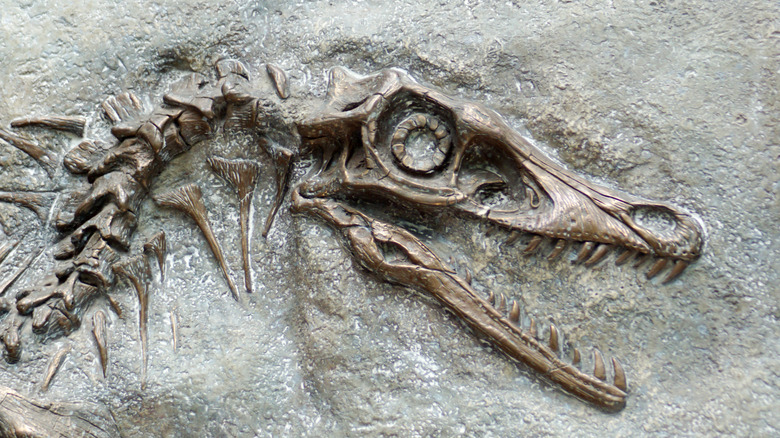
When the first "Jurassic Park" movie debuted in 1993, many paleontologists objected to the depiction of velociraptors hunting at night. Conventional wisdom said that dinosaurs were diurnal animals. However, it turns out that Hollywood may have been in the right this time (although Jurassic Park got raptors wrong in pretty much every other way). In 2011, nearly two decades after the movie's release, Spielberg and crew were vindicated by a study from researchers at the University of California, Davis showing that different dinosaur species were active at different times of the day. How could they tell? It all came down to a special eye bone that we mammals don't even have.
Nocturnal animals typically have larger pupils than diurnal animals, but fossils don't have pupils at all, so paleontologists really weren't sure which dinosaurs were active at what times. However, dinosaur fossils do feature a bone called a scleral ring, nestled in the eye socket. Today, only one variety of dinosaur survives — birds — and just like feathered dinosaurs of the past, today's avians have scleral rings. We know which modern birds are nocturnal and diurnal, so the researchers compared the scleral rings of 164 birds to those of 33 dinosaur and pterosaur fossils. They found that nocturnal birds have larger scleral rings on average, and thus infer the same to be true of their dinosaur ancestors. By taking a closer look at those bones, researchers have come to a much more complex picture of the dinosaur era.
Which dinosaurs were diurnal, and which were nocturnal?
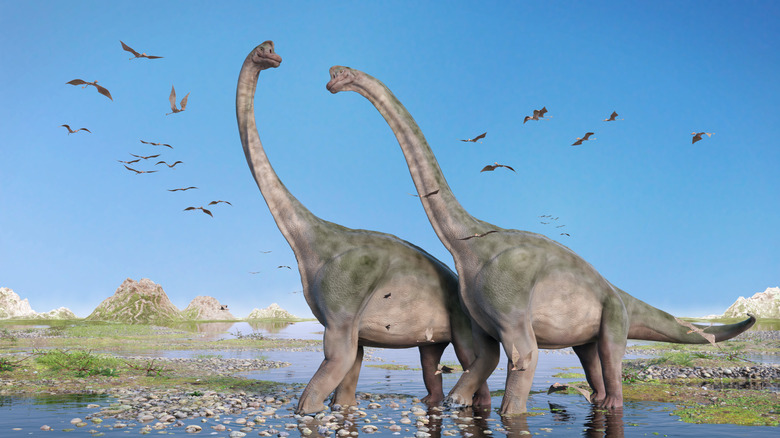
Comparing the 33 fossil specimens to bird skulls made one thing clear: Dinosaurs were active all around the clock. Some species were diurnal, as they had long been thought to be, but others were nocturnal, and some were even cathemeral, meaning they split their waking hours between light and dark. This information can in turn tell us a lot about how different dinosaur species spent their time, from their sleeping habits to their hunting and foraging strategies.
The fossils of pterosaurs and early avian dinosaurs had very small scleral rings relative to their bodies, suggesting that most were active in the daytime. That would mean today's birds haven't changed much from their ancestors, as, despite the notoriety of nocturnal birds like owls and nighthawks, the vast majority of living birds are also diurnal. Massive, long-necked dinosaurs like diplodocus had medium-sized scleral rings, indicating that they were active in both light and dark conditions, something researchers attribute to the fact that they had to spend many hours foraging and eating just to sustain their huge bodies.
As for those notorious velociraptors, their fossilized remains showed very large scleral rings, painting a portrait of a sneaky nighttime hunter. In fact, every carnivorous dinosaur analyzed in the study appeared to be nocturnal, but the most famous of all carnivores was notably omitted. Sadly, researchers weren't able to determine when Tyrannosaurus rex was active because none of the fossils found to date have intact scleral rings.