

Science Explains Why The Panama Sea Stopped 'Breathing' In 2025
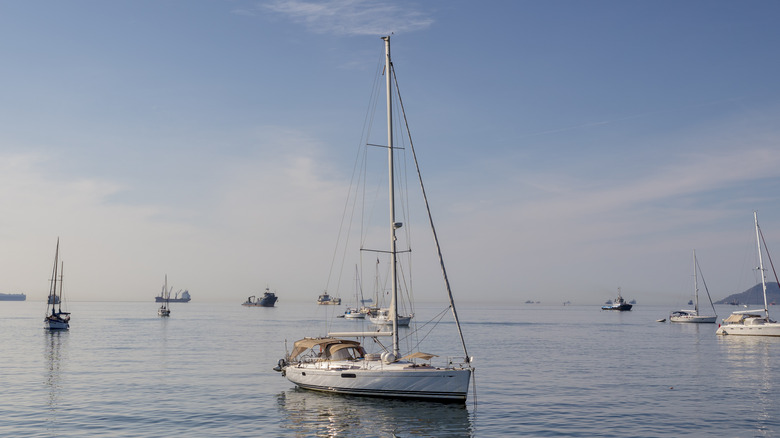
For the past 40 years, the Smithsonian Tropical Research Institute (STRI) has employed satellites and other scientific instruments to monitor the consistent "seasonal upwelling" that occurs in the waters of the Sea of Panama. The researchers have observed a consistent drop in temperature in the region during the springtime months, noting that the temperature of the oceanic waters of the Sea of Panama typically cools between January and April. The pattern has remained consistent over four decades of observation — yet 2025 was the first year that the pattern seemed to fail.
In 2025, the consistent pattern of the Sea of Panama's seasonal upwelling failed to follow its typical temperature drop. Normally, the influx of cold water provides fishermen and the local ecosystem with rich, biodiverse waters, allowing for bountiful hauls and ecological blooms among its coral reefs. However, the 2025 deficit caused a panic, since the nutrient-rich, cold waters never came on time. The unusually warm waters resulted in a failure of the oceanic food chain, as phytoplankton populations faltered and their typical predators struggled to find food.
Although scientists have only directly monitored the region's patterns for the past four decades, they've extrapolated the data to conclude that the temperature cycle has been consistent for thousands of years. That means the 2025 disruption is the first time in millennia that the Panama Sea has failed to "breathe." The most likely culprit? Human-caused climate change. While normally surface temperatures in the Sea of Panama would drop to around 19 degrees Celsius, the cooling of 2025 failed to reach below 23 degrees. Clearly, climate disruption from anthropogenic global warming has changed the natural order of the Sea of Panama, and only time will tell how the ecological change will affect the local ecosystem.
Global warming is to blame, but how exactly isn't well understood
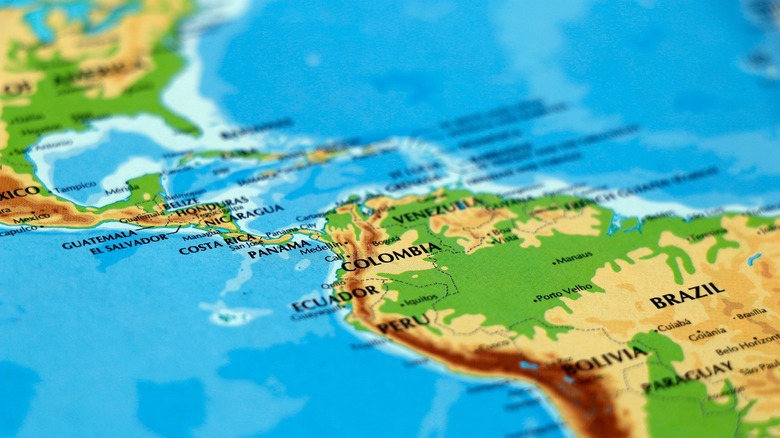
The sudden change in the temperature of the Sea of Panama's water cycle may be alarming, but it's far from unexpected. Anthropogenic global warming, which has led to climate change on local levels, has affected the planet's atmosphere and caused coastal cities like Miami to sink into the ocean as sea levels rise. Of course, scientists monitor the climatic systems from areas like Baja California to coastal Peru, but the drastic changes in their patterns have highlighted the limits of our scientific understanding of the planet's vulnerability to global warming.
Cooler upwelled waters typically deliver nutrients to the Sea of Panama in the first half of the year, which in turn catalyze phytoplankton populations to bloom. These phytoplankton are the basis of the region's food web — coral reefs, pelagic fish like sardines, and cephalopods like squid provide evidence of a healthy local ecosystem as well as hauls for local fishermen. But all signs point towards a failure of this ecological balance in the past year. This is alarming, since coral reefs are particularly vulnerable to heat stress, and the disruption of the upwelling cycle threatens to bleach coral reef communities and destroy the local economy.
Locals hope that 2025's seasonal failure is a fluke, but scientists aren't optimistic. It appears that greenhouse emissions are responsible for drastic changes in climate cycles, but how exactly anthropogenic climate change has caused the failure of the Sea of Panama's annual upwelling cycle has yet to be determined. The Panama wind jet was far less consistent than usual, leading to less cooling, but the precise mechanism that caused this failure isn't known; still, it certainly tracks with the overall pattern of the planet's increasingly unpredictable weather conditions as global warming causes unforeseen disruptions to the world's state of affairs.