

The Biggest Scientific Breakthroughs Of 2025

2025 had its ups and downs for many people, and you might understandably be ready to leave the year in your rearview mirror. Before moving on to the future though, it's worth looking back on some of 2025's biggest changes, especially in the world of science. Thanks to advancements in technology, big ideas, and even happenstance, 2025 witnessed some major scientific breakthroughs. Some of the most notable involved new and remerging species, medical advancements, and even events that were literally out of this world.
As we look ahead to the future, there's the expectation there may be breakthroughs in space travel, such as human Mars landings, as well as more seafloor mapping. There could also be some developments on land though, such as gene editing of crops and advancements in renewable energies. It's especially worth looking out for how private companies might play an even bigger role in science moving forward. Interestingly, many of the scientific breakthroughs of 2025 were achieved by startup companies, which could be an important trend as research normally funded by the federal government continues to suffer cuts.
Robotic boats collected data from a category 5 hurricane
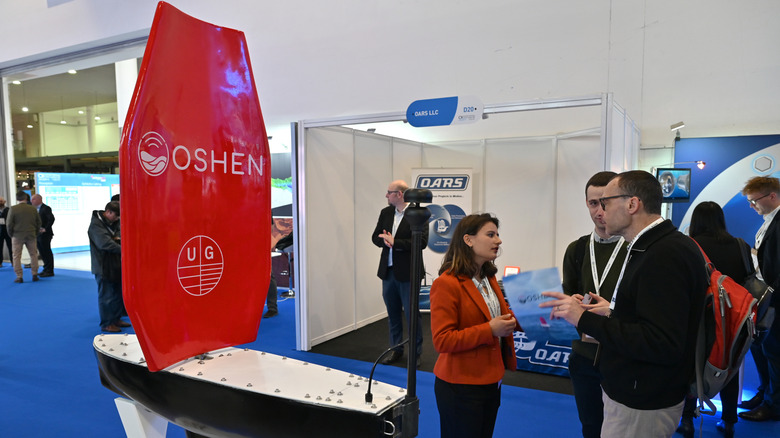
Hurricanes are historically among the most devastating natural disasters. With climate change increasing ocean temperatures that add fuel to cyclones, it's anticipated that future hurricanes will continue to be more intense and also create higher rainfall events. There's also still a lot to learn about hurricanes, though, and traditional air missions can only go so far. At the same time, it's far too dangerous to send a crewed ship out into the ocean to collect data from these often monstrous storms. A possible solution emerged in 2025 with the deployment of small data-collecting robotic boats from a startup company called Oshen.
In September 2025, Oshen partnered with the University of Southern Mississippi to send robotic boats in the Caribbean in a dangerous area known as "hurricane alley." The goal was to help collect data that might not be obtained via air missions into hurricanes, such as sea surface temperatures, salinity, and wave heights. OSHEN's C-Star model became the first of its kind to collect data from Hurricane Humberto when it was a category 5 storm, which was then submitted directly to the National Hurricane Center for analysis. Remarkably, these mighty boats are only 3.9 feet long, per BBC, but with such success, it's likely that we will see more of these types of boats heading out to sea to collect data during future hurricane seasons.
A female dire wolf was brought back from de-extinction
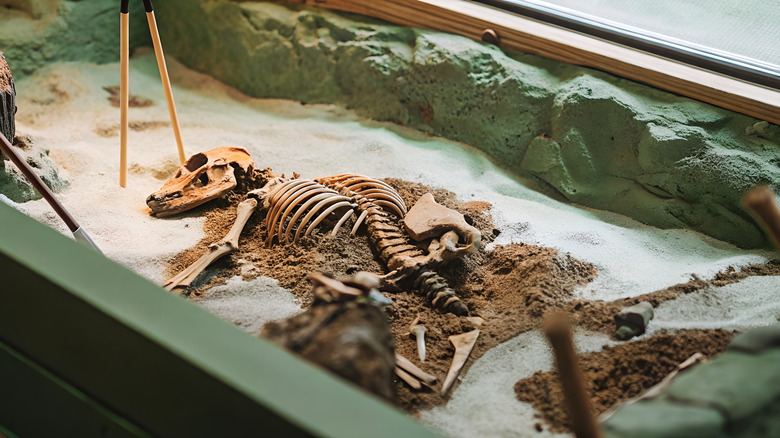
The idea of bringing extinct species back to life was once perceived as a fantasy, or perhaps something you might see in a science fiction film. Dinosaurs, the woolly mammoth, and other gargantuan species are top-of-mind when wondering what the world might look like if such animals were still around. With advances in technology, the dream of bringing back certain species is closer to a reality. This was demonstrated with the de-extinction of the dire wolf (Aenocyn dirus) in 2024, which was then extended to a female species in early 2025 attributed to a company called Colossal Laboratories and Biosciences.
Thought to have lived in modern-day North America, South America, and Asia, the dire wolf tragically went extinct over 10,000 years ago. In fall 2024, this species was essentially reborn thanks to preserved DNA from fossils that was used to help rewrite the genetic code of gray wolves, and the use of domesticated dogs who served as surrogate mothers for the dire wolves. A female pup named Khaleesi was successfully born in 2025 following the birth of two males in 2024. Overall, the resurrection of the dire wolf was the first time a startup company was able to achieve such a feat, and it may not be the last. Other animals Colossal has its sights on for de-extinction, per Time, include the dodo bird, Tasmanian tiger, and even the woolly mammoth.
A human received a pig lung transplant

The ability to conduct an organ transplant seems good on paper, but the process is incredibly complex. Part of the challenge is finding a suitable organ donor. The reality is that there are far more recipients than there are available donors, thereby creating an issue with supply and demand. This is largely why scientists are exploring the possibility of using pig organs when no human equivalent can be found. In fact, one major trial is being conducted with the help of gene-edited pig kidneys. Outside of clinical trials, one team in China took this idea a step further by transplanting a pig's lung into a human patient.
The transplantation of a pig lung into a human recipient was a novel experiment can be counted as one of the significant medical breakthroughs of 2025. According to the results published in the journal Nature Medicine, the pig lung was transplanted into a male patient who had been declared brain dead. The organ itself only survived for only nine days, but the operation officially marked the first time a human received a pig lung. It also raised more challenges to be explored in the future in regard to organ rejection and viability. As scientists continue to study pig organ transplants, there's a possibility that these could be used more than human donors to help make up for the lack of existing supply. A wider availability of organs could also mean more human lives saved.
Ocean alkalinity enhancement became a reality
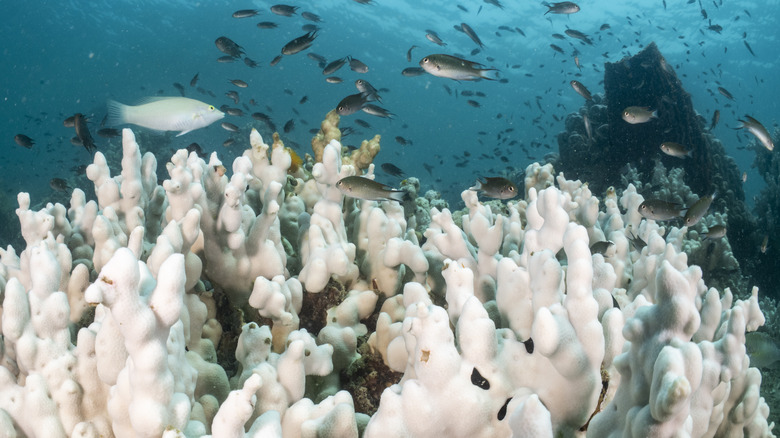
The possible impacts that global warming could have in the future are anxiety provoking, to say the least. While some of these effects undoubtedly harm people on land, there's also the problem with increased ocean acidification. According to NOAA, carbon dioxide emissions over the last two centuries from human activities has directly lowered the ocean's pH level. The atmosphere holds some of these CO2 emissions, but the ocean ends up absorbing an estimated 30% of these gas releases. The increase in acidity not only makes life impossible for many sea-dwelling creatures and plants, but it can affect human food supplies, too.
The problem of ocean acidification has subsequently inspired researchers to look for ways to make the ocean more alkaline. If you previously heard about the idea of antacids being placed into the ocean and shrugged it off, it turns out that this is very much a real thing. Also known as "ocean alkalinity enhancement," the purpose is to add alkaline substances such as alkaline rocks directly to the ocean in hopes of combatting the effects of climate change. The first small landmark test was conducted by NOAA researchers in Washington in 2025, whereby seawater was collected and then treated into a more alkaline state with the help of a specialized electrodialysis system. Overall, this small test was considered successful, even if its effects were relatively small, and it could be a first step towards larger scale tests to help reduce ocean acidity moving forward.
The Nanotyrannus broke free of its T-Rex status
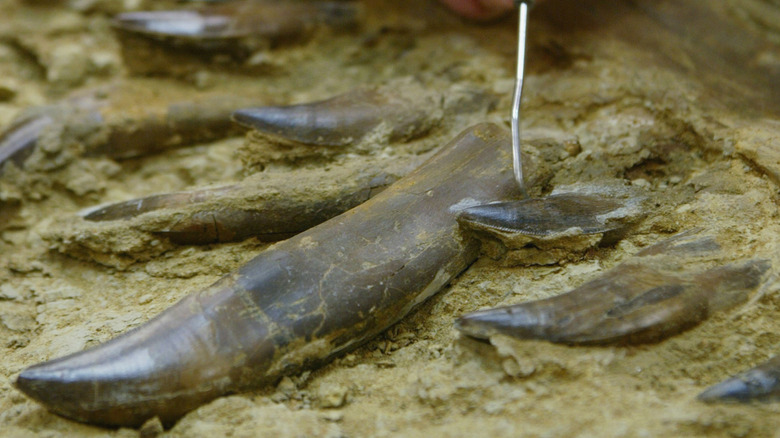
If you're a fan of dinosaurs, you may have heard about the apparent teenage Tyrannosaurus rex fossil found in 2006 alongside another belonging to a triceratops. Nicknamed the "dueling dinosaurs" fossil, this duo has also been part of a long-running debate about the Nanotyrannus lancensis. This partly has to do with the what the Tyrannosaurus rex really looked like. Previously, the name was reserved for teenaged T. rexes, as was shown with the smaller 2006 specimen that had similar features to an adult T. rex.
This long-running paleontology debate officially came to an end in 2025, when the Nanotyrannus was confirmed to be its own species of dinosaur. It is now believed that the notable half of the 2006 dueling dinosaurs fossil was erroneously classified as a teenage T. rex, despite being a fully grown Nanotyrannus. Such findings are all thanks to a landmark study in Nature reported by two North Carolina researchers who found that spinal fusions and other fossil data pointed to a fully-grown specimen of dinosaur of about 20 years of age — not a teenaged one. Thus, the Nanotyrannus is considered its own species outright and can break away from the overbearing status of the T. rex once and for all.
Having a detailed conversation with AI chatbots became a thing

For better or for worse, artificial intelligence (AI) is increasingly becoming more prevalent in human society. Aside from fears surrounding scenarios about AI overtaking humans in terms of jobs, there are also some serious questions about its impact on critical thinking and communication skills. One such area involves AI's newfound ability to converse with humans. 2025 saw a rapid increase in people having life-like conversations with so-called AI chatbots, and there are some real concerns that the accessibility of the technology could replace real human contact.
If you have yet to have a conversation with a chatbot, it usually goes like this: You either type in a question into a textbox or ask it out loud to a voice-activated version. The chatbot can then respond and even ask follow-up questions. Before you know it, you could lose several minutes conversing back and forth with this technology. While AI chatbots have been in development for the last few years, 2025 witnessed a rise in people having detailed conversations — especially among younger people. According to data reported by the Pew Research Center in December 2025, teens are especially prone to using this trend, with nearly two-thirds of surveyed individuals reporting they use chatbots. Some of these chatbot conversations can go pretty deep, too, with therapy chatbots rising in popularity. Aside from concerns about conversing with AI chatbots over actual humans, there's also a danger that the technology can continue to learn about human communication the more that people use them.
The first oral GLP-1 medication was approved for obesity

2025 also brought about some significant changes in the GLP-1 medication sector. Medically known as glucagon-like peptide 1 receptor agonists, GLP-1s work by imitating pancreatic hormones of the same name. While GLP-1 medications have technically been on the market since the early 2000s as a diabetes treatment, their potential weight loss effects have turned them into widely sought-after treatments for obesity and to help reduce associated risk factors such as heart disease. Aside from potential short-term and long-term side effects of these drugs, cost and accessibility have kept many eligible patients from being able to take them. The approval of an oral version of this medication for obesity in late 2025 was considered a groundbreaking step to help address the latter concerns.
While the FDA first approved of Rybelsus in 2019 as an oral GLP-1 for type 2 diabetes management, an oral pill for obesity was not approved until Novo Nordisk's Wegovy was given the green light by the agency in December 2025. It's expected to mark a turning point in the treatment of obesity by allowing more access to these types of therapies. Not only is the medication admittedly easier for many people to take in pill form, but it's also significantly less expensive than injectable versions. Doctors were able to prescribe this oral GLP-1 for weight loss as of January 2026, and more brands are expected to follow Wegovy for even more options at some point in the near future.
NOAA launched an AI-assisted forecasting system
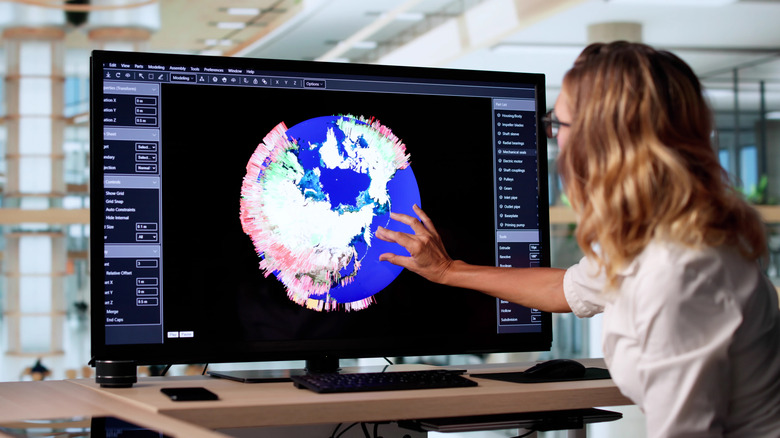
There have been jokes about meteorologists predicting the weather incorrectly for many years. Not only are such criticisms unfair, but weather forecasting is admittedly one of the most challenging jobs because of the mountain of data and complex variables forecasters must contend with. Despite what some people might think, weather forecasting has actually improved in recent years, but still, it's also not reasonable to expect perfect weather forecasts all the time. However, scientists at NOAA are now experimenting with AI-assisted tools to help improve all types of forecasting even further.
In December 2025, NOAA launched an AI-assisted program known as the Experimental AI Global and Limited-area Ensemble (aka "Project EAGLE") with the goal of helping to improve global weather forecasting. The reasoning is that since forecasting can depend upon years of weather models, AI might reduce this timeframe. Before you worry about AI replacing meteorologists though, it's important to note that Project EAGLE is designed to help provide forecasters with additional models, rather than ousting established systems. The hope is that any extra data can help forecasters make even more informed predictions about storms in the future. NOAA also hopes that such forecasts can be made in a more timely manner to help save lives.
NASA discovered a new interstellar comet

In July 2025, NASA made a huge discovery in our solar system: a new interstellar comet. Named Comet 3I/ATLAS, it was the third known sizable interstellar feature to travel from an outside solar system into our own. Additional data collected by the Hubble Space Telescope revealed some other interesting information about this newly discovered comet. Not only was its center estimated to measure between 1,400 feet and 3.5 miles in diameter, but it was also traveling at a rate of 137,000 miles per hour. While the opportunity to learn about any comet could be valuable, the interstellar nature of the Comet 3I/ATLAS is considered a gateway into the possibility of learning about outside solar systems.
On top of all of this fascinating data associated with Comet 3I/ATLAS, the interstellar phenomenon also ended up traveling between the orbits of Mars and Earth. Its closest approach to Earth was on December 19, 2025. ("Close" is also a bit misleading here though, as the comet stayed 170 million miles away.) Comet 3I/ATLAS was never perceived as any danger to Earth whatsoever; instead, it ended up being a fascinating event to watch in the sky via telescope for both professional and novice astronomers alike.
A smiling species of snailfish was discovered
While new species are still being discovered on land, there's arguably much more opportunity in the ocean. As NOAA points out, over 90% of the ocean is considered "deep ocean" that is more than 650 feet deep. Not only does this leave much of the seafloor still unmapped, but there's likely a number of deep sea creatures that have yet to be discovered by humans. In 2025, a newly discovered smiling species of snailfish became a prime example.
Also known as the "bumpy snailfish" (Careproctus colliculi), this new species was discovered by the Monterey Bay Aquarium Research Institute almost 11,000 feet down in the ocean off the coast of California, and shortly after, it got its endearing nickname of "smiley snailfish" thanks to its unique facial appearance. This particular species of snailfish also has a pink body with a bumpy texture, as well as large eyes and a rounded face. Aside from being a rather cute discovery, the bumpy snailfish also represents the fact that numerous species can indeed inhabit the deep sea, but humans are only just beginning to understand who these deep sea dwellers are, and how they're surviving in such environments. Two other types of snailfish (dark and sleek snailfish) were also discovered in addition to the smiley snailfish, although the latter seemed to have the most lasting impact.
Researchers found antidepressants might inhibit cancer cells

Finding a cure for cancer has long been the goal of scientists for decades. As researchers continue to look for ways to find possible cures for certain cancers, treatments have admittedly come a long way in helping many people go into remission. While much of the cancer treatment market is focused on developing new targeted therapies to attack specific cancer cells, some researchers are also looking at the possible use of existing drugs used for other conditions. Notably, a team of UCLA researchers discovered that selective serotonin reuptake inhibitors (SSRIs) might be one such option.
SSRIs are traditionally used to help the brain keep more serotonin to help with mental health conditions, such as depression and anxiety. These drugs are also sometimes prescribed off-label for the management of hot flashes, fibromyalgia, migraine, and other health concerns. According to a 2025 study published in Cell, SSRIs were found to help decrease cancer cell growth while also helping to increase important T-cells in the immune system to help fight it. Given the ubiquity and affordability of these common antidepressant drugs, these findings are arguably significant in the future of important cancer research. While this particular study was conducted with the help of tumor models of humans and rodents, studies with actual human participants might be needed at some point to confirm such possible uses for SSRIs.
A new fossil was confirmed as belonging to ancient humans

Archaeologists have been excavating fossils of early humans and their ancestors for nearly 200 years. This all dates back to the mid-19th century when Neanderthal fossils were first discovered in Europe. Since then, scientists have attempted to use ancestral fossils as methods of better understanding human evolution. A new discovery of a fossil was confirmed in 2025 as belonging to a Denisovan. It was considered another groundbreaking step on this path to learning more about ancient humans, including shared DNA and physical traits.
Known as Denisovans, a pinkie finger fossil belonging to these ancient humans was previously found in Siberia that helped confirm the existence of these subspecies of ancient humans. At the time, scientists believed Denisovans were primarily located in this region of modern-day Russia and north Asia. In early 2025, researchers confirmed that an excavated mandible fossil from Taiwan belonged to a male Denisovan. It's estimated that the fossil could be anywhere between 10,000 and 190,000 years old. With this discovery, researchers extracted even more DNA evidence to provide a better picture of what these ancient humans looked like and what evolutionary traits they share with modern humans.