

The Deadly Mushroom Outbreak In California That's Linked To 3 Fatalities

Health officials in California are sounding the alarm on what could be the worst outbreak of mushroom poisoning in the state's history. As of the writing of this article, 35 people have been hospitalized, three have had to undergo liver transplants, and three have died. In a typical year, the state sees fewer than five mushroom poisoning cases, according to officials in Sonoma County, where one of the fatal cases occurred. What's behind the sharp spike in cases? An unusually wet period in the frequently drought-ridden state.
Northern California is riding several months of steady rain, leaving the soil wet and ripe for nurturing the spores spread through mushroom reproduction. Over the course of the winter, the San Francisco Bay Area and nearby regions have seen unusually widespread mushroom growth. In response, many enthusiastic gastrophiles took to the woods to forage for mushrooms. They must have thought they knew how to identify poisonous mushrooms and avoid them, but like too many other amateur foragers, they failed to recognize the toxic death cap mushroom (Amanita phalloides).
Poisonings by death cap mushrooms have been reported in nine northern California counties: San Francisco, Alameda, Contra Costa, San Mateo, Santa Clara, Monterey, Santa Cruz, and Sonoma. Death cap mushrooms have also been found further south along the Central Coast region. Health officials on the state and county levels are pleading with the public not to eat any wild-foraged mushrooms, and they are right to do so.
Why you should never, ever eat wild mushrooms
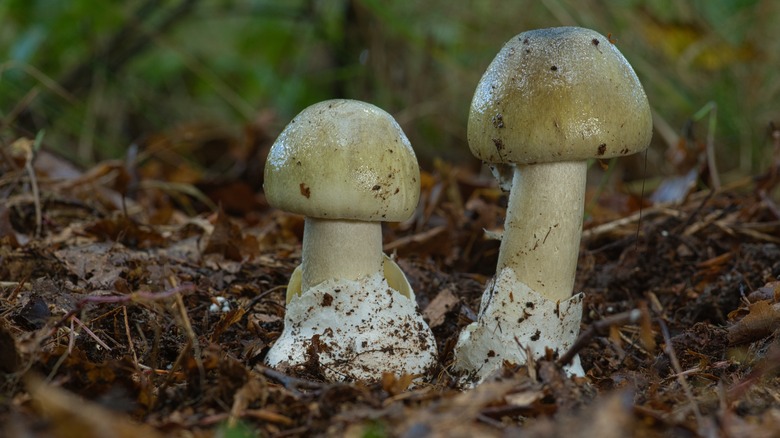
There are lots of guides purporting to tell you surefire ways to distinguish poisonous mushrooms from non-poisonous ones, but here's the plain truth: If you value your life, you should never, ever eat mushrooms that you foraged from the wild. Even experienced mushroom foragers can be fooled by the death cap, which resembles common edibles like field mushrooms and straw mushrooms.
Death cap mushrooms contain compounds called amatoxins, which are alkaloid compounds. So are morphine and nicotine, but amatoxins are far deadlier. Even taking a single bite of a death cap mushroom can send you to the hospital, and no method of cooking can remove the toxin. The effects typically take six to 24 hours to set in, but when they do, sufferers feel intense abdominal pains, fevers, and nausea. Over the course of a few days to a week, the toxin gradually shuts down the liver and kidneys, ultimately causing death unless medical intervention is given in time.
Amatoxin poisoning is a brutal way to die, bringing delirium, vomit, and bloody diarrhea, so don't even think about risking it with wild mushrooms. Besides, leaving mushrooms in their natural place is the best thing for everybody, as it allows them to keep doing the beneficial work of fungi in the ecosystem.