

The Most Nutritious Vegetable In The World Could Also Prevent Cancer
We may receive a commission on purchases made from links.
Eating healthy is one of the best things you can do for your long-term health and happiness, but it's not always easy to know which foods are the best. One way to quantify a food's "healthiness" is by its nutrient density, or its proportion of nutrients compared to its calories. When using the metric of nutrient density, the healthiest food of all may be the humble, water-grown cruciferous vegetable, watercress. On top of its nutrient density, watercress is also packed full of other beneficial chemicals that support heart health and fight cancer.
The data about watercress' nutrient density comes directly from the CDC-sponsored journal Preventing Chronic Disease. The study looked at the amounts and bioavailability of 17 nutrients in 47 different foods in relation to their caloric content, and watercress dominated the list by a healthy margin.
As for its ability to fight chronic diseases, watercress is loaded with beneficial phytochemicals like flavonoids, phenolic acid, carotenoids, and isothiocyanates. All of these compounds have a range of health benefits, and all of them can play a role in fighting and preventing cancer.
How does watercress fight cancer?
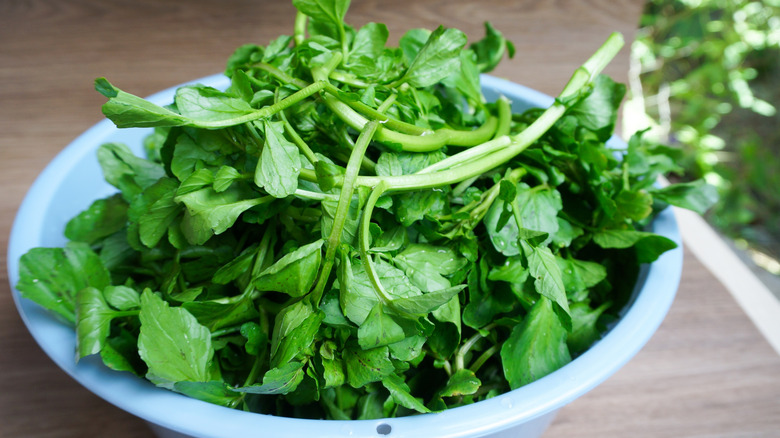
The secret behind watercress' cancer-fighting potency is a class of chemicals called glucosinolates — common to all cruciferous vegetables like broccoli, cabbage, and kale — which are speculated to be used by the plants for defense. When the cells of glucosinolate-containing plants are damaged, they expose the glucosinolate to another chemical, myrosinase, which breaks it down into isothiocyanates (ITCs), the group of bioactive compounds responsible for keeping cancer in check. In other words, the act of chewing your greens is what activates the cancer-fighting chemicals.
One of the most abundant ITCs in watercress is phenethyl ITC (PEITC) and has been shown to both prevent the onset of cancer and inhibit its spread. The neat thing about PEITC is that it works in more than just one way. To start, it directly affects cell growth and division; more specifically, it induces natural cell death, forcing cancer cells to abort their unnaturally long lives. It also helps prevent the proliferation of cancer from one part of the body to another (metastasis) by interrupting the pathways cancer uses to propagate. There's even evidence that PEITC can reverse resistance to chemotherapy drugs and activate cancer-fighting genes like tp53.
Most PEITC studies have used plant extracts and been conducted in nonclinical settings, but there are a few that have been studying "normal" watercress on actual humans. A 2007 study, for instance, found that adding 85 grams of watercress to your daily diet significantly reduced DNA damage, with even greater reductions seen among cigarette smokers.
Watercress fights more than just cancer
Just because watercress is a beast at fighting cancer doesn't mean it's not healthy in other ways. Dozens of studies have been done on watercress and its bioactive compounds, and they are summed up neatly in a 2025 review in the journal Life. Its ability to reduce inflammation and improve LDL cholesterol helps to manage cardiovascular disease. Watercress also increases insulin sensitivity and improves glucose levels, a potential boon to people with diabetes. Watercress and its extracts have even been shown to help improve the symptoms of chronic respiratory disease.
If all of this sounds good to you and you want to squeeze watercress into your diet, do it! Just keep in mind that how you prepare it can have a drastic effect on how many of those healthy bioactive compounds are available to your body. The worst thing you can do to watercress is boil it, which will destroy the majority of its healthy compounds. On the other hand, steaming didn't have a significant effect, nor did mixing with water for a watercress smoothie. Of course, eating it fresh is best.
Watercress is a leafy green vegetable so putting it raw in a salad is an easy way to get some in your diet. You can also chop it up or buy powdered forms (like Best Botanicals Watercress Plant Powder) to put it in a morning smoothie. It even makes a good soup ingredient. If you can't find watercress at your regular grocery store, take a look at your organic grocer or local markets to start adding this health powerhouse to your diet.