

The Best Exercise For Sleep Isn't Running Or Lifting Weights
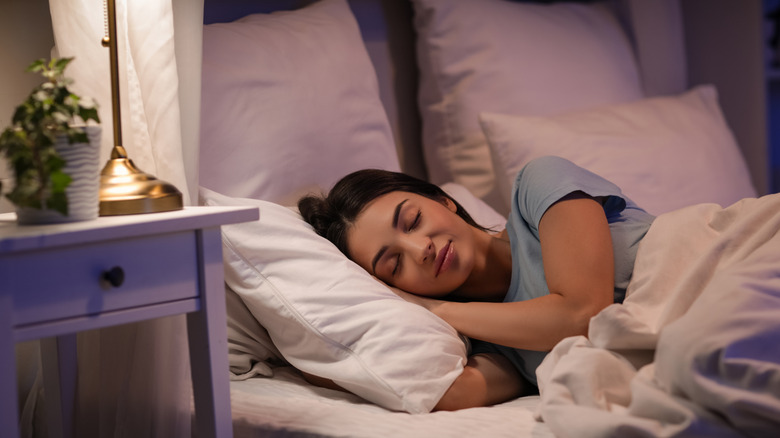
Too little sleep is a habit that can lead to an early death, but too much sleep can also shave years off your life. It's a Goldilocks conundrum to get the right amount and achieve long-term health, so many people exercise in the daytime to sleep better at night. And it's true that lifting weights or jogging will help encourage better sleep. However, there's a much better activity to achieve the best sleep health: high-intensity yoga.
How do you compare the sleep benefits of one exercise with another? The clearest method is to compare a wide range of studies of the benefits of different exercises, and then find out which one is best. In 2023, the publication Sleep and Biological Rhythms released a meta-analysis of 30 different trials investigating the connections between specific exercises and sleep. The researchers compared numerous activities and concluded that "high-intensity yoga" offers the best benefits for quality sleep.
All of the most popular activities for improving sleep quality fell below yoga in the analysis. That included resistance training, aerobics, walking, and even one of the healthiest activities for seniors, tai chi. This isn't to say such activities aren't helpful for sleep; walking and resistance training were found to be the next best exercises, and they still provided sleep benefits. Furthermore, individuals suffering from sleep disturbances may actually benefit more from aerobic exercises (often referred to as "cardio," such as running on a treadmill) than yoga, according to a separate analysis. But for those without sleep disorders, high-intensity yoga seems to be the best exercise for achieving quality sleep.
Sleep benefits from yoga depend on your style
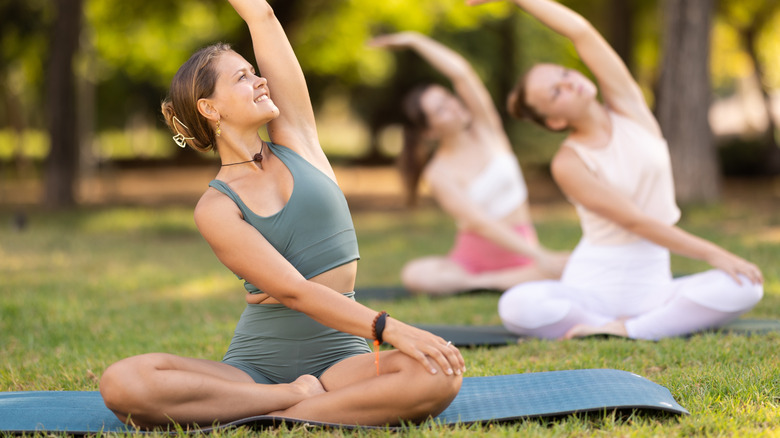
The study specifies that "high-intensity" yoga is the best exercise for improving sleep. But what is "high-intensity" yoga, exactly? After all, yoga comes in many shapes and forms. One way to distinguish exercises like yoga is to consider whether the activity is aerobic or anaerobic. Aerobic exercises are slow and steady, with an emphasis on breathing. Aerobic yoga is sometimes called "cardio yoga," since it emphasizes the cardiovascular elements of the discipline. Aerobic yoga practices are sometimes advertised as hatha yoga, restorative yoga, or yin yoga, which involve longer position holds and a focus on the breath.
Anaerobic exercises, on the other hand, involve shorter, oxygen-deprived movements, and they're the cornerstone of the "high-intensity yoga" that the researchers recommend for better sleep. These practices are intense, to say the least. Anaerobic-focused yoga emphasizes holding positions for long periods of time, and the transitions between positions are often quick and taxing on the muscles. If you find your yoga practice involves sudden position changes and difficult holds, then it's likely anaerobic in nature — or "high-intensity." Such practices may be advertised as power yoga, hot yoga, or HIIT yoga.
Of course, every yoga session is different. The practice will always involve a mix of both aerobic and anaerobic exercises, with some slow, long-held positions and some intense, difficult positions with quick changes. It all depends on your own approach towards the practice, and both forms are beneficial. In any case, it seems that the more anaerobic the yoga, with demanding, intense movements, the greater the sleep you'll enjoy. At the end of the day, high-intensity exercise is a boon for sleep health.