

One Of The Best Foods To Help You Sleep Is Backed By Science
We may receive a commission on purchases made from links.
Getting a good night's sleep is one of the best things you can do for your body, but it's not always easy. One easy way to improve your sleep is to make sure you're eating the right foods. For example, if you eat too much fat or not enough fiber, that could negatively impact your sleep quality. On the other hand, fruits and low-fat proteins can help you get better sleep. But there's one thing that's probably not on your radar that's actually a sleep super food: pumpkin seeds.
Even though garnishing your yogurt and salads with pumpkin seeds isn't as popular as garnishing your latte with pumpkin spice, you might want to add it to your weekly grocery list. The secret behind their sleep-improving benefits has everything to do with their nutrients — in particular, tryptophan and magnesium. You've probably already heard of tryptophan and how it helps you sleep, and magnesium is a vital element and influences more than just sleep.
But what are magnesium and tryptophan actually doing for you? Do the other ingredients in pumpkin seeds play a role in sleep health? Let's dive into the science to sort it all out.
How pumpkin seeds promote better sleep
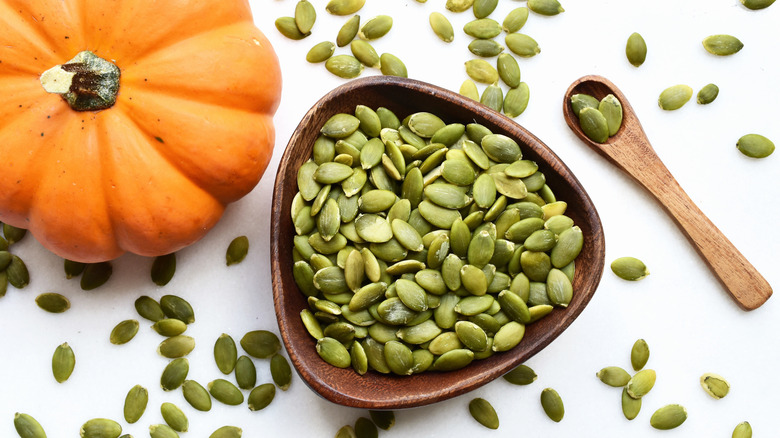
Packed inside of pumpkin seeds is a potent cocktail of chemicals and nutrients that are good for the body in general, but great for sleep in particular. The most obvious among the lot is tryptophan, an essential amino acid that you cannot produce on your own. The body uses tryptophan to make serotonin and melatonin, both of which help with mood and sleep.
Pumpkin seeds are also great sources of magnesium, and are one of the most magnesium-dense foods. Magnesium isn't as directly related to sleep as tryptophan is, but since the body couldn't function without magnesium, you can imagine how not getting enough of it could affect your body. There haven't been a lot of studies looking directly at the relationship between magnesium and sleep, but one longitudinal study published in Sleep found that there was a significant association between magnesium intake and sleep quality.
In addition to tryptophan and magnesium, pumpkin seeds are also good sources of zinc, copper, and selenium. A 2023 study published in the Journal of Affective Disorders found an inverse relationship between these minerals and sleep disorders. In other words, the more you had, the less likely you were to have a sleep disorder. All told, that's adds up to a powerful combination of chemicals all but guaranteed to give you a good night's sleep.