

The Underrated Spice That Can Help Prevent Depression
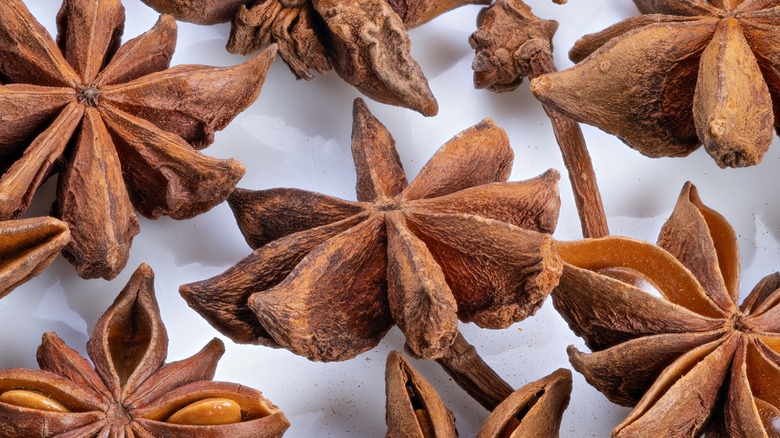
Anise seed, also called aniseed, is often used to spice up holiday desserts and mulled wine due to its familiar, sweet flavor that's reminiscent of licorice. But anise is not the same thing as licorice — it's an herb native to Northern Africa (while licorice originated in China). Furthermore, aniseed has unique properties from those of licorice. Indeed, the fruits of aniseed are commonly cultivated for end-of-the-year sweets and drinks, but new research suggests that the parsley-like plant can be used year-round for its depression-fighting effects.
According to a 2019 research study from Cairo, Egypt, oil from the anise plant can reduce symptoms of depression. The study was performed on rats, and it used both geranium oil and anise oil in its trials. The researchers conclude that both geranium oil and anise oil were effective for "ameliorating" symptoms of chronic mild stress (CMS) in the rodents. Scientists use CMS in rodents as an analogous model for depression in humans, so the test results suggest that anise oil can help fight depression.
It's not the first time that aniseed was found to provide health benefits. Thailand's Vinmec Healthcare System had previously published a rundown of the spice's proven health benefits, including its high mineral content that boosts cellular and bone health. There's also research from Iran that suggests aniseed can help improve cases of depression and reduce symptoms of menopause, such as minimizing the frequency of uncomfortable hot flashes. How exactly aniseed reduces depression, however, is yet to be confirmed — though it may have something to do with its anti-inflammatory properties.
Anise seed oil – toxic hazard or mood-boosting food?
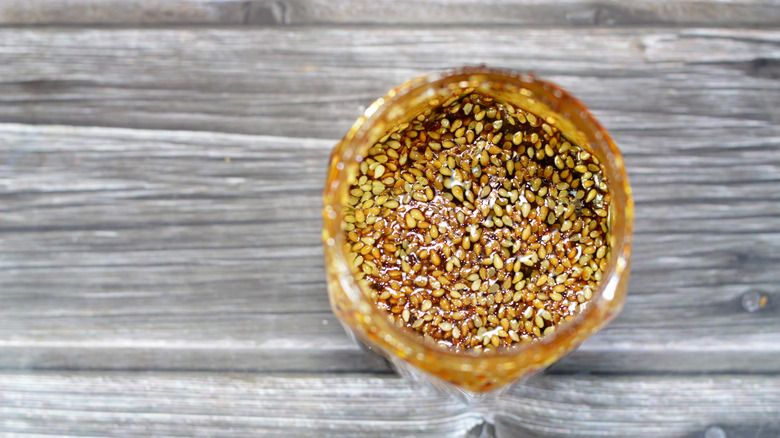
Seed oils have received a lot of flack in recent years. Many reports have suggested that seed oils are toxic and even cancerous to humans, though the debate continues. The flames of fear are fanned further by the fact that seed oils are the most frequently used oils in processed foods and cooking oils. In fact, new evidence has demonstrated how soybean oil, the most common seed oil used in American cooking oils, can increase the risk of obesity.
However, not all seed oils are inherently bad for you. It all depends on how the oils are extracted from the plant. The seed oils often cited in health debates are those that are heavily processed before being used in foods, such as rapeseed oil, corn oil, sunflower oil, and soybean oil. By the time these "ultra-processed" seed oils enter your fast food, packaged snacks, or bizarrely un-melting ice cream, they contain concentrated levels of omega-6 fats, which have been shown to increase inflammation. But aniseed, as long as it's minimally processed, may actually decrease inflammation and, consequently, symptoms of depression.
Often, aniseed isn't processed at all before consumption. Instead, recipes often call for the seeds to be added whole or simply ground up into a powder before being added to a dish. And because inflammation is so strongly linked to depression, this unrefined form of the seed is the most likely route towards battling symptoms of depression. There's more research to be done to identify the exact mechanism behind the spice's depression-battling properties, but in any case, sticking to unprocessed seed oils appears to be the healthiest option.