

Science Easily Explains Why Your Car Headlights Can Turn Foggy And Yellow
We may receive a commission on purchases made from links.
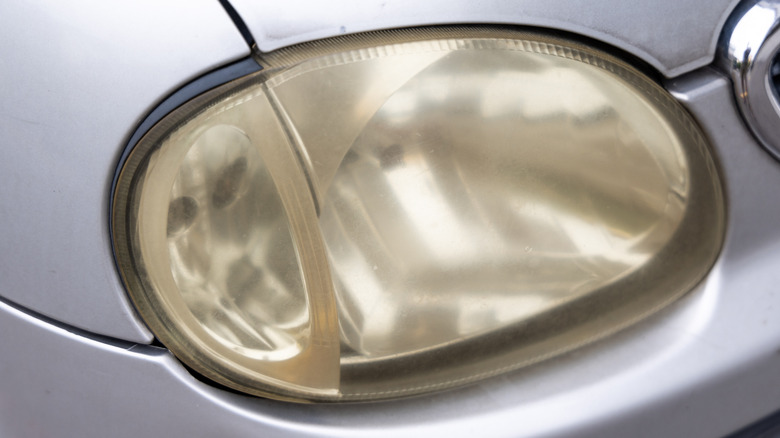
It's hard to get by without a car these days, but if you own a car, you've undoubtedly had to deal with foggy or yellowed headlights. Over the months and years, the Lexan glass or polycarbonate plastic covering for your headlights slowly loses its clarity and transparency, turning your once bright headlights into a pale yellow specter of what they once were. And the culprit? It's the very thing your headlights are compensating for: the sun.
When it comes to the sun slowly damaging your car's headlights, it's not the light you see that's the problem; instead, it's the invisible UV light that's also responsible for your sunburns. The UV light (specifically the wavelengths between 290 and 350 nanometers) breaks one of the bonds in the polycarbonate, allowing it to react with ambient oxygen in the air. Once begun, this process can't be stopped until either the plastic has no more sites that react to UV light or there's no more oxygen.
The end result of these slow-moving chemical reactions is an abundance of new chemicals that add a yellow tint to your headlights. And as for the foggy appearance, that's thanks to the chemical breakdown of the plastic. These reactions physically deteriorate the once-glossy surface of the polycarbonate, causing the light from your headlights to scatter as it passes through the damaged, irregular plastic.
Why foggy headlights are bad and how to fix it
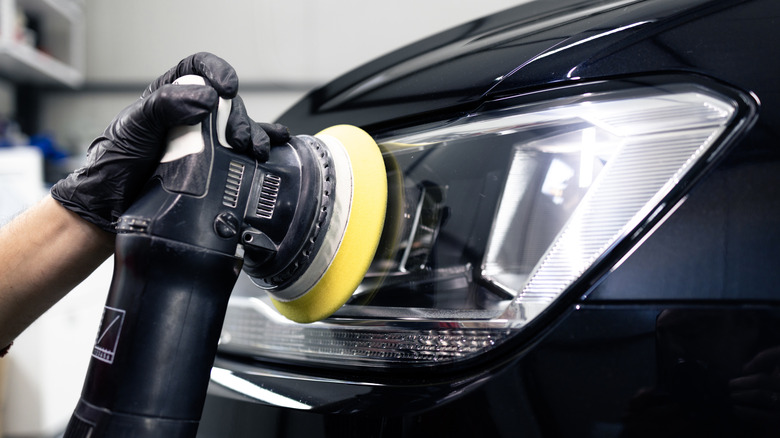
Driving around with UV-damaged headlights doesn't just cramp your style — it cramps your safety, too. In one test conducted by AAA, old headlights produced just 22% of the light that new headlights did. Professional restoration of the polycarbonate (sanding, polishing, and sealing) could bring those numbers back up to 70%, but ends up producing a lot of glare for other drivers (just don't use WD-40 on these kinds of plastic surfaces). The only way to fully restore the transparency of your headlights is to replace them with original parts from the dealer.
Given all that, the best way to handle foggy, yellow headlights is prevention. One easy step you can take is to park your car in the shade so the sun has less time to do its insidious work. Another relatively easy step you can take is to wax your car regularly. The wax doesn't just make your car look pretty; it adds a layer of protection that slows down not only the sun, but water and road debris that can damage your headlights as well.
A popular alternative to waxing your car is using products like Armor Up's paint protection film, a transparent barrier designed primarily for keeping road hazards from chipping away at your car's paint job, but it can also be used on your headlights. There are also spray-on coatings from companies like Meguiar's that are good for up to one year if you don't feel like messing with a plastic film.