

The 'Exploding Tree' Phenomenon Explained By Science
We may receive a commission on purchases made from links.
The frigid heart of winter has settled in across the U.S. and with it comes all the pleasures associated with the brisk weather. You know, things like hot chocolate, outdoor hockey, cozy nights in front of your fireplace, and the dulcet booms of trees exploding in the back yard.
Okay, that last one is actually pretty rare, but thanks to a viral social media post preceding the massive deep freeze to hit large swaths of the country, it's a phenomenon that's on a lot of people's minds. One thing that needs to be made clear though, is that these trees aren't actually "exploding." What's really happening is a phenomenon called frost cracking.
Trees aren't just a homogenous living log; they are composed of different layers with different functions. The bark of the tree tends to get colder faster than the inner wood of the tree, and it will contract. Meanwhile, the sap inside the tree can freeze, causing it to crystalize and expand. The combination of these two forces can cause a sudden splitting of the bark that can cause a loud sound like a gun shot.
Water and extreme cold can break lots of things
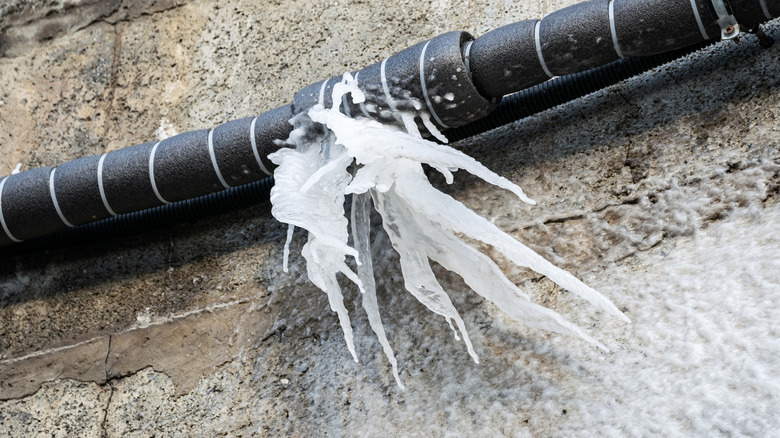
Winter and water are actually something of a destructive duo. Unless your house is built in the northern areas of the United States for instance, you've probably heard warnings about your pipes bursting during cold snaps. This happens for some of the same reasons that frost cracking occurs. When cold weather freezes the water in your pipes, the expanding ice crystals will cause them to break, leaving you with a massive plumbing bill.
The same thing can happen with rocks and groundwater in an event called a cryoseism or frost quake (not to be confused with a tectonic earthquake). For an frost quake to occur, you need a few things. First, there has to be a lot of water in the ground, getting between all the rocks. Second, the temperature needs to drop dramatically over a short period of time. Finally, there can only be light snow cover on the ground (too much snow will insulate the ground from the cold). If conditions are just right, the rock and soil will split, making a loud boom and shaking the ground.
There's not much you can do to prevent a frost quake, but there are steps you can take to protect your pipes and your trees. To keep your trees safe, you can buy a protective tree wrap to better regulate temperature changes and keep them well watered throughout the fall. As for your pipes, the easiest fix is to keep your water running when you know a freeze is coming in order to relieve the pressure in your pipes. You can also leave your thermostat at the same temp day and night. The heating bill will be less expensive than fixing your pipes.