

Science Explains Why This Texas City Is The Coldest In The State
They say everything is bigger in Texas, but maybe it would be more accurate to say everything is more extreme. A recent "Extreme Cold Weather" alert was broadcast to much of central and northern Texas, while other areas, such as Hale, Lubbock, and Lamb counties, reached up to 3.6-degree-higher average temperatures in 2025. Overall, 2025 was the Lone Star State's fourth hottest year on record, as climate change continues to cause unprecedented heat waves, cold snaps, and other extreme weather — just to list some of the negative impacts of global warming. However, there's one town in northern Texas that consistently drops below freezing 132 days per year: Dalhart, Texas.
Unsurprisingly, Dalhart is far to the north in the Texas Panhandle, so colder temperatures are to be expected there compared to a more southerly city like San Antonio. But with an average of 132 days per year of below-freezing temperatures, Dalhart actually freezes over more frequently than Chicago, Illinois (which averages 118 days of subfreezing temperatures per year). How do we reconcile the fact that Dalhart has colder winters than chilly Chicago, when it's hundreds of miles further south? The answer depends on several meteorological factors.
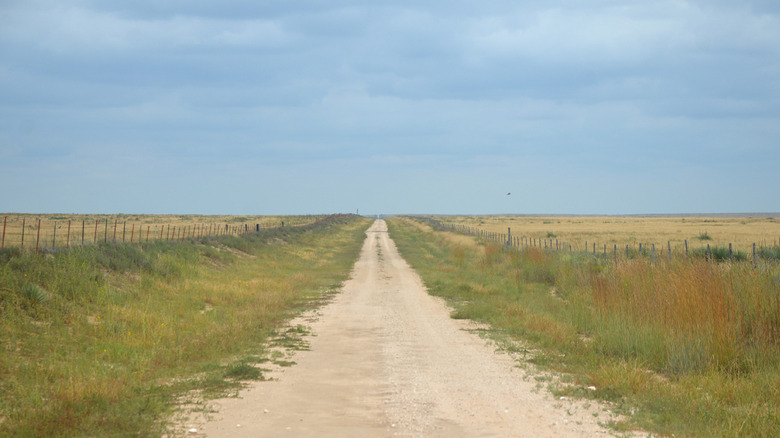
For starters, Dalhart is quite high in altitude. It's almost 4,000 feet above sea level, while Chicago is around 600 feet. This makes Dalhart comparable to Salt Lake City, Utah, which is renowned for its heavy snowfall and long skiing season. However, Dalhart experiences far less precipitation. Its semi-arid climate receives an average low of just 0.28 inches of rainfall in February, while its peak rainy season receives a mere 2.6 inches of rainfall in May. This lack of winter precipitation causes the city to remain windy and dry throughout the winter, with much of the area marked by sparse grasslands, bare soil, and constant windchill.
Texas weather extremes cost more than just money
Dalhart, with a population of around 8,500, is the coldest Texan city, but it might not necessarily be the coldest area in the state. The northern Texan Panhandle is technically part of the high-altitude Great Plains, which includes Texan towns smaller than Dalhart but higher in altitude. For example, Texline is a town with a population of 448. Located 35 miles to the north of Dalhart, Texline sits at an altitude of 4,600 feet above sea level. These higher-altitude areas likely experience even colder temperatures, though weather data with such precision is lacking for such a small town.
But due to global warming, average temperatures are expected to rise over time across the state, including in historically cold areas like Dalhart. This isn't to say extreme cold weather events will go the way of the dodo, though. In fact, they're more likely. Climate change is increasing extreme weather events, and Texas is suffering the worst out of all the states — at least financially.
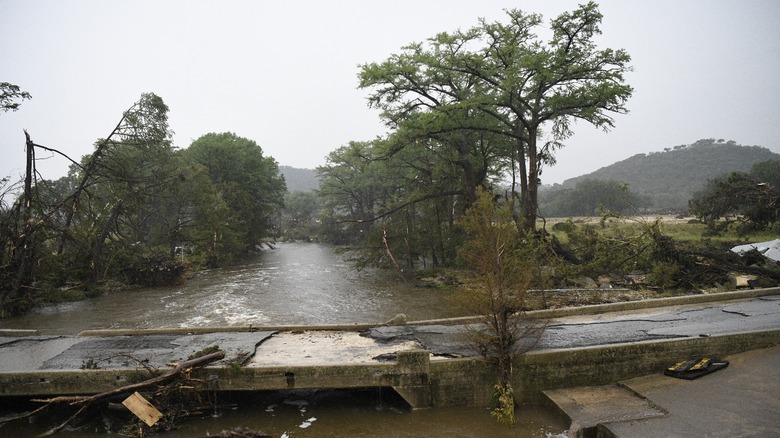
Thus far, Texas has endured more severe weather events costing over a billion dollars in damages than any other state. These include hurricanes, wildfires, heatwaves, floods, and, as is currently the case, extreme freezing temperatures. The Texas government spends billions of state and federal tax dollars to manage the damage, but loss of life is seemingly unavoidable. A confirmed 135 people died in 2025 during deadly floods, and the damages cost the state an estimated $18 to $22 billion dollars. And earlier in the year, a May heatwave boosted Texan temperatures to higher than those of Death Valley, typically regarded as the hottest place on Earth. Such extreme weather events are only expected to become more frequent in the future.