

9 Bugs That Look Like Ticks But Aren't
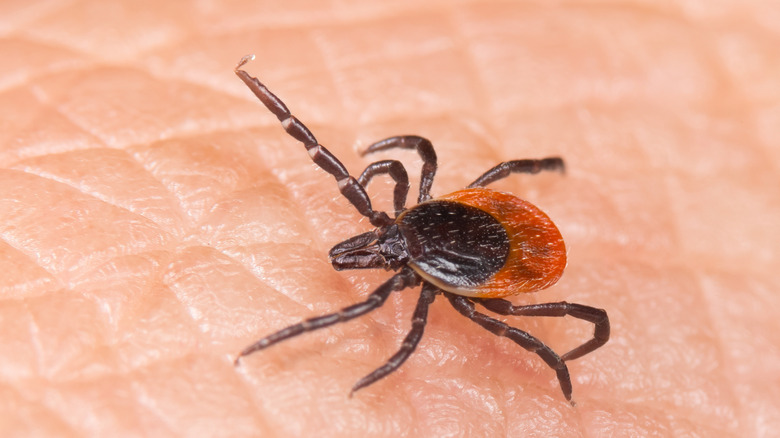
If you love exploring the great outdoors, you will no doubt be aware of the dangers that ticks pose. These blood-sucking critters can latch onto the skin of dogs, cats, and humans, and are particularly common in long grass, beaches, and around the many animals that inhabit woodland areas.
As well as leaving you with a nasty bite, ticks are notorious for spreading blood-borne disease. Lyme Disease is the most prevalent tick-spread illness in the Northern hemisphere, and can have nasty repercussions if left untreated. Ticks should always be removed from skin as soon as they are spotted, to ensure that the chance of infection is reduced.
The issue is that there are many other bugs that bear more than a passing resemblance to ticks, and can cause people to panic when they find them in their home or on their person. From fellow arachnids such as mites and pseudoscorpions to blood-sucking insects like deer keds and head lice, these bugs are often confused with ticks despite being less dangerous. Being able to distinguish between these lookalikes and the real thing will allow you to act swiftly and prevent unnecessary anxiety. Let's take a look at nine bugs that look like ticks, but aren't.
Bed bugs
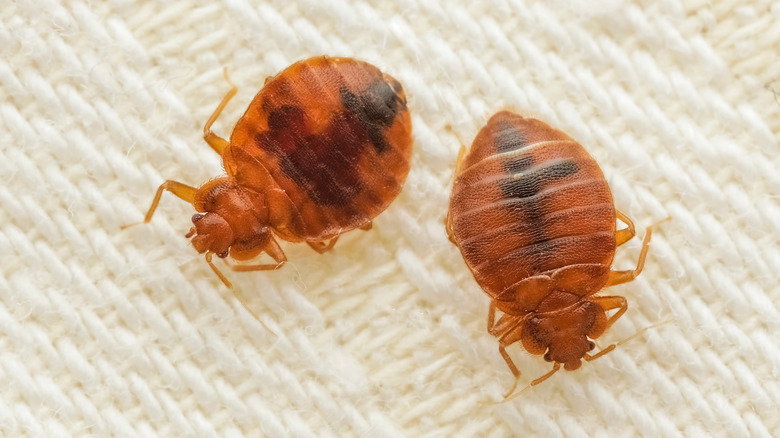
The sight of a bed bug can be alarming in itself, but its resemblance to a tick can cause further worry. At a glance, they can look quite similar, with their flat, brown bodies, but closer inspection will reassure you that they are not likely to cause any harm.
Bed bugs don't belong to the same class of organism, since they are insects rather than arachnids. This means that telling them apart comes down to a simple matter of counting: six legs means a bed bug, whereas ticks have eight. And even if a bed bug does have a little nibble on you as you sleep, it is unlikely to hang around. After feeding, the enlarged insect retreats into cracks, so you are unlikely to wake up to a huge number of them surrounding you.
While they may be considered as a sign of poor cleanliness, which isn't even true, thankfully they do not carry disease or pose any threat to your family. The biggest issue with bed bugs is that they are excellent at hiding, and could be hanging out in your bedroom furniture without your knowledge. Ticks, on the other hand, need to be removed from your home as soon as you spot one, so it is crucial to act if you find that your uninvited sleeping companion has eight legs and especially if it is still attached to your body, as this strongly suggests a tick.
Fleas
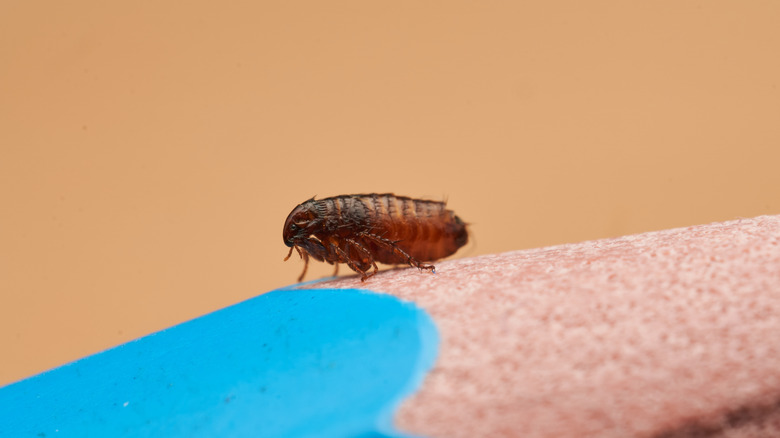
If you have an animal as a pet, chances are you have had to worry about fleas at some point. However, the presence of fleas can cause a bigger concern if pet owners mistake them for ticks.
Fleas and ticks are both tiny animals, with a flea measuring around an eighth an inch in length. Ticks can be even smaller than this before they feed, but can swell to an incredible 100 times their size after feeding. Fleas are known for their jumping abilities, but ticks are unable to jump, and instead crawl onto humans and animals before latching on for a feed. If you are able to get a close look at the bug in question, you should be able to rule out the possibility of a tick. As insects, fleas have six legs and two antennae, rather than the eight legs of a tick. Their bodies are also narrower, though with their minute size, that could be hard to judge.
While fleas can carry disease, such as typhus, this is much rarer than the threat posed by ticks, and a flea's preference to attach to animals rather than humans mean they are much less of a danger. Flea bites can cause itching and severe discomfort, meaning that treating them is crucial, but the knowledge that they are not ticks should give reassurance the next time you spot one in your home.
Weevils
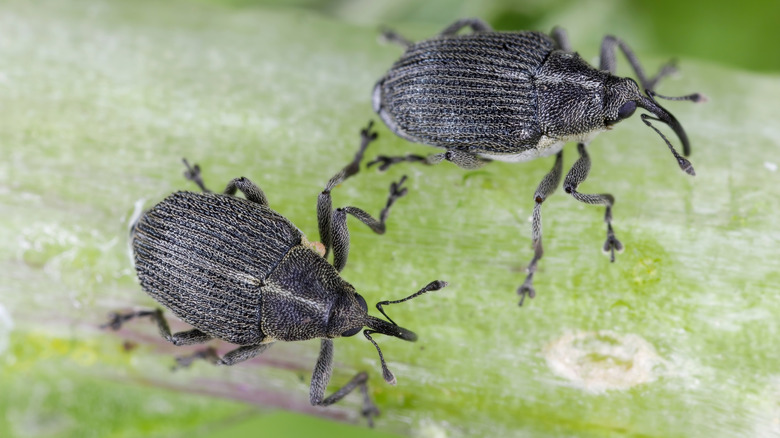
Finding a bug crawling around your home can be startling, and since weevils are very common in the house, you may often find yourself on bug identification alert. Weevils in particular can be mistaken for ticks since they have a dark brown body, and, from a distance, they can resemble an unfed tick.
Weevils are completely harmless plant eaters, though they may destroy crops in the garden, or infest dried goods such as rice and grain if they take a shine to your pantry. Rice weevils, for example, can lay more than 300 eggs inside a grain of rice, so it is crucial to get rid of them if you spot them crawling around your kitchen.
Once you get a good look at them, they should be easy to distinguish from ticks. Weevils have six legs and a distinctive snout that sets them apart from their blood sucking fellow pests.
Deer keds
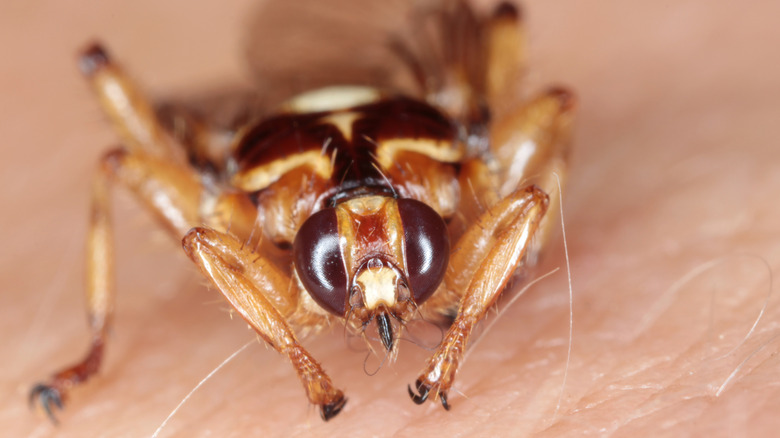
Deer are synonymous with ticks, and for this reason, seeing any suspicious looking bugs in an area near deer can raise suspicions of ticks. Although they are rarely found in the house, deer keds can cause alarm outdoors due to their tick-like behavior.
Deer keds (Lipoptena cervi) are parasitic flies that feed mainly on the blood of deer, but can also bite other mammals, including humans. The fact that they can take to the skies is the first clue to reassure you they are not ticks, but once it has landed on you, it can be harder to tell, especially if they are in the mood to give you a nasty bite. While they can look like a tick at a glance with their flat, dark brown body, as insects they have only six legs instead of the eight that ticks have as arachnids. To make things more confusing, though, while deer keds have wings initially, once they find a host, usually a deer, they shed their wings and burrow into the fur, further resembling their arachnid counterparts.
Though deer keds can bite humans, which can be painful, there is no evidence to show that they spread disease in the same way as ticks, though their blood sucking behavior means scientists have not ruled it out. If you want to be safe, wearing dark clothing can increase the chances of deer keds making their way onto your person, so if you are heading to woodland, paler clothes may be a better choice.
Clover mites
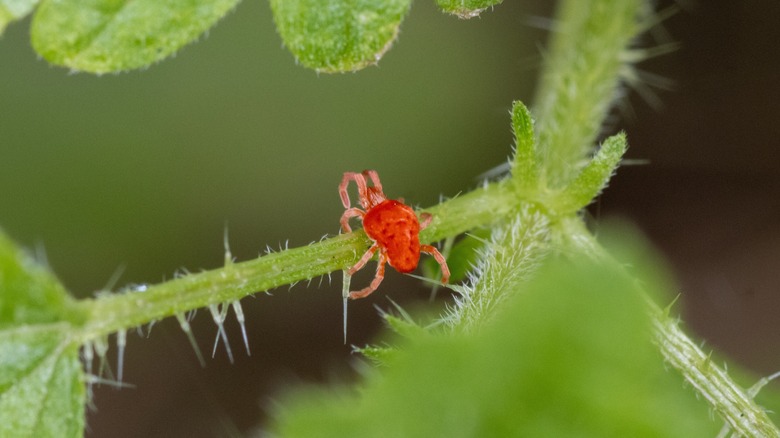
Mites in general are often mistaken for ticks, though they tend to be much smaller. Unlike many bugs on this tick lookalike list, they are arachnids, meaning that leg counting is not going to be an option for distinguishing between the two critters.
Clover mites (Bryobia praetiosa) — the tiny red bugs you might see crawling around – are arachnids, often known as blood spiders, and if you have ever accidentally squished one of them in the house, you will be aware of the scarlet mess that they can leave behind. Because they are a distant relation to ticks, they do resemble them quite closely, in spite of being a much more vibrant color. An adult clover mite is usually smaller than an eighth of an inch in length, whereas unfed ticks can range from a similar size to more than double that length. Once fed, the tick becomes engorged and can swell to more than half an inch in length. Though it can be alarming to see a swarm of tiny clover mites scurrying over your windowsill, they are completely harmless and do not carry the same level of danger as ticks.
Spider beetle
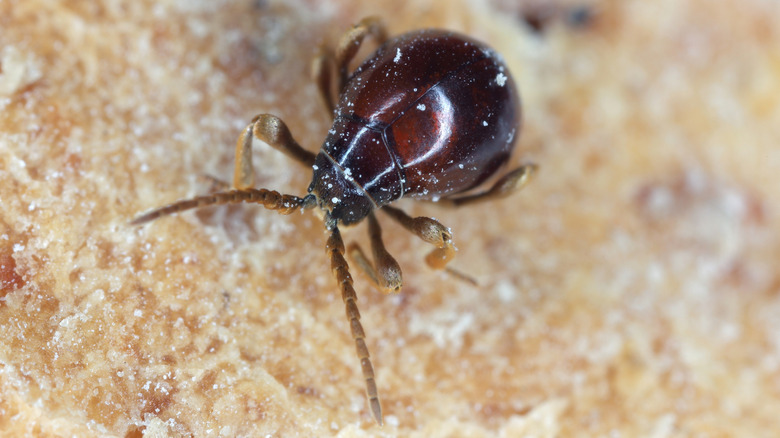
One of the more common bugs that get mistaken for a tick is the spider beetle, with its dark brown color and round body. You may assume from the name that it is a relative of the tick, but this six-legged insect is not an arachnid like its namesake.
Though spider beetles (Ptinidae) are not often noticed in homes since they like to hide in the dark, you may be alarmed if you spot one in the pantry, since they gravitate toward grains and cereals. Their long antennae at the front may look like the extra pair of legs that would suggest the presence of ticks, but they've still got fewer legs than their arachnid lookalikes, and these insects are likely to scurry away from the light if you happen to catch them on their travels.
Thankfully, spider beetles are harmless, though they can ruin the dried food in your pantry, particularly products that are already past their best. Keeping your pantry clean and tidy and reducing the humidity using a dehumidifier is the best way to keep these tick-imposters from infesting your home.
Carpet beetle
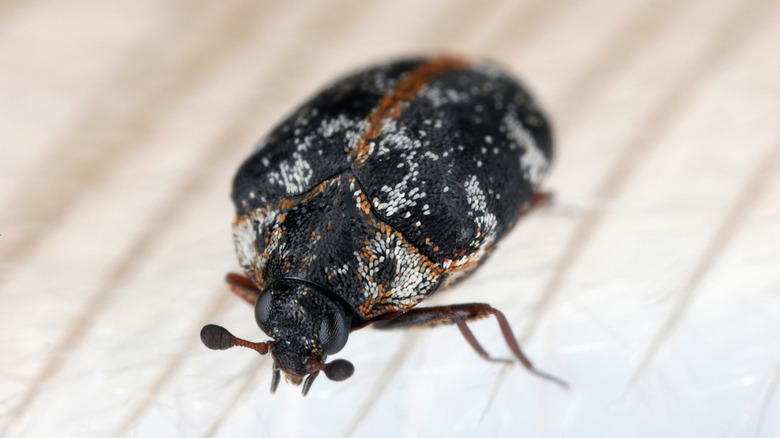
Carpet beetles are insects that are often found indoors, and the brown variety in particular can be mistaken for a tick. They can be very destructive in the home, particularly if they have access to natural fibers, but they do not pose a disease threat like ticks do.
Named after their fondness for textiles, carpet beetles (Dermestidae) feed on various substances that include wool, cotton, and leather, though they can also feed on dead animals and insects. They are known pests, and they can destroy fabrics and textiles if they are left undetected. They are insects with six legs and two antennae, but their similar size and color to ticks means they can easily be mistaken for them. Though carpet beetles do not bite humans, in the larvae stage they can shed tiny hairs that can cause irritation that could be mistaken for a bite. The presence of the beetles, followed by the apparent bite marks could cause people to fear that ticks were involved, but carpet beetles do not feed on blood and carry no disease to humans.
Head lice
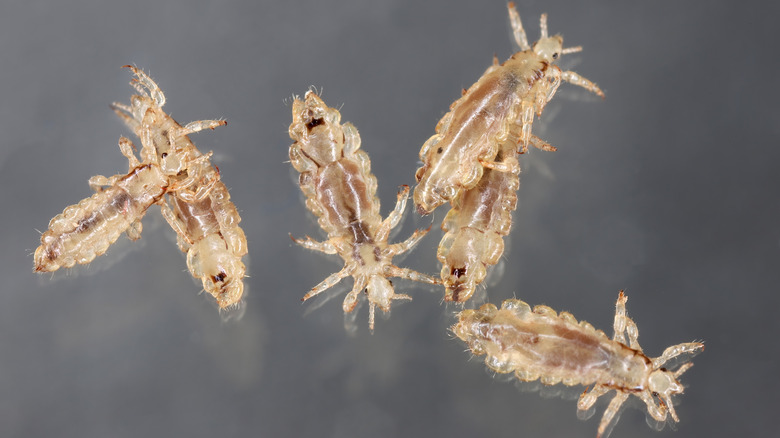
Head lice are incredibly common, with as many as 12 million children every year being affected in the U.S. Their blood-sucking nature and irritation of the skin make it easy to mistake them for ticks, but thankfully head lice are merely an itchy annoyance, and pose no threat to health.
If you can see them up close, ticks and head lice look different enough that you should be able to tell them apart. Head lice are insects with long thin bodies and six legs, and are incredibly small, measuring less than 1 millimeter when they first hatch. Unfed lice are pale in color but turn dark after feeding on blood, which is when they are most likely to be confused with ticks.
Another important difference between lice and ticks is how long they remain on the body. Once a tick has fed on blood and becomes engorged, it will fall off after a day or two. Head lice, on the other hand, lay their eggs and remain in the hair and on the scalp if not treated. While head lice do not transmit Lyme disease in the same way that ticks do, they can be a very itchy pest, and dealing with them promptly is the best way to reduce discomfort.
Pseudoscorpion
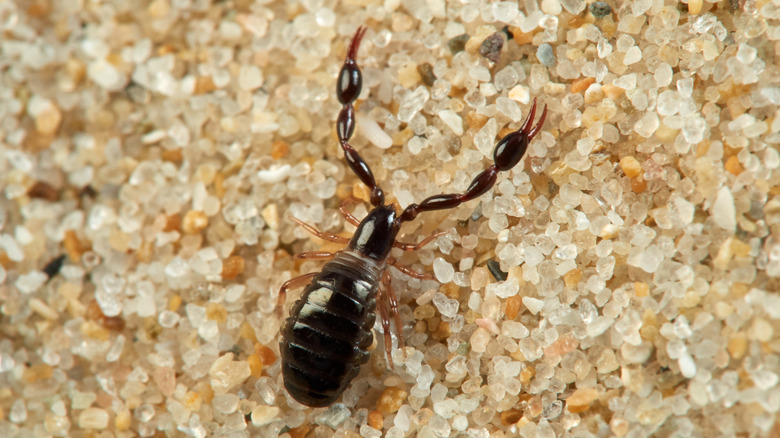
Finding something whose name includes "scorpion" in your house or on your person is a scary thought, but in the case of the pseudoscorpion, there is nothing to worry about. They are tiny arachnids, complete with pincers, that look like their dangerous namesakes, but crucially don't have a tail.
Pseudoscorpions can often be mistaken for ticks due to their similar appearance. They have dark brown, oval bodies, and at 0.2 inches long, they are similar in size to an unfed tick. They like to live outdoors, which means that one appearing in your house is likely accidental.
Despite their alarming appearance, pseudoscorpions do not bite humans, feed on blood, or carry disease. Instead they eat other tiny bugs, including lice and ants, so if you spot a pseudoscorpion scuttling around your home, scoop it up and return it outdoors so that it can help with the control of other miniscule pests.