

Scientists Didn't Expect This To Happen To The Brain Minutes After Death

An often-cited experience among those who survive brushes with death is the sensation of life flashing before their eyes. While perhaps thought of as a spiritual experience, there might be some scientific evidence to back this up as an organized activity within the dying brain. A 2022 case report published in Frontiers in Aging Neuroscience described the brain activity of a man in the minutes before his heart stopped. Researchers observed brain wave activity that is typical of recalling memories or dreaming as this patient went into cardiac arrest. Could this give scientific proof that the brain (which has a surprising anatomy) is programmed to display flashbacks in its final moments?
The 87-year-old man had suffered a traumatic brain injury and was being monitored by doctors for seizures using an electroencephalogram (EEG). These machines monitor the electrical activity of the brain and can be used to detect the onset of seizures. They can also reveal some interesting things about what is going on in the brain. After this patient died, the researchers studied the EEG data 15 minutes before and 30 seconds after the patient's heart stopped. This presented the first-ever human study of EEG activity at the time of death.
During cardiac arrest, it was previously thought that the brain would exhibit very little activity at all. However, these researchers found an interesting increase in gamma brain waves, which are associated with some complex neurological states, including meditation, dreams, and memory. This aligned with a study performed in mice demonstrating similar activity when the heart stopped beating, from which the authors suggest that this could be a neurological phenomenon that is conserved across species.
Making brain waves: the role of gamma waves in memory
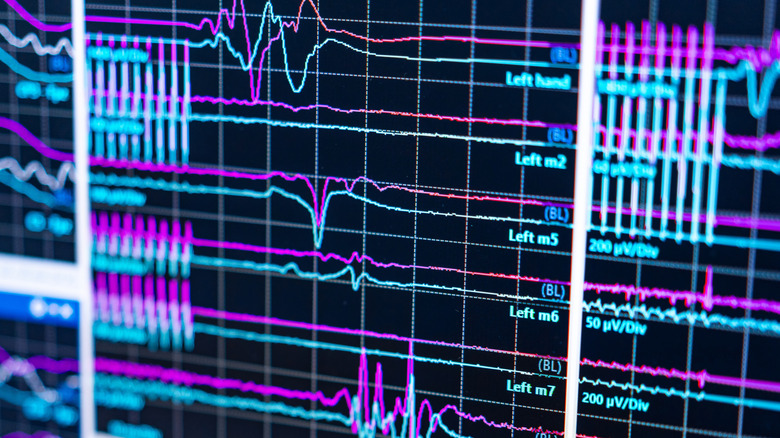
This 2022 case report highlights a surprising increase in brain waves, specifically in gamma brain waves, when the patient goes into cardiac arrest. These waveforms are interesting in the field of neuroscience as they are associated with higher-level brain activities. Previous studies have monitored EEG recordings and demonstrated a surge in gamma activity during meditation and dreaming. One study even observed that, by activating gamma activity in the brain, they could cause research subjects to become conscious of themselves in their dreams, promoting a state of reflection.
Interestingly, gamma brain waves are also observed in recalling episodic memories. These are specifically long-term memories that contain a lot of detail and are of particular lived experiences, similar to watching an episode of one's life on brain TV. Evidence demonstrates that gamma brain waves are involved in both creating these memories and retrieving them. Overall, there is great evidence to support that gamma brain waves are critical to how memory is experienced.
This finding is not without its fair share of controversy
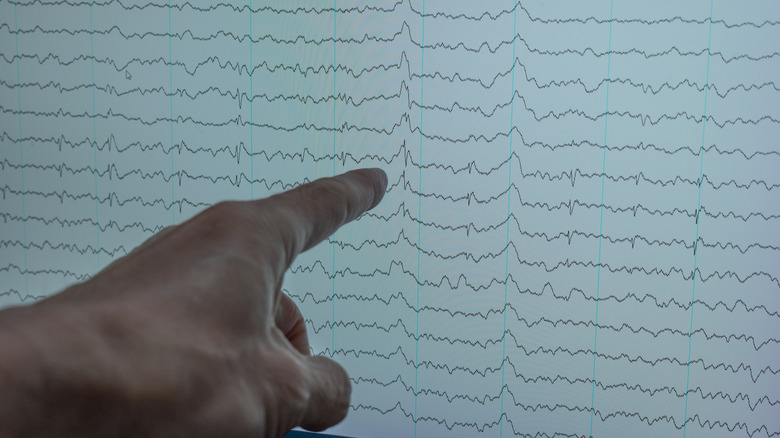
It is important to acknowledge that there are severe limitations to this study. Bruce Greyson and colleagues wrote a commentary for the paper, pointing out that although this is a great discovery, much more evidence is needed before this can be determined as an organized neurological phenomenon. Some limitations include that the patient had experienced a traumatic brain injury, which can skew some EEG recordings. Additionally, this is only one patient, and this has yet to be shown in more individuals, meaning that this example could simply be an outlier. Also, gamma brain waves within the frequencies found in this case can be observed by EEG during a number of other activities, including lasting pain and muscle contraction.
When interpreting EEG data, there is only so much to directly ascertain. With artifacts skewing recordings and various functional states attributed to certain brain waves, EEG cannot paint the clear picture necessary to draw the conclusion that life flashing before one's eyes is an experience orchestrated by the brain. While the paper is incredibly novel and important in its ability to demonstrate these EEG readings at the time of death, there are many additional factors that must be ironed out before claims can be fully supported.