

How Astronomers Really Think The World Will End
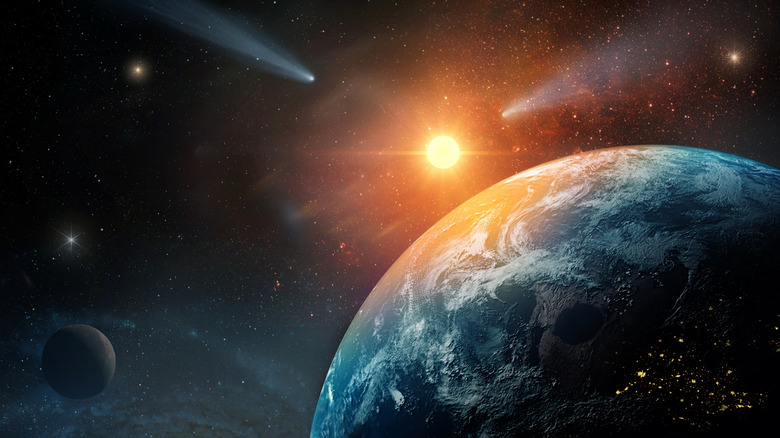
We've got a good thing going here on Earth: drinkable water, breathable air, lots of life to sustain us. Despite the turbulent times we live in, it's not an exaggeration to say that our plucky species is thriving. Despite that, we have to acknowledge that all good things must eventually come to an end, including life as we know it. But how the world will end, and when it will happen, all boils down to semantics. It could be in a mere 250 million years when Earth can't sustain us, or it could be unimaginably longer when there's simply nothing left.
Here on Earth, our time limit is tied to the life of the sun. As the sun ages, it gets about 1% brighter and hotter every 100 million years. Most planetary scientists estimate that at some point between 1 and 1.5 billion years from now, the extra energy from the sun will have boiled off all the water from the oceans, trapping Earth in a perpetual greenhouse similar to what Venus experiences now.
Of course, we'll have to leave long before that. Assuming no more industrial activity, and taking into account the natural outgassing of carbon dioxide from the crust, we only have a few hundred million years of habitability left before it's simply too hot to live and the foundations of our food chain begin to break down. Thankfully we're a clever lot, so how long do we have if we start to get creative?
What happens to humanity after Earth is gone?
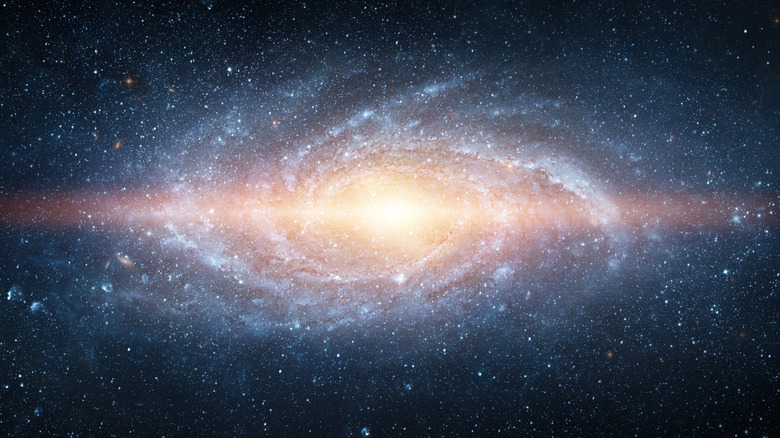
Even if we decide to move all of humanity underground into high-tech bunkers to survive the ever-growing intensity of the sun, we'll have to abandon the planet in about 5 billion years. That's when the sun will enter its red giant phase, ballooning in size to engulf Mercury, Venus, and Earth. During this time we may find refuge on Pluto when the sun's habitable zone pushes into the Kuiper Belt, but the eventual collapse of the sun into a white dwarf makes that a temporary solution.
Of course, before that happens, there's an even chance that our galaxy and our neighbor, Andromeda, will crash into each other, making predictions past 4 billion years difficult. It's possible that our solar system could be ejected out of the newly merging galaxy altogether, or it could be torn apart by a close encounter with a passing star or black hole. Assuming the most likely scenario in which we survive all of that chaos (speaking as an optimist), our next natural threat comes at the onset of the Degenerate Era.
Despite what the rise of TikTok might have you believe, the Degenerate Era won't be upon us for around 1 quadrillion (1015) years. At this point in the future, all of the stars will have burned through their fuel and degenerated into their terminal states: black holes, white dwarfs, and neutron stars. During this time, the lights in the night sky will all fade to black. If life persists this far into the future, it's possible it will exist in a Dyson sphere (a high-tech construct housing advanced civilizations) around one of the many white dwarfs. But this too will end.
What happens at the end of the universe?
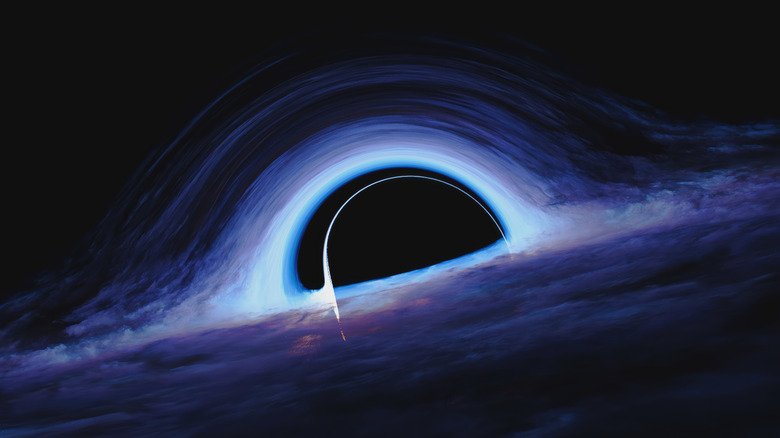
Around 1 septillion (1025) years from now, the light of the galaxy will snuff out, with all galactic matter having fallen into the supermassive black hole at its heart. Assuming that our white dwarf (not our sun — that's a cold, dark diamond at this point) has escaped the galaxy, our next concern is proton decay, the theoretical dissolution of protons into subatomic particles (the theories differ as to which ones). If proton decay is a thing, our rogue white dwarf will have dissolved after 100 undecillion (1038) years.
We can buy a reprieve of another 100 undecillion years by migrating to the remnants of a neutron star, but after that we'll have to somehow live off of the energy of a black hole. Granted, even those will have evaporated after 1 googol (ten duotrigintillion or 10100) years.
Of course, we'll only have to worry about these eventualities in a Big Freeze scenario, where the gradual expansion of the universe forces everything to settle into a frigid, thermal homogeneity. There's one scenario — the Big Rip — where the expansion of the universe accelerates to the point where even atoms are ripped apart 22 billion years from now. On the other hand, there might not be enough dark energy to expand forever, forcing the whole thing to come crashing back together in a Big Crunch in about 20 billion years, possibly triggering a second Big Bang. Thankfully, we don't have to worry about it for a while.