

The Truth About What These 7 Dinosaurs Really Looked Like
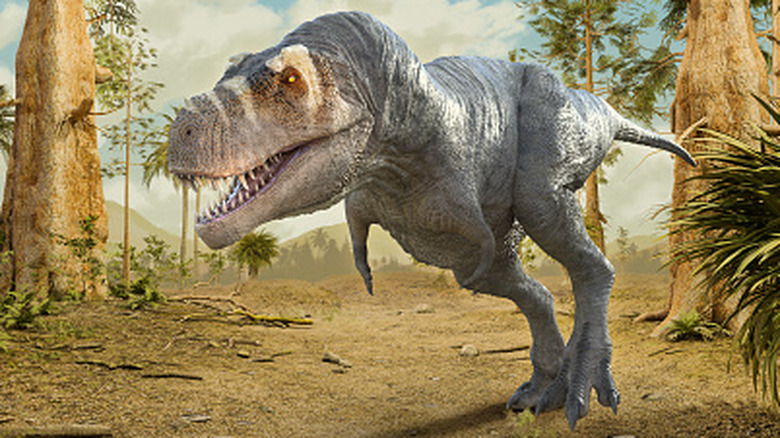
Dinosaurs roamed the earth for more than 180 million years, which is 600 times longer than modern humans have existed. In spite of their dominance for such a huge period of time, our understanding of how they looked is still not complete, since getting reliable data for creatures that died out around 66 million years ago is not easy.
However, over the last few centuries, well-preserved fossils have allowed paleontologists to build a pretty accurate picture of how various dinosaurs appeared, some of which have been ingrained in our brains since childhood. From armor-plated stegosaurus to triceratops with its three horns, there are some dinosaurs that are recognizable at a glance. However, as technology develops and better-preserved fossils are discovered, scientists' opinions on exactly how these creatures looked are beginning to change. From the ferocious T. rex potentially being covered in feathers, to the rainbow-colored crest of the bird-like Caihong juji, our ideas of what dinosaurs looked like are ever evolving as scientists find further glimpses into the past. Let's take a look at what these seven dinosaurs really looked like.
Tyrannosaurus Rex
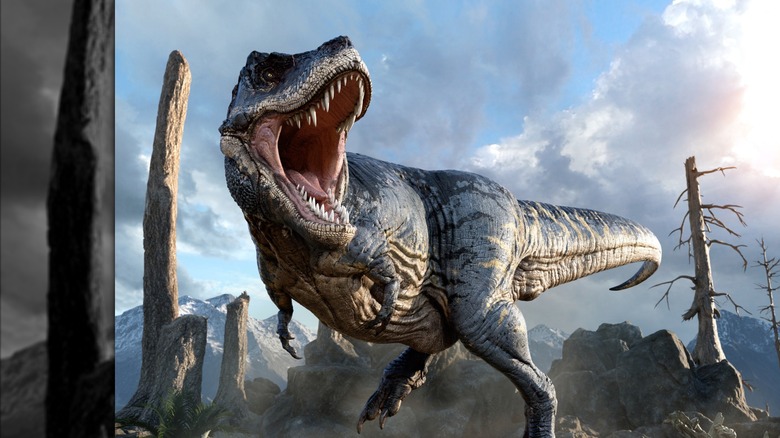
The Tyrannosaurus rex is surely one of the most recognizable dinosaurs, often depicted sprinting after smaller creatures in search of its next meal. With a name that means "tyrant lizard king," a resemblance to modern day reptiles with dark or green scaly skin is how most of us picture this incredible beast. However, recent findings suggest that our long-held beliefs about the T. rex are not quite right.
Perhaps the most surprising feature is that this enormous carnivorous beast possibly had feathers. Recently, paleontologists have discovered melanin in some T. rex fossils. Melanin is the pigment that provides color to our hair, eyes, and skin, and it's found in modern-day birds' feathers. Since other species of theropods are known to have had feathers, it is not a huge leap to assume that T. rex might have, too.
Another assumption involves the image of the T. rex being incredibly fast and amazingly athletic, chasing after its prey, but while we certainly wouldn't want to find ourselves running away from one, there is a distinct possibility that a fast human could outrun them. The incredible size of the T. rex means that running any faster than we can jog would have been difficult, and approximately 10 miles per hour is likely to have been its maximum speed. The much more nimble Nanotyrannus would have been significantly faster, running at speeds in the region of 50 miles per hour. As huge and fearsome as T. rex was, these new discoveries certainly paint a very different picture of the dinosaur that we have all envisaged in the past.
Velociraptor
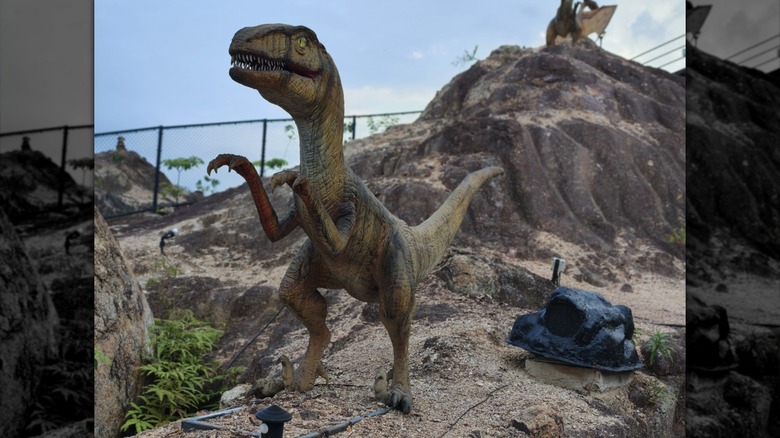
If there is one dinosaur we can all be confident that we would recognize, it is the Velociraptor. Anyone who has seen "Jurassic Park" remembers the giant reptiles and may have been terrified by them, and while we already assumed that their ability to open doors was poetic license, it turns out that they are nothing like the actual dinosaurs in question. "Jurassic Park" lied quite a bit about what the famous Velociraptors looked like.
The first major discrepancy is their size. True Velociraptors, which lived during the late Cretaceous period, were likely no larger than a turkey, making it unlikely that they could tower over an adult human. They were also covered in feathers, which was proven in 2007 when a Velociraptor fossil was uncovered that contained quill knobs on the arms. These feathers could have had a variety of uses, including trapping heat and attracting mates, but probably weren't for flying.
Although they were smaller than we imagine, the carnivorous Velociraptors would still have been fearsome predators, and one of their most striking features was the sickle claw. This incredibly sharp claw was used to keep its prey from escaping, and the Velociraptor, along with other dromaeosaurid dinosaurs, would walk on only their other two toes, keeping the super sharp claw in the air to prevent wear or damage. While real Velociraptors looked nothing like their Hollywood counterparts, they were still fast, vicious dinosaurs — making them a ferocious prehistoric cousin of our modern day birds.
Stegosaurus
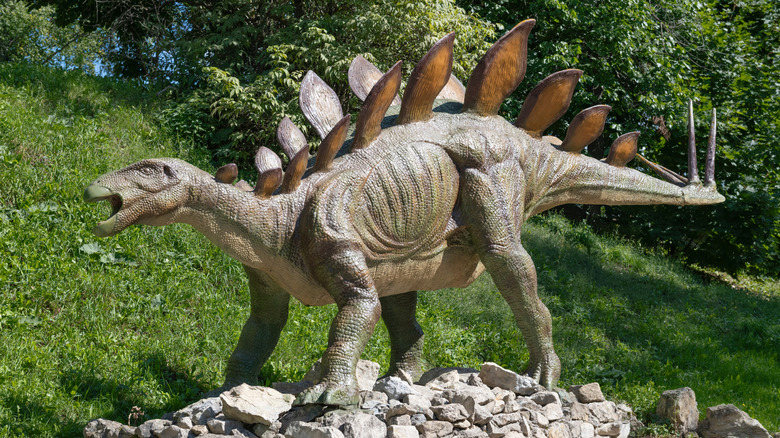
Another of the best known dinosaurs, Stegosaurus is identifiable even for a toddler, with its famous plates running the length of its back. These plates were assumed to be a part of their armor, but recent discoveries have led experts to consider that they may have been used to attract mates.
The plates of a Stegosaurus were much thinner than you may have imagined, and the presence of important blood vessels suggests that protection was not their main function. Fossils in recent years have shown that there are two distinct sizes and shapes of plates, and this has led some paleontologists to assume that male and female stegosaurs had plates that differed from each other. In extant animals, the male of the species tend to have more exaggerated physical features, such as the impressive feathers of a male peacock or the large, strong antlers of most species of male deer. It seems logical, then, that prehistoric species could have followed the same mating patterns; scientists have come to that exact conclusion, in fact. There is also a possibility that the plates could have been brightly colored, further suggesting that they were a way of attracting the female of the species.
The spiky tail of the Stegosaurus, however, was almost certainly used as a weapon. Fossils have shown that the heavy tail was capable of piercing bone, allowing this slow-moving herbivore to protect itself against the two-legged carnivores towering above it.
Compsognathus
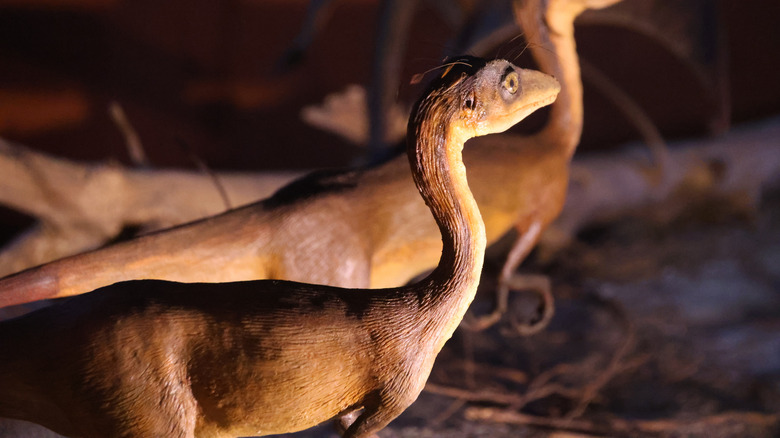
When imagining the prehistoric time of the dinosaurs, it is easy to envisage enormous reptiles taller than a two-story building racing through the landscape. However, in spite of the word dinosaur meaning "terrible lizard," there were plenty of smaller species scuttling around, and the lesser-known Compsognathus was no larger than a modern-day chicken.
Existing during the late Jurassic period, Compsognathus measured less than 3 feet in length and weighed around 8 pounds. Its diminutive size may be a surprise to many people, but being one of the smallest dinosaurs to ever exist gives it some crucial advantages that its enormous counterparts were lacking. It ran on two legs and was incredibly fast and nimble, allowing it to hunt down small creatures such as lizards and large insects.
Like many dinosaurs, scientists believe that Compsognathus could have had feathers, but would not have been able to fly. Instead, the feathers would likely have been for attracting mates or keeping the creatures warm. Our knowledge of the tiny Compsognathus helps give a more realistic picture of how the planet looked millions of years ago, with tiny, speedy dinosaurs co-existing alongside the more familiar gigantic ones.
Ankylosaurus
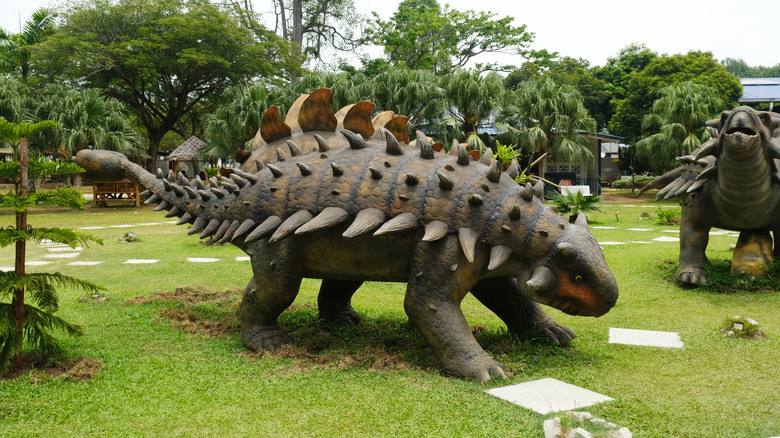
When it comes to dinosaurs that were built for protection, there are few better examples than the Ankylosaurus. It is often compared to a tank, weighing around 4 tons and reaching lengths of as much as 33 feet, from nose to heavily armored tail. Living during the Cretaceous period around 70 million years ago, they were herbivores that could hold their own with the carnivores thanks to their unique and extensive armor.
The armor of the Ankylosaurus consisted of thick bony plates embedded into the body and covered with keratin for extra protection. This is the same substance that makes up the horns of modern-day rhinos, and is incredibly tough. This plating across the back made it difficult for taller predators such as the Tyrannosaurus rex to attack the Ankylosaurus from above.
The highlight of its impressive armor was undoubtedly its tail, which was made from several bones fused together to create the ultimate weapon. A swing from the heavy tail was capable not only of deterring an attack from other dinosaurs, but could cause a nasty injury, too, breaking the bones of crocodile ancestors that lived at the time. It may not have been the fastest dinosaur, barely walking as quickly as we do, but it was more than capable of standing its ground and putting its excellent armor to use.
Triceratops
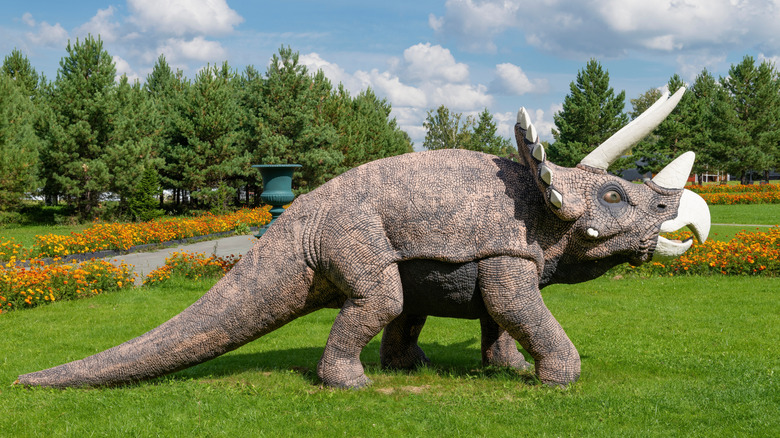
Triceratops is one of the big hitters when it comes to dinosaur familiarity, and it's often one of the first we learn to recognize as children, thanks to its signature three horns and "frill" surrounding its face. However, in recent years, scientists have been debating exactly how their faces were structured.
The Triceratops was a late Cretaceous dinosaur, living in the last 3 million years of the period, making it relatively late to evolve compared to other land-based dinosaurs. Its face, however, is clearly a distinctive feature of the dinosaur, becoming the origin for its name, which means "three-horned face." Paleontologists are now contemplating that keratin played a crucial role in the structure of more than just the horns of the triceratops. One theory suggests that the entire face and frill would have been covered in keratin, meaning their faces would likely look different that would have previously been portrayed. If this is true, it means the face of the Triceratops would have been much better protected than first thought, as the keratin would create a tough extra layer of armor that would have kept the dinosaur safe from its fearsome predators, such as Tyrannosaurus rex.
Caihong juji
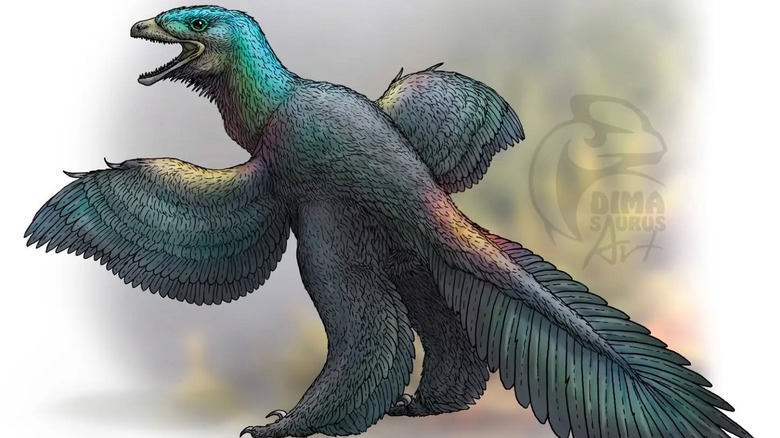
Most portrayals of dinosaurs represent them as pretty bland when it comes to color. Brown, dark green, and perhaps the occasional flash of yellow tend to be the standard colors, given that fossils containing only bone give no clue to the skin color of the prehistoric creatures. However, as more detailed and better-preserved fossils are uncovered, more information is becoming known about the wide range of colors that appeared on some dinosaurs.
A beautifully-preserved fossil of a Caihong juji that was discovered in 2014 allowed paleontogolists to see pigments from the feathers of the bird-like creature. Melanosomes — the compounds that actually give cells color — were found in the feathers, and comparable to the same compounds in modern-day birds. From this, scientists have been able to build a picture of what this late Jurassic dinosaur looked like, and their best guess is that it had a "rainbow glimmer" on its crest and chest area. There is a good chance that these colors were used for display purposes, as some of our modern day birds do, since only the later dinosaurs are thought to have used their feathered wings for flight.