

2 Reasons You Should Sleep On Your Left Side

A good night's sleep is just as essential to life as food and water, but for many people these days, it proves frustratingly elusive. With busy work schedules, urban clamor, and a world increasingly overwhelmed by screens, getting the right amount of sleep has never been more challenging, and that's just the tip of the iceberg. Quality of sleep is just as important as quantity of sleep, and if you're still feeling tired despite sleeping through the night, it might mean that you're sleeping in the wrong position. Sleep studies show a stark difference between people who sleep on their front, back, and sides, and they consistently indicate that left-side sleepers get the best rest.
Each sleeping position has benefits and drawbacks. Sleeping on your back is good for your spine, but bad for breathing. Sleeping on your stomach is good for your airways but bad for your spine and your gut. Side sleeping offers the best balance, with the left side being particularly beneficial for moving food through the digestive tract. As you read on, consider what factors most impede your ability to get a good night's sleep. If you find yourself regularly waking up with back pain, acid reflux, or shortness of breath, you might benefit from switching to sleep on your left side.
Sleeping on the left side aids digestion
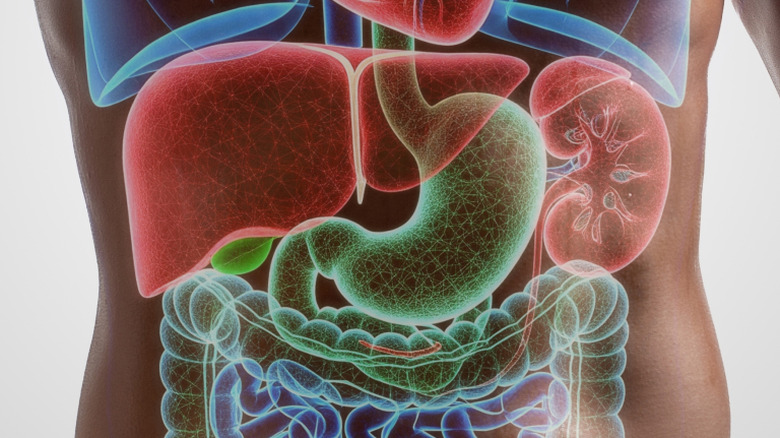
Sleeping on either side is beneficial for respiratory health, but the reason to specifically sleep on your left side is mainly about digestive health. If you frequently find yourself waking up in the morning with heartburn or stomach pain, you're probably experiencing acid reflux while you sleep. Acid reflux occurs when stomach acid moves in the wrong direction, getting into your esophagus and causing burning pains in your chest. It can happen occasionally — or chronically as part of a condition called gastroesophageal reflux disease, or GERD. It's a very common issue for both adults and children, and sleeping on your left side is one of the simplest ways to ameliorate it.
When you lie on your left side, your esophageal sphincter (the barrier between the stomach and the esophagus) is elevated above the stomach, but when you lie on your right side, the sphincter falls below the stomach. When the esophageal sphincter is below the stomach, gravity can pull stomach acid down through it and into the throat, causing acid reflux. This position also makes it harder for food and drink to move through the digestive tract in general. Switching to your left side elevates the sphincter above the stomach, making it much harder for any acid to leak through it. It also ensures that you can properly digest whatever you had for dinner while you sleep. These benefits can make the mornings a little easier on your tummy.
Sleeping on the left side has additional benefits for pregnancy
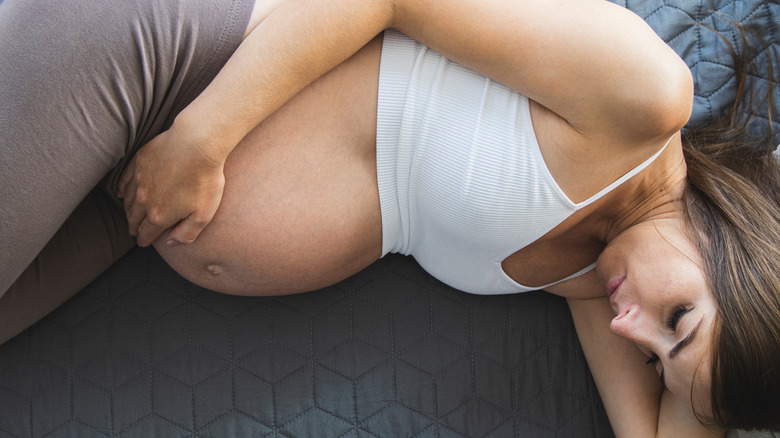
Sleeping on your left side can benefit almost anybody, but if you're pregnant, it's especially important. All of the problems associated with sleeping on your back are amplified by the added weight of a developing fetus. If you sleep on your back, pregnancy creates even more pressure on the spine and digestive system, and you could even develop sleep apnea (if you don't have it already) as the weight in your abdomen increases. In later stages of pregnancy, sleeping on your back can actually become dangerous, as the weight of the uterus presses directly on the inferior vena cava, the largest vein in the cardiovascular system. This can obstruct the flow of blood to both parent and child, which is why doctors consistently recommend that you sleep on your side if you're pregnant, especially in the final trimester.
Pregnancy is another case in which whether you sleep on the right or the left side actually makes a difference. Sleeping on your left side is more conducive to a healthy pregnancy because it maximizes blood flow to the uterus, ensuring a good supply of oxygen and nutrients to the developing baby. Sleeping on the left side can also help to reduce swelling in the legs and ankles, which is a very common side effect of pregnancy. For the optimal sleep during late pregnancy, tuck the knees up just slightly, and place a pillow between them.