

Newborn Baby Smell: The Science Behind This Phenomenon
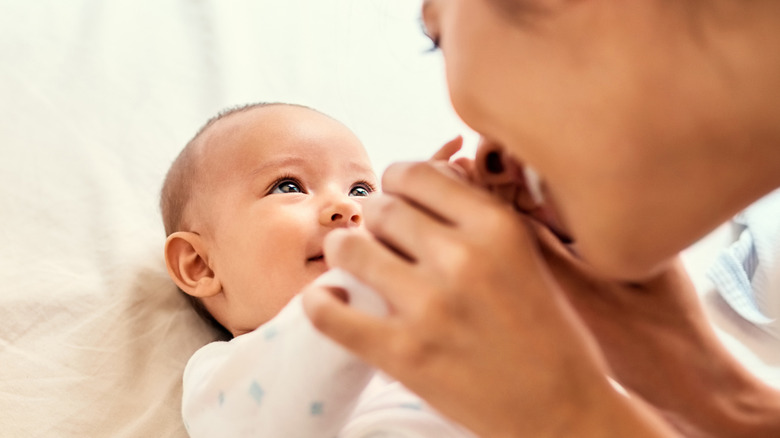
We've all heard or said some variation of a common expression: "There's nothing like the smell of a newborn baby." But what is that newborn smell, exactly? For many people, babies invoke scents of sweetness, freshness, and cleanness, with an aroma that's often compared to that of soap, fresh bread, and milk. Tellingly, a newborn's parents are most susceptible to noting the fleeting-yet-intoxicating scent of their baby. This is because the phenomenon all boils down to the evolutionary adaptation to protect and care for our vulnerable and helpless offspring.
Our sense of smell is subjective, as different species prefer different scents over others. For example, dogs have no problem sniffing a urine-marked lamppost, while the same smell can make people gag. Then, there's the feline aversion to lavender — the plant is toxic to house cats — but many people happily fill their house with the stuff. Indeed, our species' sense of smell is a finely-tuned tool for detection (and some are stronger than others). Smells tell us what is edible, toxic, and — as in the case of newborn babies — in need of care and protection.
As with most biological phenomena, the newborn baby smell is all about survival. Studies have shown that the scent of a newborn activates the parts of the brain associated with reward, pleasure, and comfort. These are the dopamine pathways of the brain, which keep us coming back for more. Such good feelings ensure that parents remain close to their child, which, in turn, helps develop an emotional bond. Tellingly, the newborn baby smell only lasts for the first few weeks or months. By the time it's replaced by less-than-rewarding smells (like a full diaper or puke), parents will already have begun developing the emotional bond that ensures they take care of their child.
The chemical cocktail that makes up the newborn baby smell
The smell of a newborn baby is so distinct that it's hard to describe. Most people prefer to compare it to other smells — buttered mashed potatoes, rising bread, warm milk, flowers, even fresh yeast. These descriptions aren't too far off the mark. Much of the baby smell is indeed "fresh" because babies' body odors lack the bacteria, fats, and other organic compounds that adults emit from their bodies as they age.
For example, baby sweat is different from adult sweat. Newborns' apocrine sweat glands don't activate until they hit puberty, so only their eccrine glands produce sweat. Apocrine glands release an odorous, oily, fatty smell, while a baby's eccrine glands only release salt and water. Then, there's natural baby skin oils. These lack the musty-smelling organic compounds that contribute to the "old people smell," which explains why we find babies fresh-smelling. Even a mother's milk can add to the mix. Small wayward drops of sugar-rich milk can contribute to a baby's sweet aroma.
It's sometimes proposed that the newborn smell comes from residual amniotic fluid left on a baby's skin. This would explain why the smell dissipates within about a month and a half. However, according to a 2019 study by Japanese researchers, amniotic fluid is only a small part of the overall picture, if at all. Instead, it appears that the entire cocktail of fresh new baby odors is necessary to trigger the hormones that encourage us to keep babies close and safe. Such hormones include dopamine and oxytocin — the "love hormone." Across the timeline of human evolution, it would seem we've adapted to find the smell of newborns attractive, which means babies have smelled lovely for a very long time.