

Did The Modern World Kill This Human Sleep Habit?
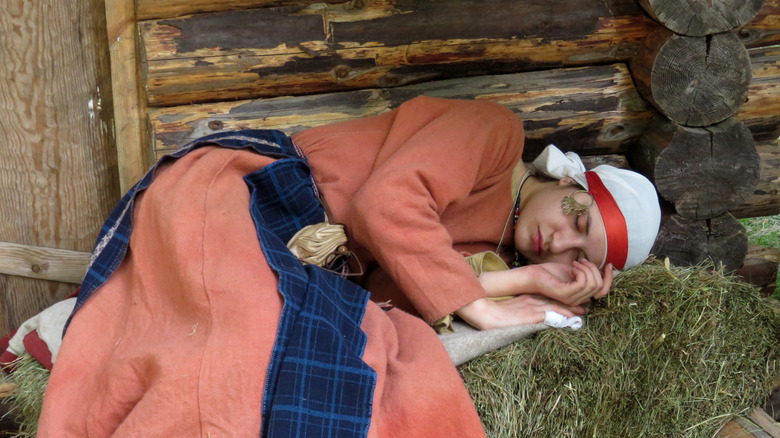
When it comes to the sciences, the study of sleep is remarkably young. Rigorous studies of sleep and sleep patterns only emerged in the 19th century. To study sleep patterns before then, one has to delve into nonscientific sources such as histories, diaries, and novels. Roger Ekirch, a history professor, did exactly that and claims that humans used to have a biphasic sleep pattern — sleep for a few hours after sunset, wake up for an hour or so in the middle of the night, then sleep until dawn — which we lost with the advent of widespread artificial light.
Ekirch's theory — laid out in American Historical Review — is compelling. It looks at a number of sources from Medieval and Renaissance England, and asserts that "consolidated sleep, such as we today experience, is unnatural." That's a bold claim and one that is generally accepted as received wisdom in many places on the internet, but the investigative tools of the humanities, which Ekirch uses draw his conclusions, aren't really equipped to properly explore what constitutes "natural" sleep.
When you dive into the science of sleep patterns, there does seem to be a shred of truth to his theories. But as with all things, the full story is more nuanced and fascinating.
What is the evidence for biphasic sleep?
The vast majority of Ekirch's evidence is literary and epistolary, meaning it does not meet the rigorous standards set by modern science, but he does present a lot of sources that mention "first sleep" and "second sleep." On top of that, there are scientific studies that corroborate his conclusions.
A 1992 study, for instance, changed the photoperiod (amount of time exposed to light) of seven subjects from 16 hours to just 10 for four weeks. During the experiment, all of the subjects adopted a polyphasic sleep pattern, with most adopting a biphasic pattern. Another article from 2017 studied 21 people from rural Madagascar who lived without electricity, and those researchers found that their default sleep pattern was biphasic as well.
In a similar vein, multiple studies have found that groups without access to electricity tend to get more sleep at night. For example, a 2015 study in Journal of Biological Rhythms looked at the sleep patterns of two closely related indigenous groups in Argentina — one with access to electricity, and the other without. The researchers discovered that the group without electricity tended to sleep more due to sleeping earlier thanks to the lack of artificial light.
The case against biphasic sleep
Despite the popularity of the idea that biphasic sleep is the "natural" sleep pattern for humans, there seems to be just as much evidence against it as for it. Remember that 1992 study that shortened the participants' photoperiod? Those subjects were kept in a dark room for 14 hours and not allowed to do any activities. And that study in Madagascar that found the subjects' sleep patterns were biphasic? It also found that those individuals slept less and had lower quality sleep than their electrified contemporaries. Moreover, their biphasic sleep patterns could have been a result of their local environment.
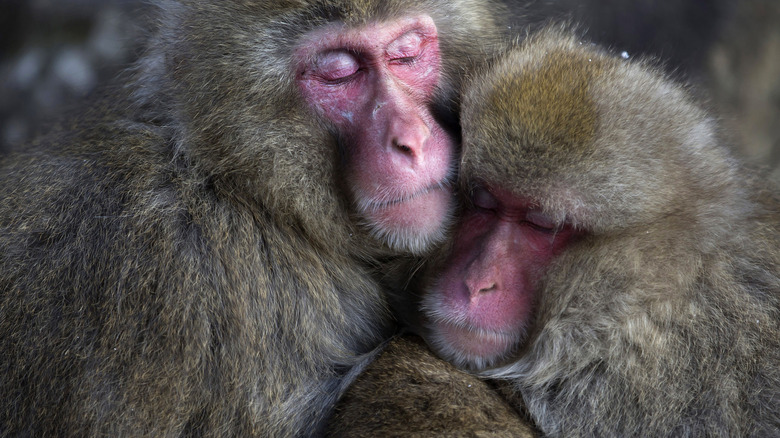
A 2015 study, for example, looked at three pre-industrial groups in Africa and South America and found that all had monophasic sleep, and evolutionary biologists note that monophasic sleep is the norm for all of the higher primates (whereas elephant sleep patterns are biphasic). Human sleep is probably neither biphasic nor monophasic. And while tiny fish might be the key to understanding the evolution of sleep more generally, a 2016 article examining specifically the evolution of human sleep suggests that our ecology is the primary driver of sleep. Our "natural" sleep patterns are driven more by our risk of predation and need for food and socialization more than anything inherent in our biology.
Ekirch's historical analysis of sleeping patterns primarily encompasses the U.K. and Western Europe, which is mostly north of 40 degrees latitude. That means that the shortest night of the year will have at least nine hours while the longest will have 15 or more. If humans are assumed to be abed from dusk 'til dawn, and adults need no more than eight hours of sleep (in fact, too much sleep might actually have negative effects on your lifespan), the emergence of a biphasic sleep pattern is unsurprising, but it's not necessarily "natural."