

The Final Sense The Human Body Loses Before Death, According To Science
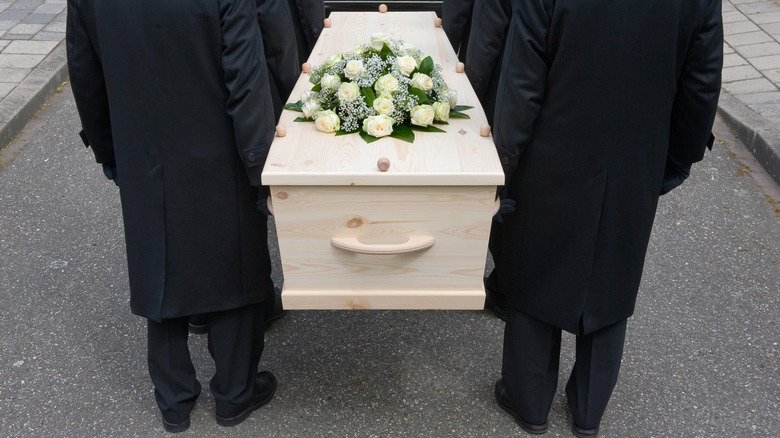
Life's greatest mystery is what happens when it ends. Throughout all of human history, people have been pondering the experience of death, and from culture to culture, everyone has their own theory about what happens when we take life's final bow. Scientists are no exception to this trend, as extensive research has been done to find out what it feels like to die, both from a physical and mental standpoint. Of course, the dead can't share their experiences with us, but many people who have had near-death experiences report a common theme. They feel like their life is escaping through the loss of sensory perception, and a growing body of research suggests that the one sense that lingers the longest is hearing.
Doctors have suspected this may be the case for some time now. An NYU study published in Resuscitation surveyed people who were revived from cardiac arrest with CPR and found that 21% of those who survived felt awareness, and in some cases, that including hearing, even after their hearts had stopped. While it's only anecdotal evidence, stories like these have inspired a deeper exploration of the dying brain with help from modern medical technology. The most fascinating discoveries have come from conducting MRI (Magnetic Resonance Imaging) scans on dying hospice patients — strangely fitting, given that the MRI, created in the 1970s, is still among the greatest medical inventions of all time. The results indicate that certain parts of the brain do remain active longer than others at the end of life, and the nervous system continues to react to sounds almost up to the moment of death.
MRIs suggest that hearing could last even after your heart stops
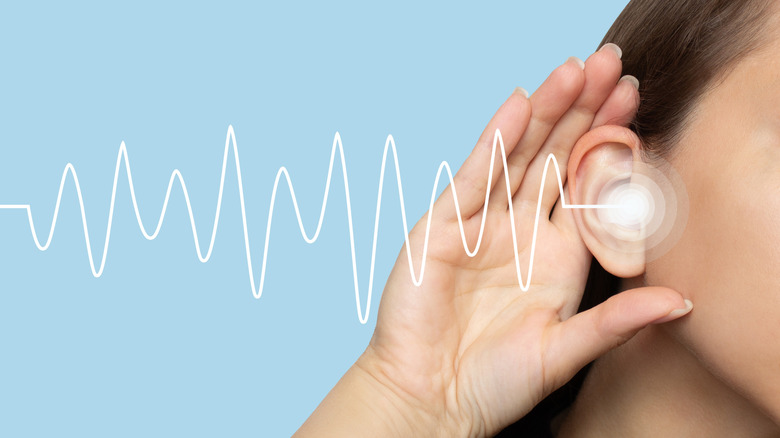
In a groundbreaking study published in the journal Science Reports in 2020, a medical team from the University of British Columbia recorded electrical activity in the brains of dying hospice patients. They looked for event-related potentials (ERPs), which are voltage changes in specific parts of the brain activated by certain stimuli. The researchers played varying audio samples to the hospice patients, and discovered that ERPs still occurred even after the patients were unconscious. This points to the brain continuing to process sounds up to the final moments of death.
Scientists already knew that parts of the body survive after death; all of the cells don't shut down in one moment. A person can be declared legally dead if their heart and lungs cease functioning, but the brain doesn't necessarily go at the same rate, nor vice versa. In a fascinating case, reported in Frontiers in Aging Science, an 87-year-old was having a CT scan for epileptic symptoms when they abruptly suffered cardiac arrest and died, inadvertently creating a scan of death itself. The results showed that brain waves decreased upon death (no surprise there), but gamma brain waves degraded slower than other types. Gamma brain waves are associated with high alertness, and notably play a fundamental role in auditory processing. This proves that at least one part of the neurological mechanism for hearing stays active beyond the heart and lungs, and even the rest of the brain.