

Scientists Finally Crack Antarctica's Blood Falls Mystery
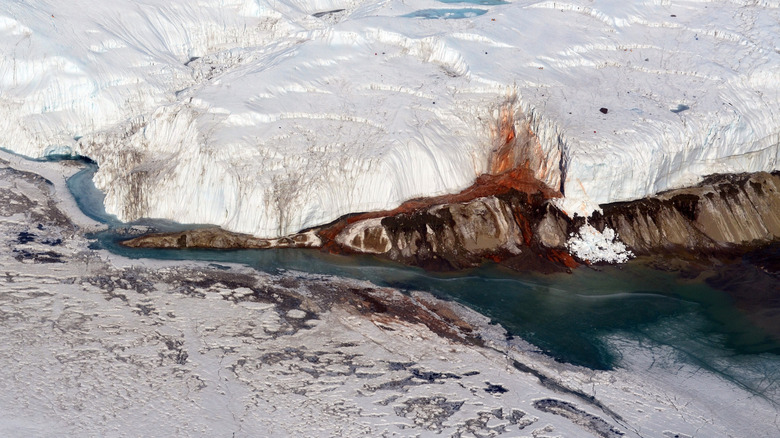
Deep in Antarctica, at the bottom of the Earth, is a stream that flows red. The aptly named Blood Falls is anomalous in a number of ways. There is the matter of its distinct color, which has piqued the interest of scientists and sight-seers alike. Additionally, it is on the coldest known glacier with consistently streaming water. The average temperature in this area is 1.4 degrees Fahrenheit. Researchers have now uncovered some of its tantalizing mysteries. The reason Blood Falls continues to move: pressure.
The earliest record of Blood Falls is from over 100 years ago. In 1911, a British geographer named Thomas Griffith Taylor is said to have made the discovery, leading to the location's name: Taylor Glacier. The explorers made note then of the seeping red liquid at this glacial site, and scientists struggled to explain it for over a century. However, three separate measurements of Blood Falls in 2018 would provide researchers with all the right pieces to finish the puzzle.
One mystery after another
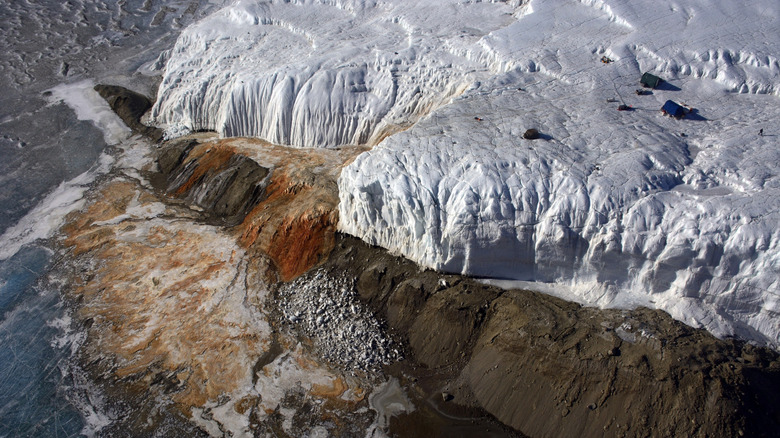
The water flowing on Taylor Glacier does not freeze. This is due to the level of salt in the water. Think about how wintry places lay salt on the roads and sidewalks ahead of a snowstorm. The same principle applies here. This salty water that does not freeze is referred to as brine. But this presented a whole new mystery about Blood Falls, because Taylor Glacier is clearly composed of frozen freshwater. So, where did this brine come from?
Using a large electromagnetic instrument, researchers found ancient groundwater beneath the glacier. Therefore, the source of brine was revealed. This particular brine is also iron-rich, which solves the bloody aspect of this mystery. The iron is oxidized when introduced to the open air as Blood Falls flows, causing it to turn that distinct, rusty red. While the source and color of the Falls was uncovered, that generated the remaining mystery of how brine from this ancient river makes its way out of the glacier.
Serendipity leads the way to discovery
As reported in a paper published in Antarctic Science, Peter T. Doran and his colleagues would use GPS data, water temperature measurements, and camera imagery, all collected from September through October 2018, to study the onset of a Blood Falls flow event. They were able to determine that, during the flow event, the pressure of the water beneath the glacier was reduced. As the ice creeps along, pressure builds in the subglacial channel. Eventually, the pressurized brine seeps through the cracks of Taylor Glacier in bursts. And there you have it: Blood Falls.
The extended release of brine during the recorded event slowed the movement of the glacier, making that glacial speed, well, even more glacial. Of course, the dataset the authors were working from had a limited time frame, and future studies should explore more long-term effects. This would allow researchers to examine how changes in temperature over time affect this process.
It is fascinating that three separate measurements and recordings (imagery, GPS, and temperature) made simultaneously over seven years ago could lead to such a groundbreaking discovery. The authors of this study refer to it as serendipitous. Sometimes luck just might be on the side of science.