

Why The Sound Of Chewing Might Drive You Crazy

Sometimes it's really the little things. A loudly chewed chip, a repeatedly clicked pen, a nearby person with very audible breathing — these things might just set you off. A noise that could appear universally irritating might cause you to feel an overwhelming sense of rage, stress, or disgust. If certain sounds generate a large emotional response that feels beyond your control, this might be a sign that you have a disorder called misophonia.
People who have misophonia are triggered by specific noises into a state of fight-or-flight, which can result in anxiety and intense anger. Both triggers and responses can vary depending on the person. Some people might be completely fine with open-mouthed chewing but become triggered by yawning or a dripping faucet, and vice versa. Likewise, some people might have difficulty regulating their responses internally but refrain from taking action, while others might feel out of control and behave impulsively. However, behavioral outbursts are more commonly observed in children.
There continues to be a rich and contentious debate within the scientific community as to whether misophonia is, in fact, its own disorder. While not existing within the Diagnostic and Statistical Manual of Mental Disorders, researchers across various disciplines developed a consensus definition in 2022, which classified misophonia as a disorder. Given that this is such a recent development, research and understanding are limited and can only continue to grow.
What we know about misophonia
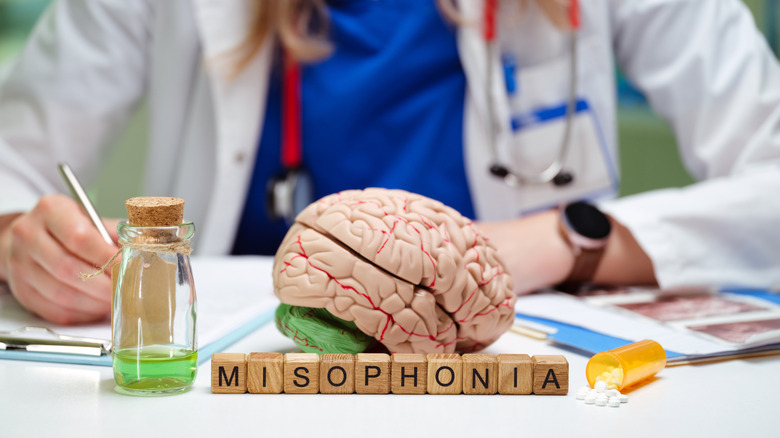
Because the scope of research as it exists now is so limited, it is difficult to determine exactly how common this particular condition is. Current estimates suggest that about 20% of people experience misophonia. So, if you have experienced this, you certainly are not alone. Some research shows that it is more common in women, although other studies reveal no difference in prevalence based on gender.
Other disorders might put you at a higher risk of misophonia. These include various conditions, such as attention-deficit/hyperactivity disorder, post-traumatic stress disorder, and tinnitus. Within audiology, misophonia is, in fact, typically considered a subtype of another auditory disorder known as hyperacusis, in which sounds are perceived at an uncomfortably loud volume.
The neurological reason for misophonia is unknown. A 2019 study using functional magnetic resonance imaging demonstrated that playing auditory triggers for patients with misophonia resulted in greater activity in the insular cortex, anterior cingulate cortex, and temporal cortex of the right hemisphere compared to other auditory cues. These areas of the brain are important for both auditory and emotional processing. Therefore, there is potentially some disruptive functioning in these parts of the brain which could lead to symptoms of misophonia.
While there is no known cure for misophonia, therapy can be useful in mediating symptoms and developing healthy coping mechanisms. Moreover, there are support groups and clinics specifically for patients with misophonia. These resources can provide you with tools to approach auditory triggers when they occur.