

The Genetic Lifeline Aging Men Lose (And Why It Matters More Than You Think)
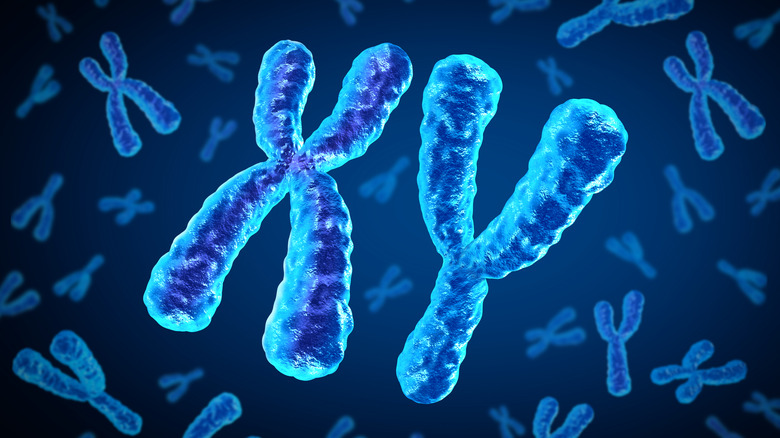
Many men are unaware of the fact that, as they age, they are losing the very thing that makes them men. No, this isn't some rant about masculinity; biological males are literally losing their Y chromosomes. The phenomenon has long been understudied because, while the Y chromosome determines biological sex and plays a role in sperm production, it doesn't appear to do anything else (it suffices to say there are some differences between the chromosomes of those born male versus female). It has by far the fewest genes of any human chromosome, with something around 50 protein-coding genes compared to roughly 900 in the X chromosome. It is also the only chromosome that can be removed from a cell without killing that cell, which led to the assumption that men can survive just fine without it. However, a growing body of research is linking Y chromosome loss to early death, and potentially, complete human extinction.
A medical literature review published in Reproductive Medicine and Biology in 2022 estimated that more than 40% of men over the age of 70 have lost the Y chromosome in some of their cells. It appears to be the most common form of acquired chromosomal abnormality, and in rare cases, it's even been observed in children and fetuses. This comes at an alarming cost, as Y chromosome loss has been linked to a growing number of life-threatening issues, including cancer, heart disease, fibrosis, and Alzheimer's disease. Research into the causes and effects of the phenomenon is a young field, and it shows just how little we know about this particular chromosome.
Scientists aren't really sure what the Y chromosome is doing
The Y is perhaps the least understood of all chromosomes, the last in the human genome to be fully sequenced. It took until 2023 to do so because the Y chromosome has no paired chromosome and thus accumulates a lot of repetitive DNA sequences that defy standard genetic decoding methods. This all means that scientists actually have very little idea of what the Y chromosome does beyond the basic sex stuff. It was long assumed that was it, but it appears that assumption was wrong.
The first major study to set off alarm bells about Y chromosome loss came in 2014. An analysis of 1,153 elderly men in Sweden, published in Nature Genetics revealed that men with Y chromosome loss lived an average of five and a half years less than men who didn't. The loss has been implicated in several leading causes of death, including heart disease and Alzheimer's; however, the mechanisms behind that are poorly understood. One area where doctors are making great progress, though, is with the link to cancer.
Y chromosome loss is seen in a high number of male cancer patients, especially those with bladder cancers. A 2023 study published in Nature provided a possible explanation. The loss of Y chromosomes appears to weaken T-cells, one of the two main types of immune system cells. Weakened T-cells make it harder for the body to fight disease, and cancerous tumors can take advantage of this.
The Y chromosome could disappear altogether
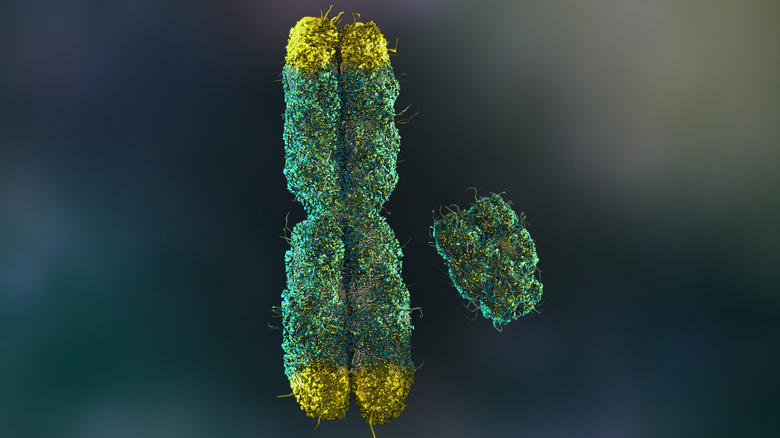
With the Y chromosome finally sequenced in full, the medical community has started to take a closer look at this long-understudied part of the male genome. Already, evidence is mounting that could help to explain longstanding medical quandaries like why males have higher rates of most cancers than females. However, this may not have always been the case, as the Y chromosome has also been undergoing a dramatic change across several mammal species.
Both the X and Y chromosomes evolved from older, non-sexual chromosomes approximately 180 million years ago, after the Triassic Period, in which mammals first emerged. At that time, the Y chromosome was just as large as the X, but over the millennia, the Y began to decay. Another study published in Nature estimated that the human Y chromosome today contains just 3% of its original genes, while the X chromosome is almost unchanged with 98% of its original genes still present.
If the Y chromosome continues to lose genes at this rate, it will disappear from the human genome entirely in about 4.5 million years. That would spell the end of our species ... unless, that is, a new chromosome evolves to replace Y. This has been observed in some rodent species like the mole vole and spiny rat. They have lost the Y chromosome altogether, transferring key genes to a different chromosome. It's even possible that the human male could be replaced by an entirely new biological sex.