

The Morning Habit Scientists Don't Want You To Try

It's the easiest thing to do. As soon as you wake up, you reach for your phone to turn off the alarm. Then you see all of the notifications that have appeared on your lock screen. Naturally, you peruse those emails and messages and news updates. Maybe you scroll for five minutes or maybe you scroll for an hour or more. But you can probably already guess that this is not the best thing for your health.
While thorough studies on the biological effects of checking your phone immediately upon waking are sparse, there are some things we know separately about phone usage and about sleep health that indicate why it's a good idea not to immediately reach for that phone. First, we know that waking is a process and can sometimes be a particularly slow process in cases of sleep inertia. This is especially true when wake times differ or after bouts of sleep deprivation.
We also know that blue light from phones increases alertness, and this could seem like a great solution when you are struggling to keep your eyes open. However, while you might want to short-circuit that grogginess, your brain isn't necessarily on the same page. Though access to the world through your phone is nearly immediate, it takes some time for your brain to come back online. Introducing cues for alertness before your brain is prepared can lead to heightened stress.
The endless morning doomscroll

Another issue is that this habit can easily lead to uninhibited scrolling. Research indicates that one of the last things to boot up in your waking nervous system is the prefrontal cortex, which is responsible for executive functioning and skills like problem-solving and self-control. So, what might initially be intended as five minutes of scroll time could become much longer and make getting out of bed to start the day that much harder.
Something else to consider is the type of content you are engaging with. One study found a small association between mass tragedy media exposure and increased anxiety. Although the relationship of news sites to anxiety has generated conflicting results, there is some evidence to support that exposure increases anxiety in certain people. Therefore, if you are more susceptible to developing a strong emotional response to the news, it's probably best to avoid those triggers early in the morning.
Overall, high levels of screen time are associated with poorer mental health outcomes. So, exercising moderation when using your phone appears important for positive outcomes. However, if inhibition is already low in the morning, putting down the phone soon after you awake can be a greater challenge than at other times of the day. In addition to potential mental tolls, this could also disrupt engaging in more positive morning habits, like a relaxed stroll or meditation.
How to break your doomscrolling habit
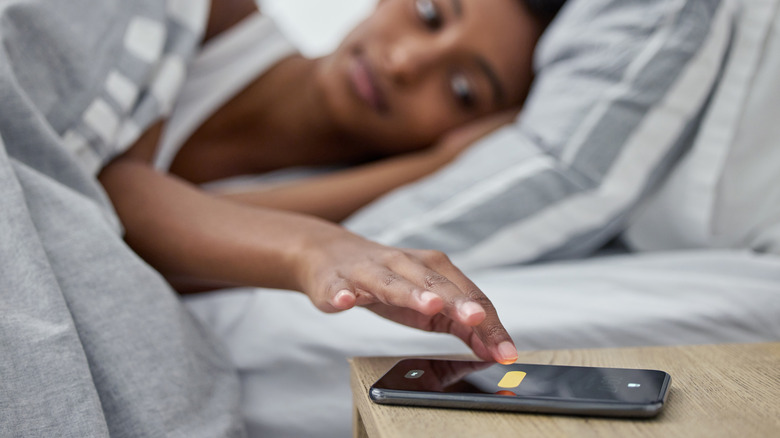
If you are someone who wakes up and reaches for your phone, do not feel bad. This is a completely normal habit. Approximately 84% of people in the United States go on their phones within 10 minutes of waking up, so you are certainly not alone. Sometimes it feels like our entire world is on our phone, and one way to break this habit is to spread out that world.
For instance, using an old-fashioned clock as opposed to the alarm on your phone can help change that first morning step. If you have one laying around or can afford to make the purchase, switching to a digital or analog clock cuts out the need to put your phone beside you as you sleep. Plus, hitting an actual button to snooze is kind of fun. But, if that option is unavailable to you, try putting your phone on Do Not Disturb or Airplane Mode. This will stop that swarm of notifications from being the first thing you see when you wake up.
You can also try to give yourself something else to engage with that you look forward to in the morning. For instance, you could read a book, take your dog for a walk, or place a piece of candy in a different room to motivate you to leave your bed (although, your dentist might not be a fan of that last one). Developing new habits takes practice, whatever you decide.