

Your Neanderthal DNA Is More Complicated Than You Originally Thought
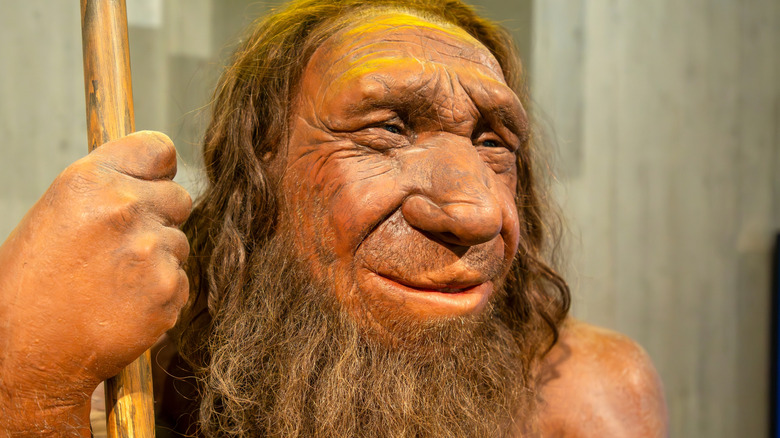
The timeline of human evolution has featured quite a few different hominids. Apart from our very own Homo sapiens, perhaps none of them is as famous as H. neanderthalensis, aka Neanderthals. We know for a fact that the two groups overlapped and interacted for thousands of years before Neanderthals went extinct an estimated 35,000 to 24,000 years ago. We also know that this period of coexistence led to Neanderthals mating with humans, but the sexual politics of those couplings may have been more complicated than it would seem at first glance.
The remnants of these unions still linger, and in particular European and Asian populations can still have up to 2% Neanderthal DNA. Now, new research published in Human Genetics suggests that the mating dynamic between Neanderthals and H. sapiens worked in a very specific, surprising way: Human women and Neanderthal men mated disproportionately more often than it worked the other way around.
Researchers discovered this by studying the genomes of Neanderthal-free African populations, as well as Neanderthal chromosomes. "What we found was a striking imbalance," study co-author Daniel Harris said in a press release. "While modern humans lack Neanderthal X chromosomes, Neanderthals had a 62% excess of modern human DNA on their X chromosomes compared to their other chromosomes." After the discovery that Neanderthals had ample H. sapiens DNA in their X chromosomes in particular, they determined that the most likely cause was a mating preference between Neanderthal males (who only had one X chromosomes they could pass along) and Homo sapiens females (who have two).
The new findings raise interesting questions about attraction between the two groups
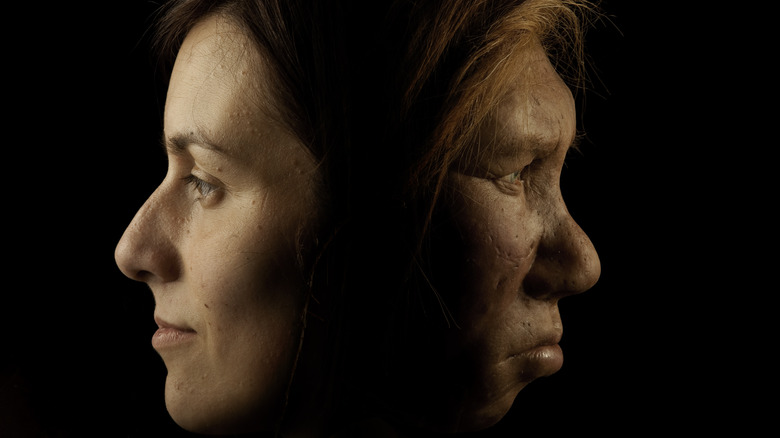
Men and women pass on their sex chromosomes, aka allosomes, in a different way. Since women have twice the amount of X chromosomes compared to men, this means that a combination of a Neanderthal father and a H. sapiens mother wouldn't allow as many Neanderthal X chromosomes to linger in human genetics, which in turn would explain the comparative "Neanderthal desert" in human X chromosomes.
Of course, this discovery only addresses the cold, hard science of the situation. It doesn't actually explain what social and behavioral patterns led to this particular procreation bias between the two groups. Scientists find these questions fascinating, as well. "The idea of mate preference driving this bias is certainly compelling," evolutionary biologist Matilda Brindle of the University of Oxford told National Geographic. "What was it about Neanderthal males that (modern) human females found so sexy, or vice versa?"
While we may have a tough time finding out just what brought Neanderthal men and H. sapiens women together so often that it actually affected both groups' genomes, the study does show one thing. If you have a trace amount of Neanderthal DNA in your ancestry, one of your ancestral grandmothers very likely got busy with a Neanderthal guy back in the day.