

The Real Reason Waiting In Line Feels Like An Eternity
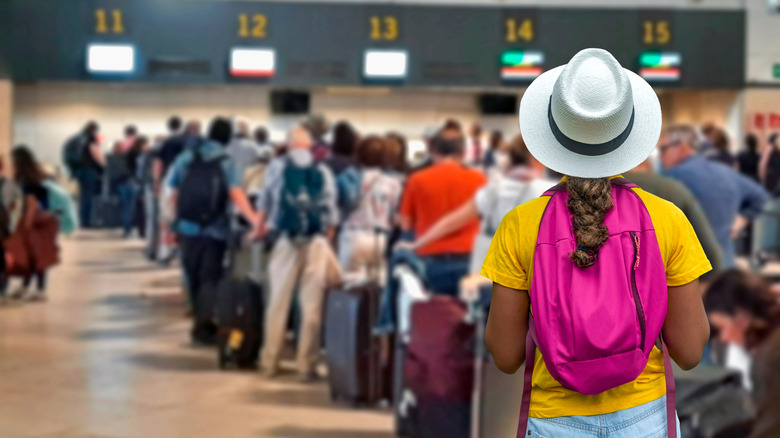
Even in today's fast-paced, same-day delivery world, it's often necessary to wait in line. However, sometimes a 30 minute wait seems to go by in a flash while a five minute delay feels like eons. Some scientists consider the passage of time to be one of the main human senses. Many organizations have done extensive research into how best to improve queueing behavior and reduce wait times, but the psychology involved in waiting is just as important. Anxiety about how long a wait will take, perceptions about the wait time, and the physical and social environment can influence how people interpret the passage of time.
Having a better understanding of psychological factors affecting the perception of time can help people prepare for waits. At the same time, such an understanding can give organizations like airports, doctors' offices, and grocery stores ways to change public perception of their wait times while they work to move people through faster. People tend to remember how long a wait felt, meaning the emotions they attach to the wait can be more important than the time spent.
Why time seems to drag while waiting

A big part of perception of wait times lies with the physical and social environment. Someone standing in line filled with strangers in a silent and otherwise empty room will feel like their wait took a long time. In contrast, someone waiting in a room with art on the walls or music playing, or someone waiting with friends would perceive the same wait time as being more bearable and thus shorter.
Another aspect of the perception of waiting lies in the reason someone is waiting. Anxiety has a profound effect on how we perceive the passage of time. In fact, during stressful events people often report that time seems to slow down. So someone unsure about getting a seat on a flight or a person waiting for medical test results will perceive the wait more unfavorably. People will also be more tolerant of long waits if they see what they're waiting for as valuable or exciting. This can be seen in the way someone would be more willing to wait an hour to get a table at an exclusive restaurant than they would be to wait half as long at a fast-food place.
Uncertain, unexplained, and unfair waits also dramatically color perceptions of time. Knowing why something is taking so long, how much longer it will take, and why other people are moving through the line at different speeds can improve the experience of waiting.
How to make waiting less painful

Waiting can be annoying and time consuming, but knowing the reasons why two waits of identical length can feel different is the first step toward making waiting more tolerable. Being prepared for delays can make them easier to deal with. Similarly, bringing a book to read or friend to talk to can help make the time seem to pass more quickly.
Organizations can also use this understanding to make waiting easier. Giving people places to sit or making the environment more interesting through décor, background music, or giving people something to do while they wait can go a long way. This is one reason why restaurants will sometimes pass menus out to people who are waiting. Better communication practices that let people know how long a wait should take and whether there are any factors that could cause delays can also improve perceptions. People tend to be more patient when they know what is happening. Organizations have also found that progress bars or delivery trackers, even if they don't provide useful data, can give people a sense of control and reduce uncertainty.
Having better understanding of the psychology involved in our sense of time can help make those occasions where we have to wait in line more tolerable. Delays might be inevitable, but with the right physical and social environment and clearer communication, a 10 minute wait might feel like less of an ordeal.