

The Freshwater Animal That's Unsettlingly Dangerous
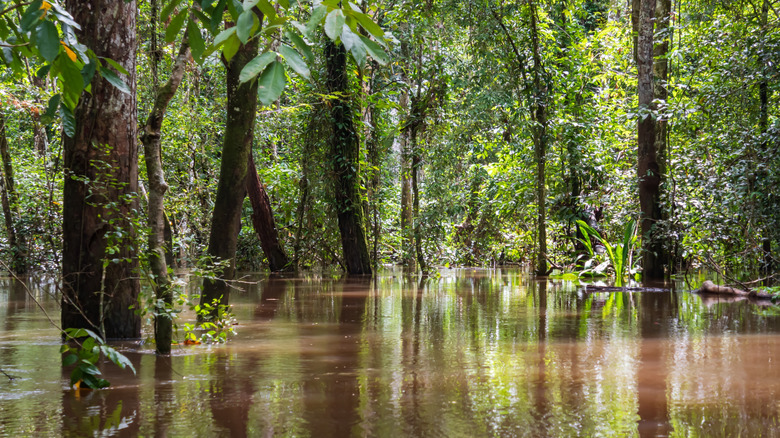
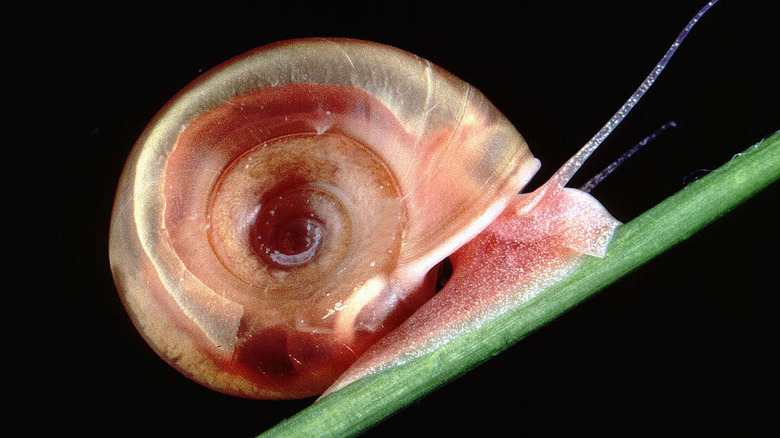
Lions, tigers, and bears may inspire fear, but when it comes to human deaths these beasts don't even crack the top 10. What's truly surprising though is how the small and slow freshwater snail contributes to thousands of deaths per year. Although they lack teeth and claws, these water dwellers are hosts to a genus of parasitic worm known as Schistosoma, a type of trematode associated with a disease that leads to an estimated 200,000 deaths per year.
Of the various species of Schistosoma, six are known to infect humans. Approximately 250 million people, mostly in Asia, Africa, and South America, are at risk of infection. Freshwater snails host larval forms of Schistosoma, which swim out into the surrounding water. Once they encounter a human, these larvae penetrate skin and enter the bloodstream. Inside the body the larvae grow into adults and the females lay eggs. Some of the eggs pass out of the bloodstream into the urinary and digestive systems, where they exit the body through urine and feces. However, adult worms and eggs that aren't excreted can cause an illness known as schistosomiasis or snail fever.
A hazard in the water
Schistosomiasis has been observed in 79 countries, most of them in tropical and subtropical regions. Poor communities that lack adequate sanitation and access to safe drinking water are the hardest hit. This is because Schistosoma eggs in urine and feces end up in the water that people fish in, drink, and use for household chores and agriculture. Therefore those who work in agriculture and fishing are more likely to be infected as are women who do domestic tasks like washing clothes in contaminated water. Children who play in unsafe water are also at a high risk of infection.
Schistosomiasis is mostly caused by an immune response to eggs that have become lodged in the body's tissues. Common symptoms include fever, chills, and muscle ache. The disease can also cause anemia in children. Other symptoms depend on where in the body schistosomiasis occurs. Intestinal schistosomiasis can cause abdominal pain, diarrhea, and blood in the stool. This form of the disease can also cause an accumulation of fluid in the abdominal cavity, leading to enlargement of the liver or spleen. Urogenital schistosomiasis commonly causes blood in urine, with more severe cases resulting in damage to the kidneys and bladder.
Multiple ways to control schistosomiasis
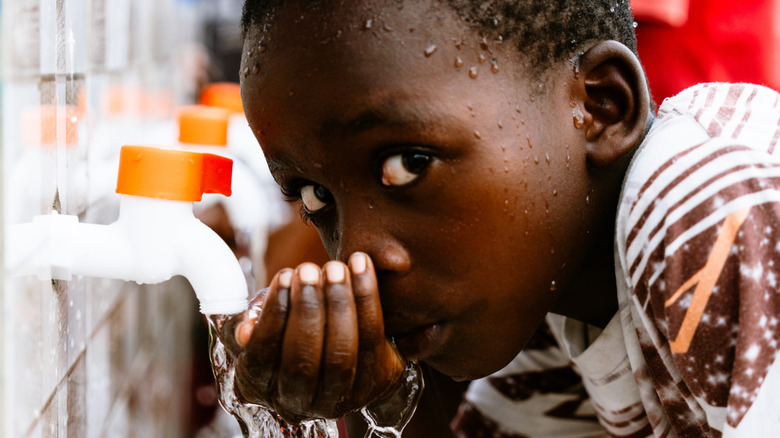
The most effective method for controlling schistosomiasis to date is large-scale preventive treatment of at-risk groups with praziquantel, a drug that kills worms in the blood stream. People who are most at risk for infection such as young children, adults whose work makes them more likely to be exposed, and communities where Schistosoma are more prevalent are targeted for routine preventive treatment. Other ways of preventing schistosomiasis include improved sanitation, access to safe drinking water, and education on hygiene and safety, all of which reduce exposure to the parasite. These methods have been successful at controlling schistosomiasis in some countries, though getting adequate amounts of praziquantel to fully prevent the disease is challenging.
Another emerging method to stop the disease involves controlling the freshwater snail population in affected regions. Human ecosystem impacts like building dams for agricultural irrigation are thought to have led to the loss of river prawns, a natural predator of freshwater snails. Reintroducing river prawns to these regions and removing or altering dams to allow prawns to return could help control schistosomiasis. One study by researchers at Stanford University found that areas where such ecological approaches are in use saw significantly lower rates of infection.
Such approaches are in their early stages, but when combined with other interventions, they could help reduce illness and death from schistosomiasis. In the future, a combined approach could make freshwater snails far less dangerous than they are today.