

The 12 Worst Ways To Die In Space Will Make You Think Twice About Becoming An Astronaut

We may receive a commission on purchases made from links.
The space near us is an increasingly busy place. Private companies are in space with an increasing presence, and NASA's Artemis program is slowly but surely gearing up to put more astronaut footprints on the moon. However, space is also a very dangerous place. The more humanity is turning its gaze toward the stars and other celestial objects, the more likely it is that people will die up there. What's more, there's every chance that some of those deaths are not going to be very pleasant at all.
Sciencing has taken a look at various bad things about space exploration before, and we've explored how space can permanently damage astronauts. This time, we'll take things one step further with a deep dive into the various truly horrifying ways that space travel can terminally influence the human body. Here are some of the truly worst ways a person can die in space.
You might get hit by a micrometeorite or space debris in orbit
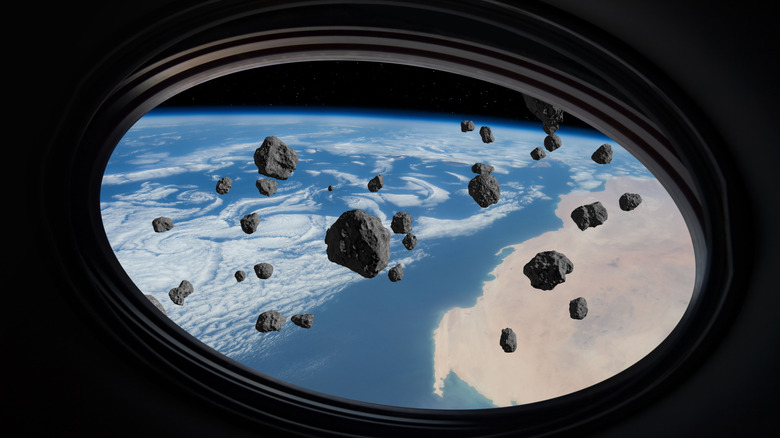
Many people don't realize what a staggering amount of space debris hits Earth daily. There's more of it hanging around in low Earth orbit, too, zooming around the planet at speeds of up to 18,000 miles per hour. A lot of this is man-made stuff: small bits and bobs that have broken off satellites and space shuttles.
Since there's an estimated 15,100 tons of human-made space debris, this creates a potential problem for any aspiring spacefarer who plans to spend any amount of time in orbit. This is something that the International Space Station is already dealing with, incidentally. In 2013, astronaut Chris Hadfield captured an image of a hole in the station's solar array, which resembled a bullet impact. This had been caused by either a small piece of space junk or a tiny micrometeoroid.
It can get worse, too. In 2025, China's Shenzhou 20 spacecraft was unable to carry out its mission after space junk impact cracked its windows. Experts are concerned about the risk space debris poses, especially since there's potential for a shrapnel effect where colliding space junk bits break and create even more pieces to zoom in orbit at incredible speeds.
Falling in a black hole would turn you into spaghetti ... or do something even stranger
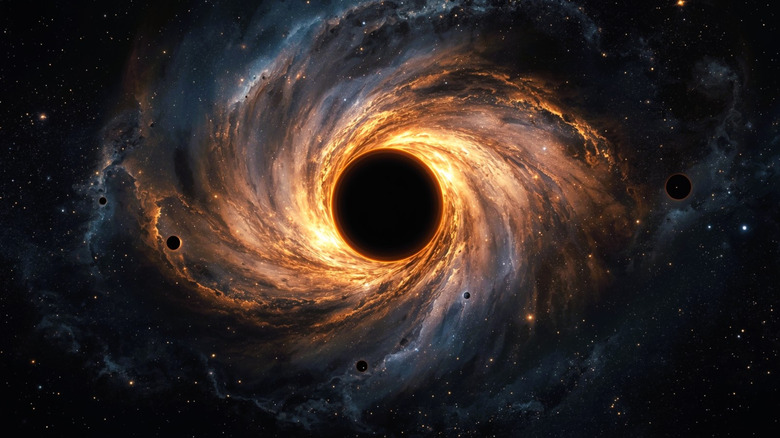
Black holes are the pop culture be-all and end-all of deadly space mysteries. Many movies and TV shows have explored them in some capacity, but it can still be hard to wrap one's mind around what a black hole can do to a human being.
There are plenty of big mysteries about black holes that science still can't explain. However, we do have some idea of what would likely happen if a person ended up falling in one ... and it's not very nice. Smaller black holes would "spaghettify" a human by simultaneously stretching and compressing the body into a very thin, long thing. The larger supermassive black holes wouldn't do that. Instead, they'd suck you in with their gravity, in which case you'd be trapped. Of course, there's also the theory of white holes; bright cosmic objects that spew matter out instead of sucking it in. It they exist, there's a chance that a person sucked in a black hole might end up coming out of a white hole, wormhole style. This might feel like less than a blink of an eye, though, and could actually take billions of years.
If that sounds like the kind of ride you might enjoy trying despite (or because) of all the potential weirdness, there's still one thing to keep in mind. You're just a squishy human ... while the forces at play are strong enough to rip stars apart.
Ending up near a gas planet would cause you to fall indefinitely until you're crushed
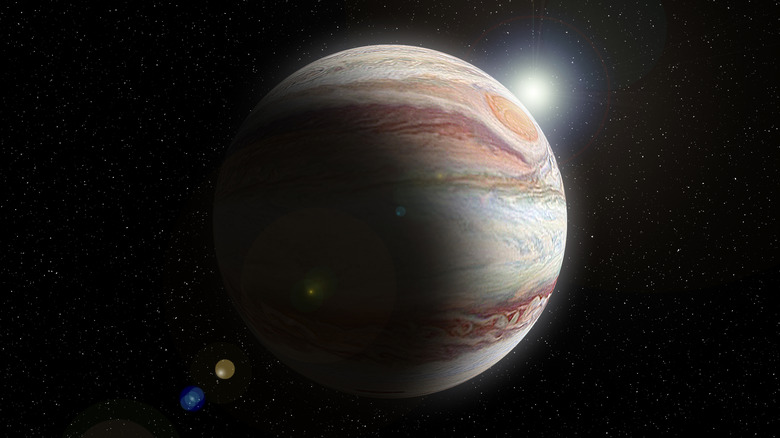
The sensation of falling in your dreams can be a jarring one. Still, it has nothing on what it would be like to fall through the atmosphere of a gas planet like Jupiter or Saturn.
Let's say that a person ends up plummeting toward one of those planets — or, for that matter, the equally gaseous Uranus or Neptune. It wouldn't be nice, to say the least. In fact, chances are that you wouldn't even make it very far, seeing as it's very cold high up in the atmosphere: Neptune, for instance, would slap a person with -330 degrees Fahrenheit. However, the further you fall, the worse it will become for your body. Because gas planets don't have a solid surface, you keep falling until you're in their very core, where the pressures are beyond crushing and the temperatures are scorching. Saturn's center could be as hot as 15,000 degrees Fahrenheit.
Fortunately, there's a silver lining of sorts. Since the atmosphere you'll face while falling will be a distinctly unhelpful cocktail of hydrogen with shades of water, methane, and helium, you'd likely just lose consciousness and perish without being forced to experience the forces that maul your remains.
Re-entry might mean a fiery death
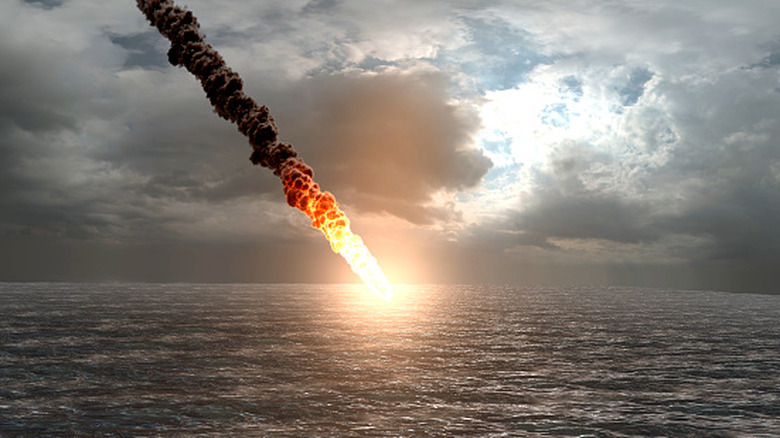
When a meteoroid enters Earth's atmosphere, it encounters friction from the air and rapidly heats up until it becomes a fiery meteor. It's an impressive phenomenon that can turn truly horrifying when you remember that all objects heat up a whole bunch when this happens. This includes spacecraft, which have to use some serious heat shielding if they want to survive the up to 6,998 degrees Fahrenheit they're subject to during re-entry.
Should this heat shielding be inadequate, the vessel and everything (and everyone) inside would be in serious trouble. The re-entry heat is so extreme that cargo ships hauling materials to the International Space Station are often disposed of this way. In 2023, the Russian Progress MS-23 cargo ship loaded up with ISS waste took mere minutes to disintegrate. The majority of it burned up entirely, and the little that remained ended up in the Pacific Ocean.
A gamma ray burst might cook you alive
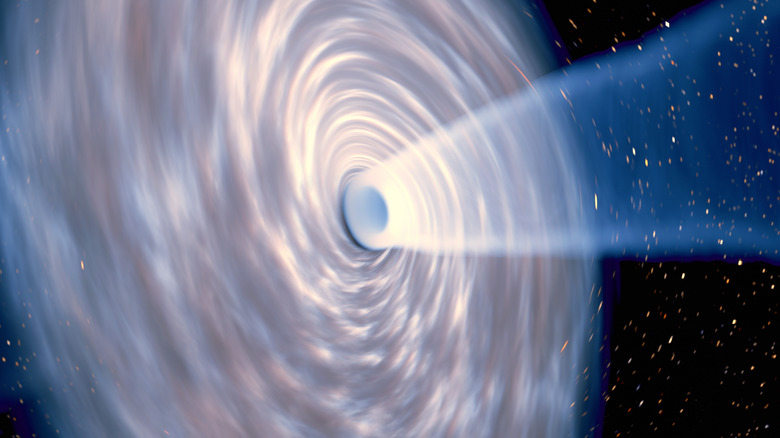
In extreme cases, a space-faring person might find themselves in the way of a truly massive cosmic force, such as the unfairly powerful phenomenon known as a gamma ray burst. These vast releases of energy happen when an aging star doesn't have enough fuel to sustain its thermonuclear reactions anymore, which causes it to give in to its own gravity and collapse on itself. This is a violent reaction that can take mere seconds, but it can release an amount of energy that exceeds our sun's energy output over 10 billion years.
One effect of this gigantic event is that the collapsing star's poles blast out powerful beams of gamma ray energy into space. Gamma rays are effectively particularly powerful photons that can be used in small doses to treat various ailments. In larger doses, however, they can be extremely harmful to human beings, causing severe health issues and sterilization.
In terms of gamma ray burst-level doses, these photons could potentially vaporize an entire planet from 200 light years away. This would obviously also spell doom to a space traveler who found themselves on the way of the blast.
Low-gravity conditions could deteriorate your physique to the point of organ failure
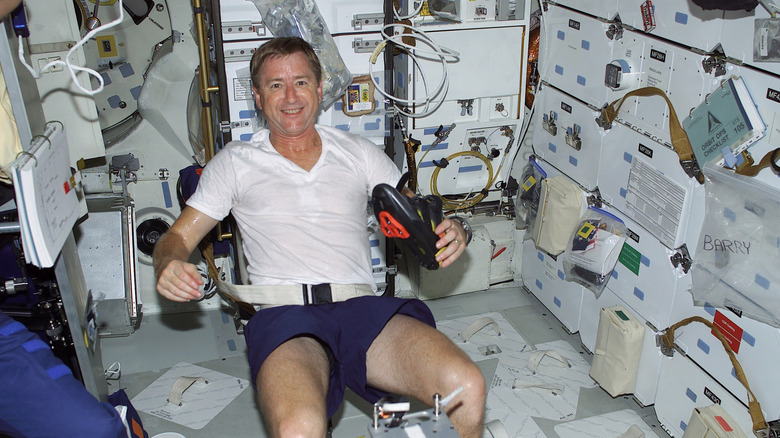
If you thought that astronauts don't experience gravity, that's not exactly true. Though the pull of Earth is lower in orbit, astronauts still experience microgravity conditions, which mess with their body in a number of ways — and it doesn't get any easier when the space ship travels further from Earth.
Let's say that a person was traveling to Mars. The traveler'd kidneys might not survive the trip, thanks to either cosmic radiation or microgravity disrupting the way they work. As such, a space traveler's kidneys start forming kidney stones at an increased pace. During longer journeys, they might actually stop functioning altogether. This would be a bad thing, seeing as kidney failure can be fatal. Other organs are also impacted by space. The heart changes into a round ball-like shape, blood vessels deteriorate, and a shift of fluids into the skull subjects the person to an array of hearing, eyesight, and brain issues called Spaceflight Associated Neuro-ocular Syndrome.
The sad fact is that the human body isn't really designed for space travel. Muscles and bones aren't subjected to as much strain in low-gravity conditions as they otherwise would, so they deteriorate fast. Even though the International Space Station astronauts have exercise programs to fight this off, the effects linger. Astronauts could suffer from back pain for years after returning to Earth, simply because space has done a number on the small muscles that support their vertebrae.
Poisonous gas might get you within your own spacecraft
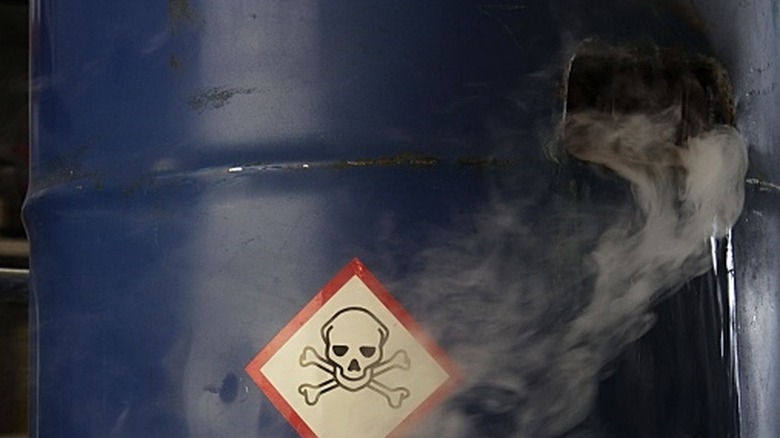
One problem about space travel is that the spacecrafts we use for it are made and operated by human beings. As such, they can be prone to some pretty interesting mishaps ... up to and very much including dangerous poison gas leaks.
This particular hazard of space travel was discovered the hard way in 1975, when the Apollo spacecraft returned to Earth from the Apollo-Soyuz Test Project mission. At first, it seemed that the Apollo landed in the Pacific Ocean without a hitch. Soon, however, it became clear that astronauts Thomas Stafford, Vance Brand, and Donald Slayton had been subjected to a mysterious gas that had filled the craft during their four minutes of descent, and that Brand had even briefly passed out due to a badly-fitting oxygen mask.
The gas soon turned out to be nitrogen tetroxide, which seeped into the astronauts' lungs and started to fill them with fluid. Fortunately, all three received appropriate medical care and survived the ordeal, which had been caused by the crew failing to use two specific automatic landing system switches at a late stage of their descent. Still, the very prospect of potentially deadly gas leaks in an enclosed spacecraft is a worrying one for a wannabe space traveler.
Exposure to the vacuum of space would rapidly shut you down from lack of oxygen
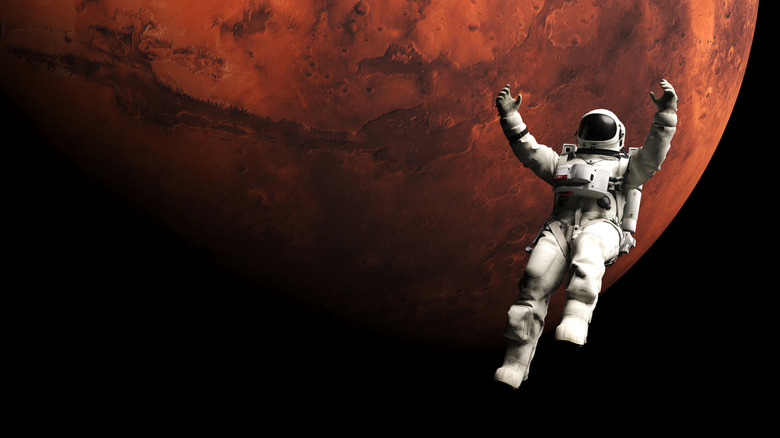
Exposure to the unforgiving, cold vacuum of space is probably the first thing that comes to mind when we think of space travel-themed deaths. However, the actual process of this happening is slightly different than what you might imagine. In a scenario where a human being is exposed directly to space, all air will instantly and brutally flee their lungs, which may cause damage if they attempt to hold their breath. This lack of oxygen is likely the thing that will kill them, since the brain can only operate on fully empty lungs for up to 12 seconds before blacking out. Now unconscious, the person will die within minutes.
Interestingly, it would take hours for the body to freeze because there's no air or water to aid with the transport of heat. However, the surrounding temperature of roughly -454 degrees Fahrenheit would wreak havoc on the person in a variety of other ways. The liquids on their skin would instantly evaporate and cause a nasty frostbite, and the ones immediately under the skin would swell up.
After this nasty but fortunately fairly quick demise, the person's body would be in for a longer ride. In Earth's orbit, the sun would prevent it from freezing but it would eventually burn their skin off. In deeper space, the frozen body would simply float about until it's taken apart by small micrometeoroid impacts over billions of years.
You might drown ... in your own spacesuit
During a spacewalk, an astronaut's spacesuit is the only thing between them and the unforgiving conditions of the dark emptiness beyond. Imagine, then, what a horror scenario it would be if said suit would suddenly start to fill with water.
This has actually happened. In 2013, Italian astronaut Luca Parmitano was on a maintenance space walk outside the International Space Station, when he suddenly noticed water inside his helmet. This rapidly became a problem when the water didn't stop coming. The liquid got into Parmitano's eyes and ears, making communication with other astronauts difficult and creating a severe risk of drowning. What's more, the experience was highly disorienting, and Parmitano was initially unsure whether he'd be able to make it back inside in time. An investigation later determined that water had leaked into the suit before, but this had gone unaddressed.
The frightening incident was ultimately a close call, and the astronaut was able to abort the spacewalk without any injuries. Still, it could easily have led to a disaster.
Even if you're protected by spacesuits and spacecrafts, space radiation might get you
Space isn't just cold and devoid of air to breathe. It can also give you cancer.
Space is surprisingly full of different types of radiation, all of which can damage (and potentially kill) a person in a number of ways. This is such a big issue that astronauts are legally considered to be a type of radiation worker.
Astronauts in Earth's orbit have to deal with the sun's solar energetic particles, radiation particles in Earth's magnetic field, and the galactic cosmic rays that come from outside our own solar system. The radiation is so relentless and its cumulative risks are so major that it's the single biggest health issue astronauts face, which is saying something considering everything else on this list. The doses of radiation astronauts face vary, and can cause several serious health issues that range from the aforementioned cancer to cardiovascular disease, tissue degeneration, damage to the nervous system, and even acute radiation sickness. Understandably, NASA is actively studying space radiation and developing ways to protect astronauts from it.
The indignities would just pile up after the death
Dying in space is one thing, but what happens to the body afterwards is another. Provided that your mortal remains aren't lost in space, there are several ways things could go, and not all of them are particularly dignified. If the death takes place on low Earth orbit or even the moon, there are protocols that enable the return of the body to our planet in a reasonable period of time: Potentially just hours from the International Space Station, and mere days from the moon.
Things are trickier if the death happens on a longer mission or if other factors prevent quick return to Earth. One potential way would be for the spacecraft to have a special body bag and an enclosed storage area, where the body would remain for what might be years. In his 2013 book "An Astronaut's Guide to Life on Earth," Chris Hadfield describes space agencies' contingency plans for scenarios with no obvious way to store a dead body. He discusses brainstorming sessions that ranged from impromptu space burial to sticking it aboard a resupply ship that burns during re-entry to atmosphere.
The most likely improvised way would be to store the body in a cold location, like the airlock or the trash storage. However, the most creative body-storage tactic NASA has looked into may be the 2005 concept called "The Body Back." It would turn the body into freeze-dried ash that can be stored safely and indefinitely.
Even trying to reach space can kill you ... or someone else
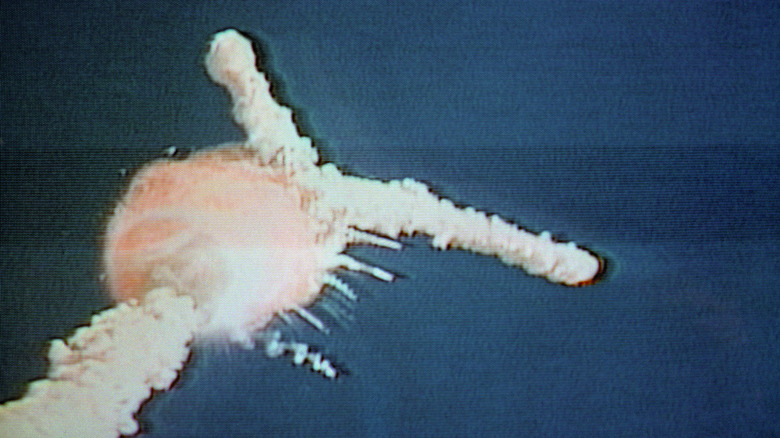
The idea of dying in space is terrifying, but trying to reach space can also be very hazardous to one's health. Space travel has claimed numerous lives over the years, from training accidents to terrible disasters during takeoffs. The most tragic and best-known example of the latter happened on January 28, 1986. Seven astronauts died in the Challenger disaster, when the space shuttle exploded nigh-immediately after its launch. More recently, Elon Musk's SpaceX lost a rocket in 2025 when the 40-foot Starship 36 malfunctioned and exploded during a test. Fortunately, no personnel was injured.
Interestingly, rocket launches can prove dangerous to people who have absolutely nothing to do with them, too. Rockets tend to drop a lot of excess parts when they're launched to space, such as booster rockets and protective fairings at the tip of the rocket. As launches become more commonplace, cost-efficient reusable parts become more prevalent, but whatever rocket parts are detached still tend to be abandoned to fall as they will. Some researchers think there's so much of this debris flying around these days that there's a chance someone will be killed by falling rocket parts before long.