

The Dangerous Spider You Could Find Hiding Under Your Car
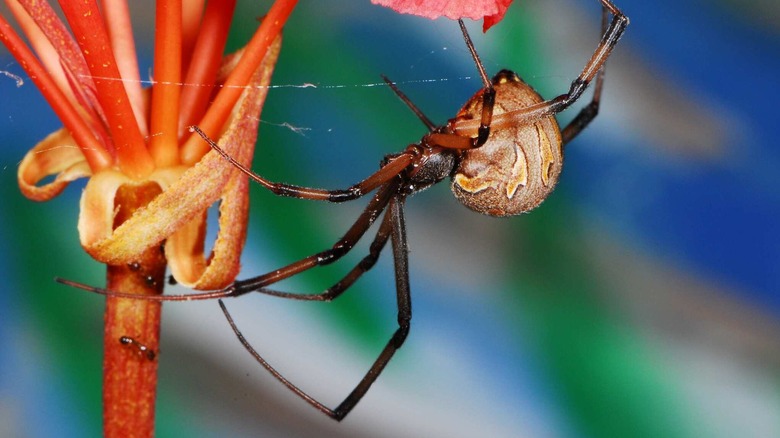
In the southern United States there is a silent invasion underway. Once confined to the humid subtropical climate of the Florida peninsula, the brown widow (Latrodectus geometricus) has established a permanent foothold as far west as California and north up to South Carolina, but has even been spotted in southern Canada. Although this arachnid doesn't pack a potentially lethal bite like some of its cousins, it's still dangerous and worth watching out for.
The brown widow is dangerous for the same reason all widow spiders are dangerous: their venom. All widow spiders have a neurotoxic venom called latrotoxin. The most common symptom from a widow bite is burning pain at the bite site, and with brown widows, that's where it usually ends, but it's not uncommon to experience pain in lymph nodes near the bite, weakness in the legs, or muscle pain, particularly in the abdomen.
The reason that the brown widow bite is less potent than those of its cousins is thought to be due to the lower amount of venom the brown widow delivers with its bites. Having said that, the brown widow may be the most venomous spider in North America. A 1989 article in the South African Journal of Science looked at the toxicity of a number of Latrodectus spiders and found that the venom of the brown widow was three to five times more lethal than that of North American widow spiders, but it's payload of venom was significantly less than its peers.
The brown widow is a global citizen
The brown widow was first described by science in Colombia in the 1840s, but it's believed that it originally came to the New World from Africa. The first recorded observation of L. geometricus in the U.S. was in Florida in the 1930s, and that's where they stayed for around 60 years. In the 1990s they started showing up across the country in warm coastal states, and over the past 10 years they have been spotted in Oregon and Pennsylvania (but not Alaska). Globally, brown widows can be found on every continent except Europe and Antarctica.
As far as invasive species goes, the brown widow is really good at moving in and taking over. A 2008 study examining the spread of L. geometricus in southern California noted its penchant for displacing the local western black widow spiders. The same study also found reports of brown widows displacing southern black widows in Hawaii, and South American black widows in the Caribbean.
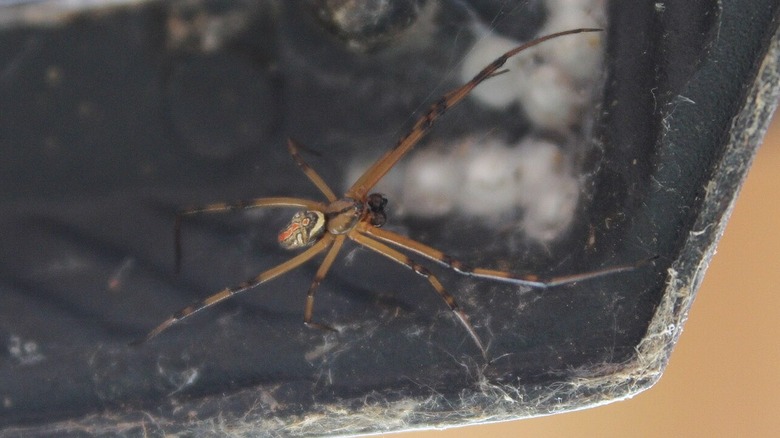
Making matters worse for humans is the spiders' propensity to build their webs on human made structures. They are considered peridomestic, in that they are outdoor spiders, but they like to keep close to where we live. According to some reports, they are particularly fond of cars and RVs which is both annoying and a perfect vector to continue their widespread distribution.
How to keep brown widows in check
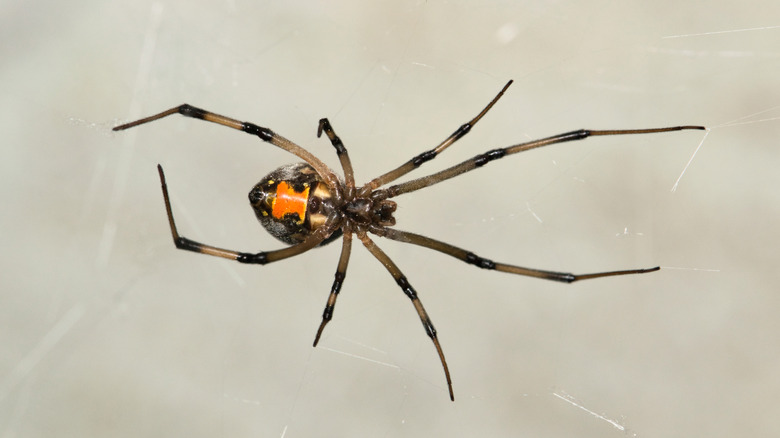
If you're worried about brown widows cramping your domestic style, the best way to manage it is with prevention. The first thing to do is make sure there's no food around for them to eat. A single egg sac from a brown widow can have between 50 and 250 spiderlings in it. A 2026 study in the Journal of Arachnology showed that given a healthy supply of food, up to 60% survived, but with limited resources, fewer than 10 survived. In other words, keep your yard clean and your trash bins closed to keep edible pests to a minimum.
If you already have an L. geometricus infestation, you could invoke the nuclear option and use a pesticide — most of which will work — but choose an oil-based pesticide if you want to sterilize the egg sacs before they become a problem. If you don't want to spread toxic chemicals all over your house and yard, you're going to have to get cleaning. Spraying your porch with vinegar won't work, but reducing your clutter inside and out will give them fewer places to build a web. Also take the time to make sure your home is properly sealed around doors, windows, and foundations to keep the spiders outside.
Whether you like it or not, brown widows are here to stay. Unlike their cousins in New Zealand, brown widows are considered a cosmopolitan species due to their widespread distribution. If you live in an area where they are established, the best thing you can do to keep your pets and family safe, is prevent them from ever setting up shop.