

The Surprising Thing Science Reveals About Cooking Potatoes
We may receive a commission on purchases made from links.
Potatoes can be a wonderful, hearty accompaniment to many dishes, but only if cooked properly. Gluey potatoes are a less-then-delicious experience, and the unpleasant texture usually comes from overcooking them, which affects the starch stored within them.
On a cellular level, raw potatoes consist of tightly packed cells, which gives them their firm, inedible texture. They can be considered in this state to be alive, since you could allow the tubers to sprout then plant them in soil and they would happily reproduce. Once you start cooking them however, they are no longer living organisms as the enzymes start to denature and cell walls begin to break down at temperatures over 100 degrees Fahrenheit. This is the first step in making the potato edible, as the cells start to move further apart from each other.
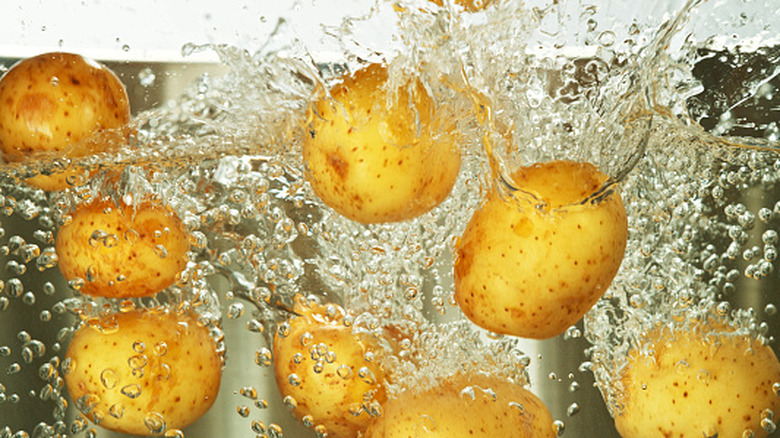
As the temperature continues to increase, especially through boiling, the potatoes take on water and become larger, a process known as starch gelatinization. This process is vital in continuing the transformation from rock solid potatoes to a delicious, fluffy side dish. However, as with so many things, moderation is key. Taking the cooking too far will allow the gel to escape from the cells, causing the dreaded gluey texture. The key to getting the perfect texture in your potatoes is to find a way to cook the potato all the way through, without the outside becoming overcooked.
How to prevent gluey potatoes
The secret to keeping potatoes beautifully soft instead of disappointingly gluey is to let the starch gelatinize sufficiently, but stop short of allowing it to break free and ruin the texture. To achieve this, you need to find a way of cooking the inside of the potato properly, without overcooking the exterior.
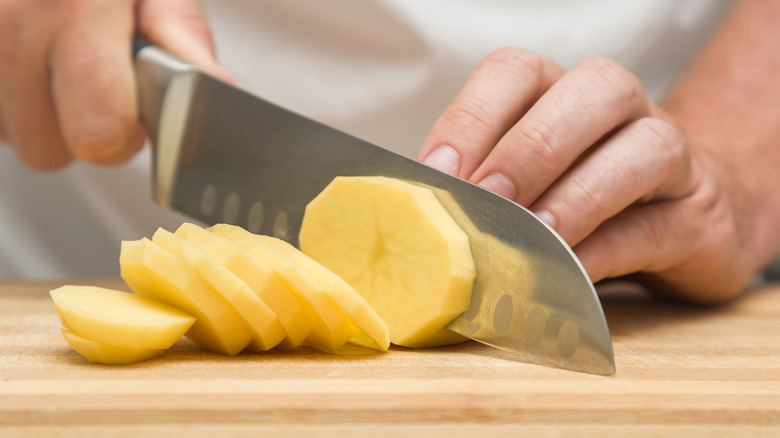
In an article for The Guardian, Chef Heston Blumenthal, known for his "molecular gastronomy" approach to cooking, explained the easiest way to perfect your spuds. By cutting the potatoes into 20 millimeter (~0.75 inches) slices and boiling them at around 158 degrees Fahrenheit, the heat can penetrate all parts equally, preventing the usual gluey texture. The lower than usual temperature also plays a part, as the starch granules can swell without bursting. Using a potato ricer in place of a masher will also make a difference, according to Heston, as it "helps keep the (starch) granules intact."
If you have previously been boiling your potatoes vigorously in large pieces, then using a blender to whip them, making these few easy changes will alter the chemistry going on inside the spuds, and improve the texture considerably. The science of cooking potatoes is a delicate balancing act of heat and mechanical handling to make sure the precious starch molecules inside can swell to their creamy best without rupturing and turning the whole dish to mush.