

'No Artificial Colors' Doesn't Mean What You Think It Does
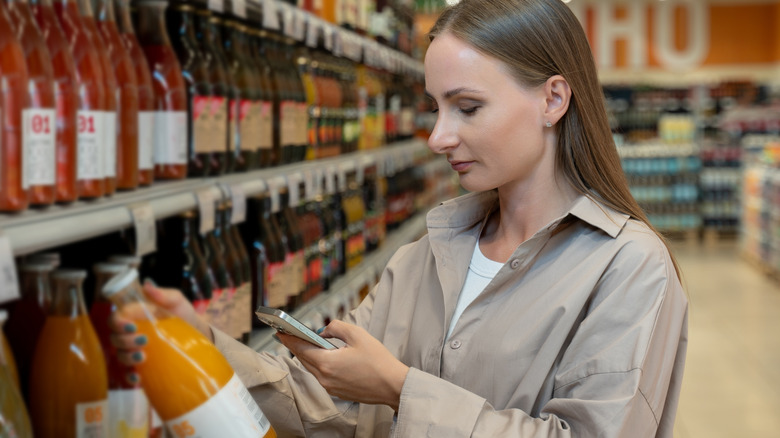
Despite our knowledge that whole foods like nutritious vegetables (one of which might even help prevent cancer) are the best choices for human health, the occasional packaged food or beverage is often unavoidable. Even then, not all selections are necessarily detrimental to our health, particularly when an item doesn't contain any synthetic ingredients. For many years, the U.S. Food and Drug Administration (FDA) had strict rules governing how food manufacturers could legally label items as having "no artificial colors" to help consumers make decisions about avoiding synthetic coloring agents. As of early 2026 though, such rules have slightly shifted and might cause some confusion among consumers. Now, it turns out that the old label of "no artificial colors" does not completely exclude all types of coloring. While not necessarily harmful in all cases, the fact that "no artificial colors" no longer means a food is completely color-free is an important distinction to keep in mind for the next time you head out to the grocery store.
Previously, the FDA said that no company could make the claim of "no artificial colors" if any dyes were used in their products. Among these included petroleum-based colors like Red No. 40, Yellow No. 5 & 6, and Green No. 3. This was so that anyone looking to avoid synthetic food colors could avoid such items. In February 2026, the FDA made a significant announcement regarding artificial colors in foods. While the agency still prohibits the use of "no artificial colors" like the aforementioned examples as a way to limit synthetic dyes, these rules are no longer exclusively applicable to artificial petroleum-based colors only.
What the FDA's 'no artificial colors' rule now entails
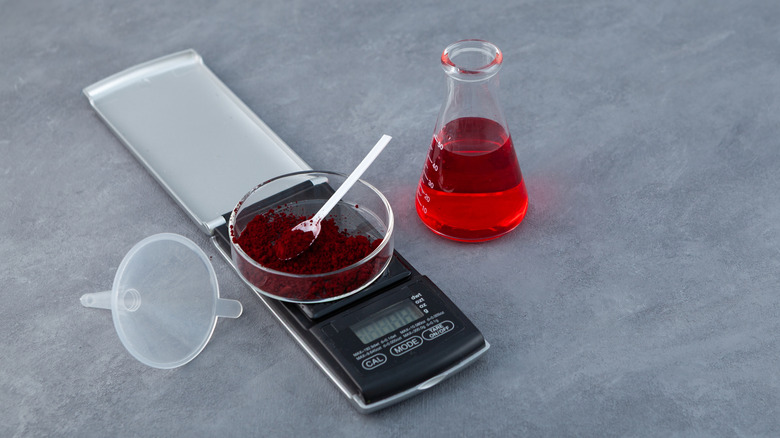
As of the latest changes in 2026, the FDA has given the green light for companies to use plant-based colors in foods while still being able to legally claim the "no artificial colors" label. This means that a particular food may not contain synthetic dyes per the old rules, but it may have added color via more natural ingredients instead. Notable examples of recently FDA-approved natural colorings include those made from beetroots and spirulina extract, which can give foods red or bluish-green hues, respectively. The FDA previously approved three other natural food coloring sources in 2025, including butterfly pea extract, calcium phosphate, and galdieria extract.
Overall, the new FDA rules governing artificial colors in food doesn't change much in regard to preventing companies from using synthetic dyes and illegally labeling their foods otherwise. But by allowing for the use of "natural" food colors, the agency is hoping to encourage food manufacturers to use more plant-based items. In turn, the idea is that companies that might otherwise have used synthetic dyes and labeled their foods appropriately could not instead hop on the "no artificial colors" bandwagon by using more plant-based food coloring instead. At face value, this change could be a win for people who are concerned with artificial dyes in their foods and want more plant colorings, and for those looking to adopt healthier meal habits overall (unlike this breakfast habit that might actually be increasing your risk of an early death).
Potential caveats of the artificial coloring rules change

Given the promotion of natural food colorings over synthetic versions, it's difficult to see any major drawbacks to the new changes in the FDA's "no artificial colors" food policy. There are a few caveats to consider, though. While the new policy governing the use of food colorings is inherently designed to promote healthier additives in the U.S. food supply more generally, some advocates have raised the alarm over the ability of some companies to find potential gray areas. For example, the Center for Science in the Public Interest's director Sarah Sorscher told the Associated Press that the FDA's new policy could provide a legal green light for food companies to use any non-petroleum additives, including titanium dioxide.
Cost is another possible issue. While having fewer synthetic dyes in foods may be desirable by many consumers, it's not clear whether the addition of plant-based dyes over having none at all might affect the prices of certain products. According to data science professor Liberty Vittert via the The Hill in 2025, products containing zero dyes are generally more expensive than those that do contain artificial colorings, although there's the hope that consumer costs may eventually level out with the wider use of plant-based colorings in food manufacturing.
A final consideration is safety. While natural food colorings sound safer in theory, there's still a lack of scientific evidence to conclude that all synthetic versions are harmful to everyone. Nevertheless, there are mixed results from scientific studies that have some consumers concerned that synthetic food colorings are linked with possible neurobehavioral challenges in children. The inconclusive factor is what has prompted many people to steer clear from these artificial dyes to begin with.