

The Myth About Recycling Plastic That People Should Stop Believing
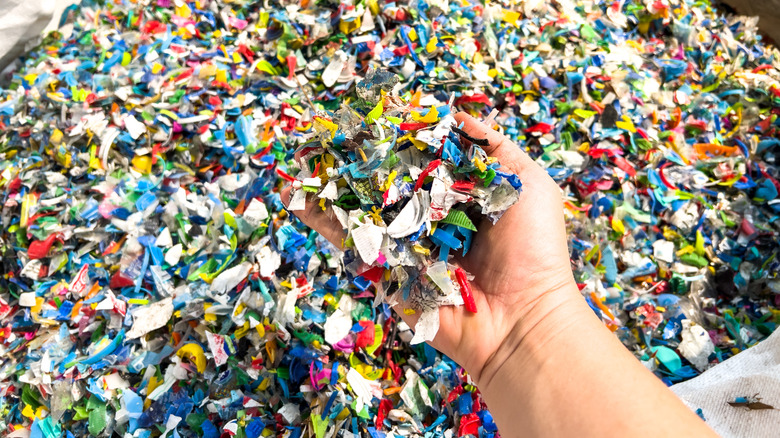
Recycling feels good, since it seems like an easy way to help the planet. In fact, separating plastics from other waste has become something of a ritual in many parts of the world, and it's based on the sentiment that every ecofriendly act is valuable. Unfortunately, recycling plastic doesn't do much to reduce carbon emissions, and it may even be environmentally damaging. Environmental campaigns have led us to believe that recycling plastic offsets our carbon footprints, yet the resources involved are extremely energy-intensive. Not only is the plastic that we place in our bins rarely recycled, but the small percentage of plastic that does get recycled comes at a high cost.
It's widely believed that recycling can help reduce environmental pollution, and can even promote electric cars. However, only a small fraction of plastic waste actually makes it to recycling plants. It's estimated that around 5–6% of plastics set out for recycling in the United States are actually repurposed for new products. And since the plastic boom that started in the 1950s, less than 10% of all plastic produced has been recycled.
It's cheaper, and often more eco-friendly, to create new plastic than to recycle used plastic. It takes a lot of energy and resources to recycle plastic. Fossil fuels generate energy, and that energy is used to separate, transport, and process plastic waste. Worse yet, plastic recycling involves the use of some seriously toxic chemicals. Recycling centers typically bathe plastic waste in chemical solvents to extract reusable plastic. Those chemicals are then disposed of as hazardous waste, which raises the question of how much recycling plastic reduces pollution.
The toxic process of recycling plastic
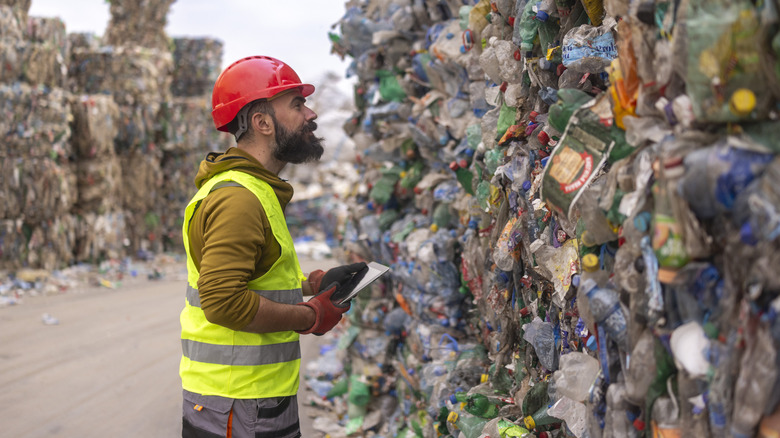
Around 20% of all plastic waste is incinerated, around 22.5% gets mismanaged (e.g. dumped into natural waterways like the ocean), and around 50% ends up in landfills. The remaining 6–9% of plastic waste gets recycled, but that doesn't mean it's environmentally friendly. In fact, recycling plastic is costly to both the environment and the economy. The process uses lots of resources and energy, and it only postpones the inevitable fate of all plastic waste. This is because recycled plastics are lower-quality than new plastics, so it's more cost-effective to burn them or dump them than recycle them.
Plastic waste is first collected by locally funded collection teams, then taken to a recycling facility, which sorts the plastic mechanically and manually. Non-recyclable waste is redirected for the landfill, while the plastic waste deemed recyclable is cleaned of contaminants and shredded. Then, most facilities employ chemical solvents to expedite the process. In either case, the amalgamated plastic is collected into batches of plastic flakes, which are then exposed to high heat to melt them into uniform pellets. These resulting pellets are considered low-quality plastic, so they're primarily used for insulation, decking, and clothing.
It's obvious that the plastic recycling industry is far from eco-friendly. The resources required to transport, sort, shred, refine, and export recycled plastics is immense. Huge volumes of chemicals and fuels are necessary for the process, and only low-quality products can be made from recycled plastics. Perhaps it's time to stop patting ourselves on the back for recycling our plastic products and finally recognize that plastic is, ultimately, not a reusable resource.