

Is It Actually Dangerous To Swallow Chewing Gum?

Perhaps one of the most enduring myths is that chewing gum stays stuck in your stomach for 7 years if you swallow it. The cautionary tale is right up there with the idea that swallowing watermelon seeds will cause a watermelon to grow in your stomach, and that "If you keep making that face, it'll get stuck like that!" Fortunately, all three claims are just myths. Like other insoluble foodstuffs, such as the cellulose-rich outer shells of corn kernels, swallowed chewing gum will pass through your digestive system within around 24 to 48 hours. At least, in most cases.
Although gum won't take 7 years to pass from your mouth to the toilet, it can cause some problems. A single, small piece is highly unlikely to cause any damage, but swallowing a large amount in a short period of time has, on rare occasions, proven to cause internal blockages. There are reports of toddlers having entire multicolored masses of chewing gum removed from their behinds after entering the hospital with complaints of constipation. In one case, an 18-month-old had a sticky mass removed from her stomach containing both chewing gum and numerous coins. While such cases are rare, they do prove that swallowing large quantities gum can lead to a hospital visit.
Ironically, chewing on gum has been shown to provide a slew of benefits, including improving digestion (though swallowing it is still not recommended). Masticating on gum can stimulate the digestive system's activity, which may help the colon and small bowel. Experts have even found that colon surgery patients can have a faster recovery time if they chew gum while they heal. There may also be cognitive benefits to chewing on gum (especially peppermint), as studies have shown the practice to improve test scores and help deal with exam stress by reducing the stress hormone cortisol.
Synthetic chewing gum may pollute your body and the planet
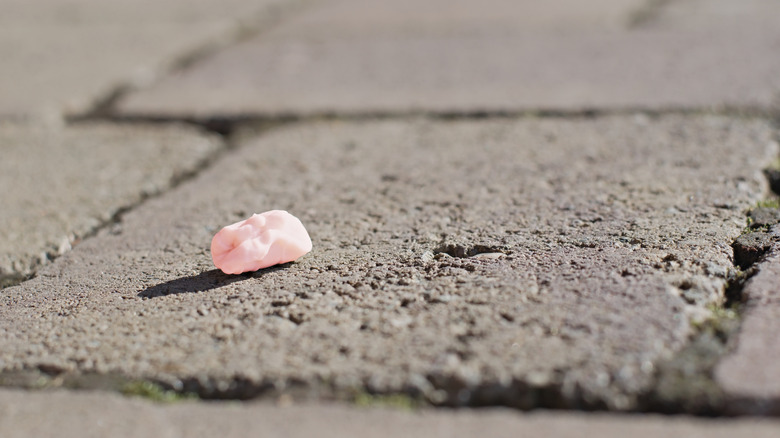
No, swallowing gum won't hurt you, but you should know what chewing gum is made out of before you decide to test that out for yourself. In the past, chewing gum was made out of "chicle," a rubbery substance derived from the sap of the sapodilla tree. But as chewing gum's popularity grew in the 20th century, chicle was replaced by synthetic alternatives. "Synthetic gum base" can mean anything from the styrene-butadiene used in car tires to the polyvinyl acetate used in wood glues to the polyethylene used in plastic bottles.
While all of the aforementioned synthetic gum bases have been declared safe by the U.S. Food and Drug Administration, they're still not meant to be ingested. There's a growing concern that food-grade plastics may build up within the body in the form of microplastics over time — strangely, that's one of the reasons Ziploc bags may pose some surprising risks. Studies have suggested that gum bases like polyethylene can accumulate in the stomach and liver, and microplastics may even cause inflammation. Whether swallowing or spitting out chewing gum makes a difference in the accumulation of these microplastics makes a difference is yet unknown, but it certainly casts doubt on the supposed harmlessness of synthetic gum bases.
Gum doesn't stay in your stomach for seven years, but it can pollute the environment for decades. Because so many chewing gums are now made with synthetic rubber bases, tossing a spent piece onto the ground is virtually the same as any other type of plastic pollution. In the U.K. alone, it's been estimated that over 9 million dollars are spent every year cleaning up chewing gum. Such clean up efforts help reduce microplastics from entering the local ecosystem, but it would be better if folks would just throw out their gum — and refrain from swallowing it.