

Don't Toss Your Leftover Coffee Grounds - Science Has A Better Idea
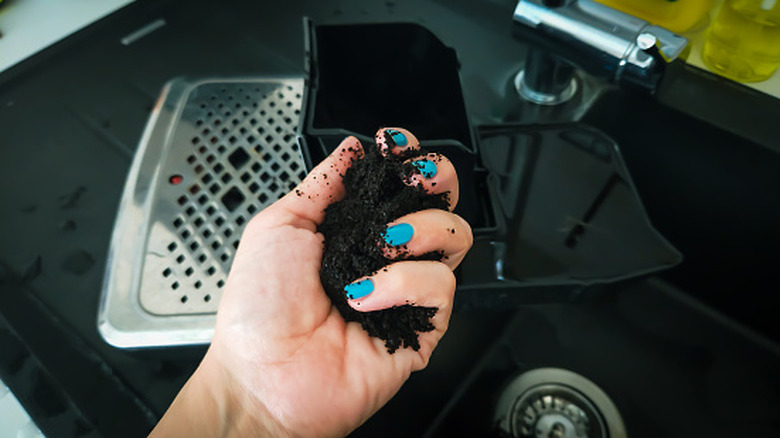
People around the world start their day with a fresh cup of coffee. But with global consumption being somewhere between 400 billion and 1 trillion cups each year, there's the question of what to do with the leftover grounds. For a long time, this has meant dumping used coffee grounds in the trash. However, science shows that this leftover product contains a range of nutrients that can help plants grow as well as compounds that can deter garden pests.
Leftover coffee grounds, whether from your kitchen or collected from a local coffee shop, can be a great addition to your compost bin. However, even if you aren't making compost, you can add spent coffee grounds directly to the soil. Experts caution against simply dumping grounds into a single layer on top of the soil, though. Mixing coffee grounds into the top 4 inches or so of the soil works better. Additionally, mixing leftover coffee with different amounts of water can make solutions to pour on garden soil or to spray directly on plants to keep pesky slugs at bay.
Grounds into the ground
Plants need three major nutrients to thrive: nitrogen, phosphorus, and potassium. Used coffee grounds contain all of these substances along with small amounts of other important nutrients like magnesium, copper, and calcium that aren't usually found in commercial fertilizers. However, the amounts of nitrogen, phosphorus, and potassium are too small for coffee grounds to be your only source of fertilizer. The real benefit of adding coffee grounds directly to the soil lies in how they improve the soil's structure. Microbes in the soil break down coffee grounds over time, releasing nitrogen and other minerals as well as chemicals that cause the particles that make up soil to clump together and improve soil drainage.
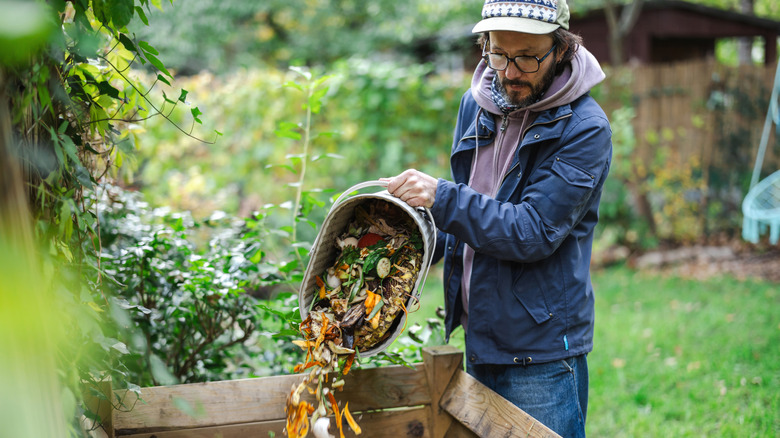
Another way for your garden to get a kick from coffee is to add used grounds to your compost pile. You should add coffee grounds to compost sparingly, though, mixing it with leaves, fresh grass clippings, and other materials. Leftover coffee grounds should make up at most 20% of the overall materials in the bin. This isn't because coffee grounds are acidic as some might think (leftover grounds are actually close to neutral, with a pH of 6.5 to 6.8). The reason is that used coffee grounds contain caffeine, which can be harmful to plants in high enough doses. In fact, energy drinks can affect plants for much the same reason.
Perk yourself up and then stop pests
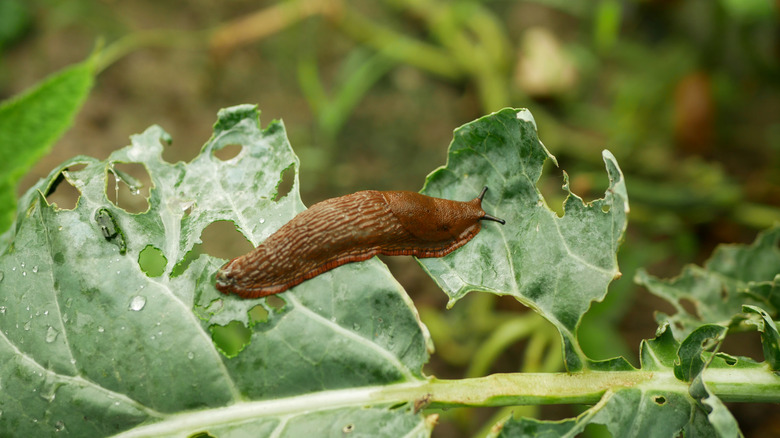
The small amount of caffeine found in leftover coffee grounds are perfectly safe for your garden in small amounts. However, the same chemical can also keep slugs from devouring your plants. Although they play a crucial role in the ecosystem by consuming decaying plant matter, slugs can wreck a garden in short order. They feed at night, making it hard to catch them in the act, and slugs can eat several times their body weight in plants each night. One of the characteristics of slugs is that they will eat almost any plant in a garden, leaving holes in the leaves of larger ones and eating entire seedlings.
There are many ways to slug-proof a garden, but many commercial baits can be toxic to pets and other wildlife and shouldn't be used with edible plants. This is where coffee comes in handy. Research has found that a mixture of brewed coffee and water applied to soil will eliminate around 95% of slugs in a garden. Treating plants directly is another option, though this would require a more dilute solution to avoid damaging leaves.
By adding nutrients to compost, improving soil drainage, and keeping slugs away from your strawberries, leftover coffee can give your garden a boost. For many of us coffee helps us start the day, and for those with green thumbs, leftover grounds are too valuable to simply throw away.