

The Myth About Weight Loss People Should Stop Believing

With all of the complicated and often conflicting approaches out there, trying to lose weight can sometimes feel overwhelming. One expert might recommend eating vegan while another says you should eat only meat. Nutrition is also home to a wide range of myths, including the notion that all carbohydrates cause us to gain weight. The truth is that simple and processed carbohydrates affect our bodies far differently than complex carbs.
A study of more than 130,000 adults over the course of 24 years found that, when it comes to weight gain, the type of carbohydrates people consumed were more important than total carb intake. The participants gained just over three pounds over a four-year period; however, those who ate more complex carbs and high-fiber foods like whole grains, nutritious vegetables, and fruit gained less weight overall than those who consumed more processed grains as well as foods and drinks with added sugar. These findings suggest that all carbs are not created equal when it comes to matters of weight.
Carbs are not always so simple
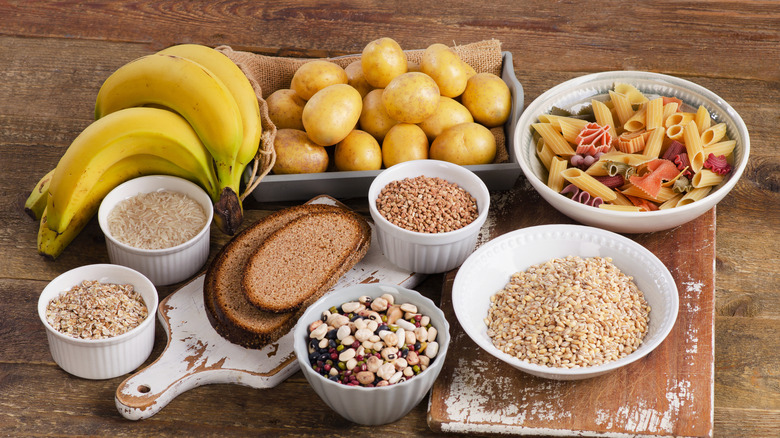
Carbohydrates are one of the major organic compounds that compose living organisms. They are lumped into two basic categories: simple and complex carbs. The difference between a simple carbohydrate and a complex one comes down to its chemical structure. Carbohydrates are made up of chains of simple sugars. Simple carbohydrates have fewer links in their chains, making them easier to digest than complex carbs. This is why simple carbs like sugar give you a quick boost of energy. Complex carbohydrates, on the other hand, are longer chains that take more time and energy to break down. Complex carbs also have vitamins, minerals, and fiber, and can be a good source of plant-based protein.
People who lose weight when cutting out carbohydrates were often consuming too many simple carbs beforehand. Some people on low-carb diets lose water weight. A low-carb diet also typically reduces the amount of calories consumed. A diet that cuts out carbohydrates can also be challenging to stay with. However, a balanced diet that limits added sugars to less than 10% of your daily caloric intake and includes fruits, vegetables, whole grains, and other sources of fiber like beans, among other sources of fats and protein, can support successful and sustainable weight loss.
The power of substitutions

While experts recommend limiting foods high in added sugar, the opposite is true for fruit, which is high in sugar. This is because fruits contain essential vitamins and minerals and because they are typically a good fiber source, which has been shown to help with weight control and digestive health. Fiber helps with feelings of satiety as well, which can decrease how much a person eats. Research also shows that fiber may benefit the gut microbiome and have positive effects on fat oxidation and storage.
Although fiber is helpful for weight control, where fruits, vegetables, and whole grains have the most effect is when they substitute other foods. Research found that replacing one serving of starchy vegetables or sugar-added food with a serving of whole grains, fruit, or non-starchy vegetables was associated with less weight gain. In other words, substituting a salad or fruit cup for french fries is helpful for weight control. To control weight we shouldn't listen to the myth that says carbs cause weight gain. When it comes to weight, carbohydrate quality matters more than quantity.