

Scientists Want To Feed Cows Seaweed And It Is Not For The Reason You Think
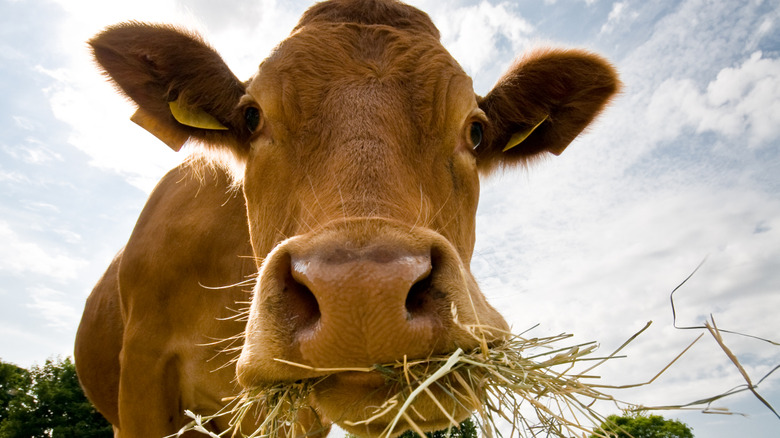
Cows are some of the most abundant creatures on Earth. Overall, it's thought there are about 1.5 billion cattle in the world, and cows make up the majority of the population. In order to meet the needs of humans who eat animal products, cattle are raised in nearly every part of the world. Their diets vary based on type of farm, with some cows eating agricultural grains and others grazing on grass, hay, fruits, and legumes. In recent years, scientists have been studying the potential benefits of feeding cows something different: seaweed. Research has consistently shown that this dietary modification could possibly reduce global greenhouse gas emissions amid a large cow population.
Like many other types of mammals, cows burp. The unfortunate side effect of these seemingly harmless belches are their effects on global warming, though, as these release harmful methane gases. Not only are cattle the biggest source of agricultural-related greenhouse gases, but the University of California-Davis estimates that each cow burps around 220 pounds of methane gas every year. And, while carbon dioxide makes up the majority of greenhouse gases, methane traps more heat in the Earth's atmosphere.
Given these facts, climate advocates and researchers have urged humans to eat less beef as just one way to reduce related greenhouse gas emissions. Scientists have also been researching other potential ways to offset the methane-producing belches of cattle, including by feeding them seaweed. It's thought that seaweed may help cows digest their foods more efficiently, and thus lead to fewer cattle burps in the atmosphere.
Possible effects of seaweed consumption in cows
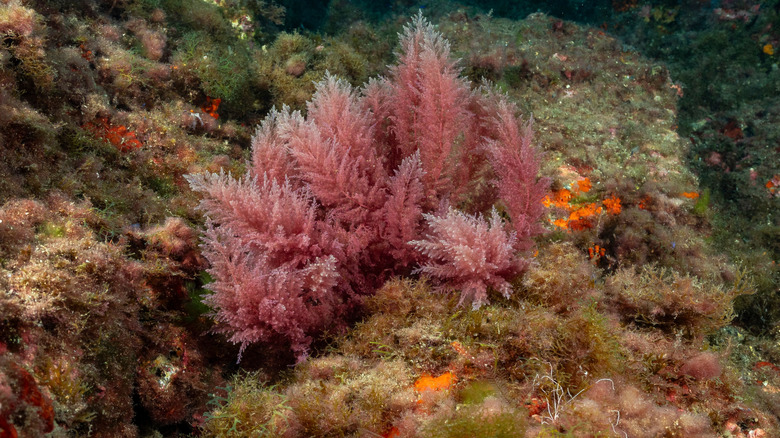
The idea of cows eating seaweed isn't entirely novel. Historically, farmers along coastal areas have been known to allow their cattle to eat seaweed washed up along the shore as part of their diets. But the concept of feeding seaweed to livestock to help reduce methane emissions more specifically was further studied in Australia with a team of scientists from James Cook University and the Commonwealth Scientific and Industrial Research Organisation (CSIRO). Then, over the last several years, other scientists in both Australia and the U.S. have evaluated the seaweed's effects on methane emissions with some promising results. One key study published in 2021 in PLOS One found that Asparagopsis taxiformis reduced methane emissions in male cattle by more than 80%. Researchers have specifically targeted seaweed from the Asparagopsis family, which is primarily found in warm tropical waters, but there are also other types of seaweed that may be studied, too.
At this point, you might be picturing cows eating handfuls of raw seaweed, but this isn't how this methane-reducing practice works. Instead, seaweed is provided as a supplement to cows in either oil or powder form. You might liken this process to the way some people add powdered greens to smoothies in an effort to get more veggies in their diets. However, the supplement itself also makes up less than 1% of a cow's diet, per Yale Climate Connections. Farmers now have the option to buy these types of commercial seaweed supplements for their livestock, such as those sold by CSIRO-affiliated Future Feed.
The caveats of seaweed supplements for cows
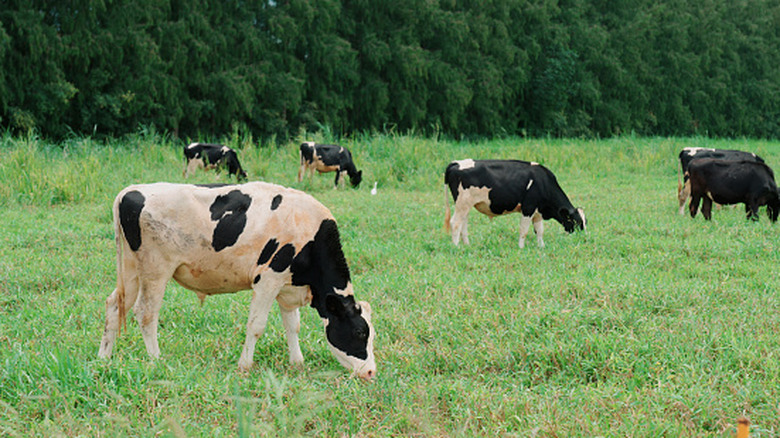
The use of seaweed supplements for cattle is becoming more widespread as studies consistently show their benefit on reducing methane-containing cow burps. At the same time, the supplement doesn't appear to affect the taste of beef or milk, which can dispel possible concerns over the quality of cow products for human consumption. Still, some potential concerns have been raised over the long-term health of cows on behalf of the American Dairy Science Association, as noted by one study in the Journal of Dairy Sciences published in 2025. Related research has also raised concerns over excess iron levels in cow's milk from seaweed consumption, though more long-term studies are needed on this subject.
Another major caveat is supply. While Asparagopsis might be abundantly available in the ocean, there isn't enough to feed the billions of cattle on Earth. In the meantime, scientists are looking for ways to grow more of the seaweed, particularly as demand for this feed additive increases. Also, feeding free-range cattle seaweed supplements may not be an easy task for farmers.
Finally, while feeding seaweed to cows might reduce methane emissions, it's important to note that this won't solve the problem alone. As Columbia Magazine notes, other agricultural sources of methane emissions are also plant-based, including rice fields. Yet adding seaweed in cattle diets could be a good place to start. Given the urgent need for reduced greenhouse gas emissions, all possible solutions can potentially help to make a difference.