

The Popular Myth About Lightning People Need To Stop Believing
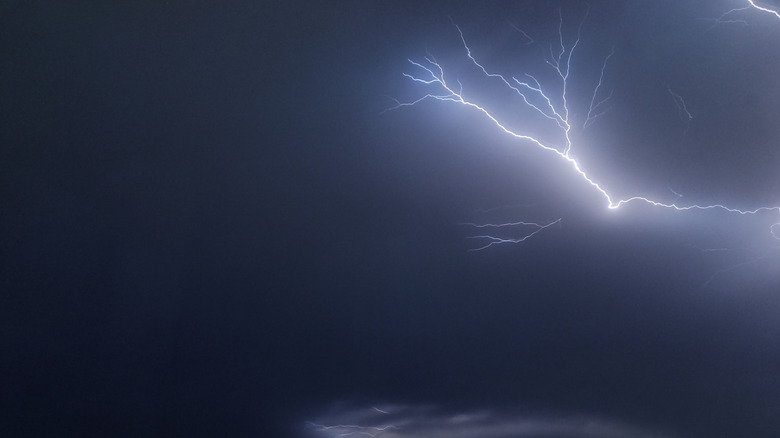
Few things match the awe-inspiring power of a thunderstorm. With bright flashes of lightning and loud crashes of thunder, it's no surprise that humanity has built legends around this force of nature. However, one of the myths about lightning that people should stop believing is that lightning never strikes in the same place twice. Believing this myth could lead to people taking unnecessary risks. In fact, lightning often strikes locations multiple times in one storm, and some areas have been struck by lightning many times.
This myth's origins likely come from attempts to reassure people that bad things won't happen again. A lightning strike is an uncommon occurrence in the average person's life, so the myth makes sense in a way. However, simple observation would tell you this myth is untrue. Additionally, an understanding of how lightning works would show that the factors that cause a lightning strike to happen would make some places, such as trees and tall buildings, more likely to be struck over and over.
What causes lightning
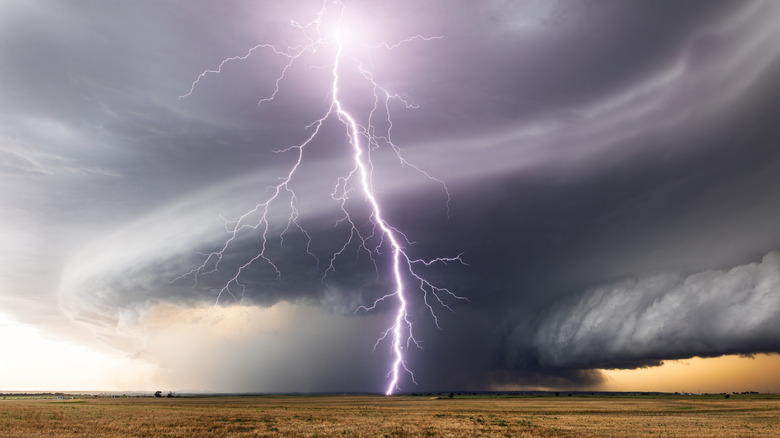
Lightning results from differences in electrical charges between clouds and the ground. Ice crystals and water droplets moved by winds inside storm clouds bump around. This leads to a building negative charge in the lower part of the cloud and a growing positive charge on the ground. When the difference in charges gets large enough, an electrical current will move through the air, creating a flash of lightning. This process takes place in a matter of milliseconds and can repeat itself several times in rapid succession. This shows that lightning can indeed strike the same place more than once.
Electricity takes the path of least resistance; with lightning, that often means striking the tallest object around. This means that mountain peaks, trees, and tall buildings can be struck by lightning frequently. In fact, the Empire State Building is hit by lightning around 25 times per year on average. Lightning's tendency to hit the highest point around is why tall buildings often have lightning rods, metallic rods that guide electrical currents safely to the ground. This is also why one of the most dangerous things to do during a thunderstorm is take shelter under a tree.
Lightning safety is serious business
The myth that lightning never strikes the same place twice can be dangerous if it leads people to not take safety seriously. In an average year, somewhere around 20 people are killed by lightning in the United States, and hundreds more suffer serious injuries. The most devastating, but rarest, lightning strikes are when lightning directly strikes a human. More common are side flashes where current jumps to a person through the air from a taller object, like a tree, that was struck. Electricity can also move through the ground or through wires and other metal surfaces like pipes after a lightning strike.
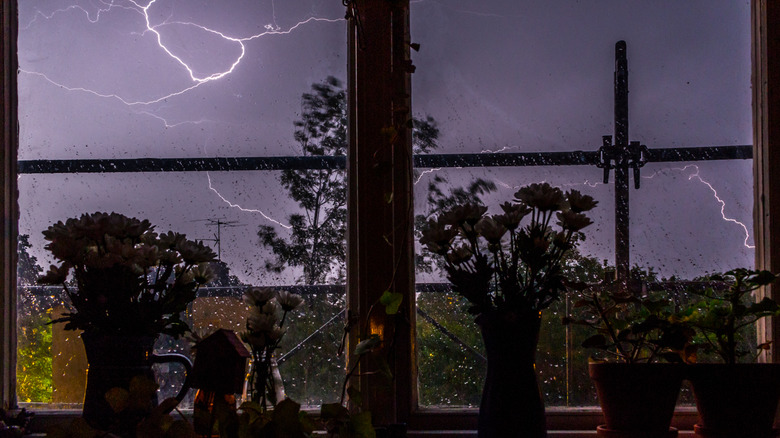
The best choice for safety in a lightning storm is to take shelter in a sturdy building and stay away from wires, plumbing fixtures, and windows. A second choice is taking refuge in a hard-topped vehicle with windows rolled up, as your car can protect you from lightning, even if not for the reasons you might think. People should take cover immediately after hearing the first sound of thunder, no matter how distant, and should stay sheltered for at least 30 minutes after hearing the last rumble of thunder.
The idea that lightning can't strike the same place twice is a persistent myth, but one that people should stop believing. Some areas are more likely to be struck than others, but that doesn't mean you're safe if taller objects around. Thunderstorms can put on an amazing light show, but the safest bet is to stay indoors.