

Why Retatrutide Could Be The Next Game-Changing Peptide

Recent years have seen an explosion in the popularity of weight loss medications like semaglutide (Ozempic). These medications work by binding to receptors for different hormones involved with insulin production, appetite, stomach emptying, and many other functions. Current drugs work by acting on one or two hormone receptors. However, a new drug in the works known as retatrutide is designed to work on three separate peptide hormones, which could make it even more effective than current medications.
Semaglutide and other peptide medications were first used to help patients with type 2 diabetes control their blood glucose levels. But before long, researchers found that these drugs also led to significant weight loss. Obesity is associated with poor health outcomes, contributing to around 3.4 million deaths per year worldwide. Similarly, type 2 diabetes is responsible for many health problems and can increase the odds of developing certain types of cancer. Thus having medications that can effectively reduce body weight and control blood glucose is beneficial.
Medications target hormone receptors
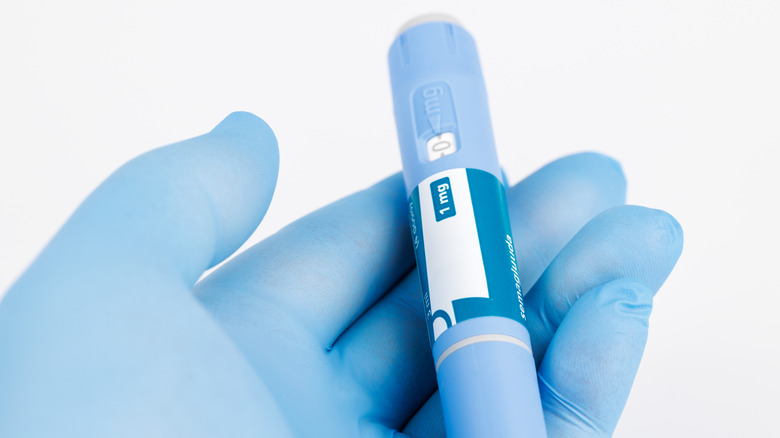
Peptide medications target receptors for three major metabolic hormones. These are glucagon, glucagon-like peptide (GLP-1), and glucose-dependent insulinotropic polypeptide (GIP). GLP-1 stimulates insulin release, delays stomach emptying, and reduces appetite, contributing to weight loss. GLP-1 agonists bind to GLP-1 receptors to increase these responses. A different medication known as tirzepatide works on both GLP-1 and GIP, which also influences insulin production and appetite. Glucagon, much like GLP-1 and GIP, reduces gastrointestinal motility. It also decreases fat production and increases fat loss.
Retatrutide takes things further by targeting GLP-1, GIP, and glucagon receptors at the same time. This allows it to increase fat metabolism, slow down digestion, decrease appetite, and increase insulin sensitivity. By targeting all three common metabolic peptide hormones, retatrutide has the potential to be even more effective than current medications at treating obesity and type 2 diabetes. The drug's design also means it can be taken once per week. However, like all medications, retatrutide has side effects, and more research on its safety and efficacy is needed before it can be prescribed to the public.
Testing efficacy and safety

Before medications can be prescribed, they must go through extensive human trials. The first set of trials, known as phase 1, assesses a drug's safety and how it works in the human body. Once a medication passes the first trial, it goes on to phase 2 trials, where the drug is tested in a randomized, placebo-controlled trial.
In its phase 2 trials, researchers found that retatrutide contributed to a weight loss of 5% to 15% over 48 weeks. Trials also observed improvements in blood glucose control, improved insulin sensitivity, and reduced fatty tissue in subjects' livers. Trial participants reported side effects like nausea, vomiting, diarrhea, and constipation when taking retatrutide. Other medications like semaglutide have similar side effects, which sometimes leads patients to stop taking them. These side effects were most common in higher doses, and reducing the dosage of retatrutide decreased side effect severity.
Retatrutide is now in phase 3 trials, each including thousands of patients. Researchers are looking into efficacy and safety of the drug in obese or overweight patients, people with obstructive sleep apnea, subjects with a history of heart attack or stroke, and patients with knee arthritis. The first of the Phase 3 trials is estimated to end in May 2026. These trials are the next step toward retatrutide being approved to treat type 2 diabetes and obesity. Once approved, this new peptide medication could be a real game-changer.