

The Artemis II Astronauts Noticed Something Unexpected About The Moon
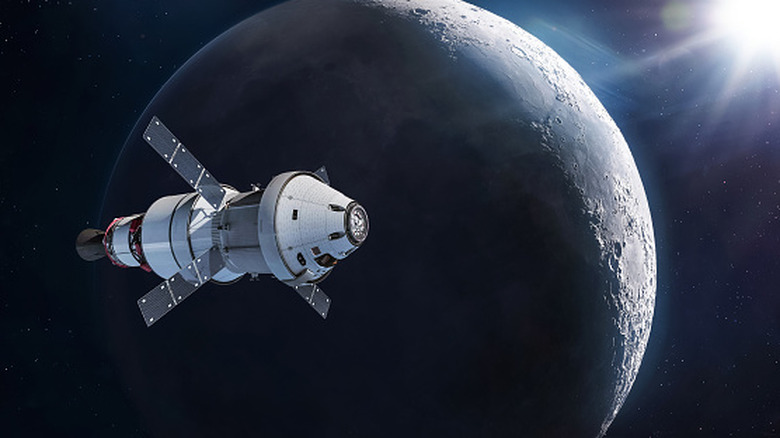
NASA's nine-day Artemis II mission concluded with a successful return to Earth on April 10, 2026. During the trip's seven-hour lunar flyby section, the four astronauts in the Orion spacecraft managed to capture some truly captivating images of Earths' sole natural satellite. What's more, they also spotted something that may seem surprising: While it's easy to think that the moon would be fairly monochrome, its surface is actually surprisingly colorful.
"They have said a couple of things that they just called down to the ground to get our comments or just let us know what it is they're seeing," NASA Deputy Associate Administrator for Exploration Joel Karns told CBS News while the mission was still ongoing. "One aspect is that they are seeing a lot of color on the moon."
As it turns out, NASA actually had hopes that the astronauts would get first-hand visuals of the moon's color palette while they were up close, since the human eye can spot colors more easily than the mission's camera equipment. Specifically, astronauts reported seeing brown and green areas, which may indicate a number of things. Karns specifically mentioned that these colors could be caused by either chemicals, minerals, or surface changes.
NASA trained the Artemis II astronauts to observe and describe moon's geology
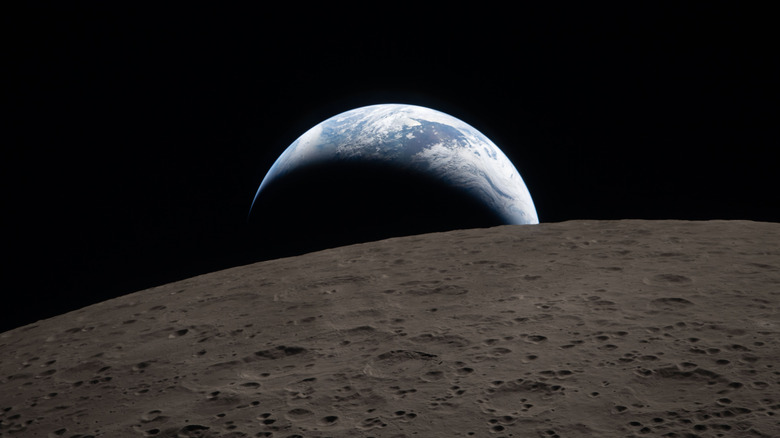
The astronauts of the Artemis II mission knew to look out for the colors and other geological aspects of the moon because they were extensively trained to visually identify them. Since this mission didn't actually land on the moon, being able to recognize various aspects of its geology by sight was an important part of the mission. To this end, the crew members made detailed notes and logs about their observations, which will be unpacked and investigated.
Of course, the astronauts weren't relying on their eyes alone. They brought back a great many images, only a small number of which was delivered to Earth while the mission was ongoing. Experts will be analyzing the material for weeks and months. With any luck, they'll find out plenty of other interesting things about the moon in the not too distant future — and NASA will have brand new insight for its upcoming missions.
Despite the impact the first moon landing had on the world in 1969, humans haven't gone back to the moon since 1972. The Artemis II mission marks the latest step toward rectifying this, and in 2028, the Artemis IV mission is set to feature the first lunar landing in decades. Beyond that, NASA's Artemis project is already looking into what a trip to Mars might actually look like, so fans of space exploration live in interesting times.