

Scientists Say Neanderthals Might Not Have Had This Advantage Over Humans After All
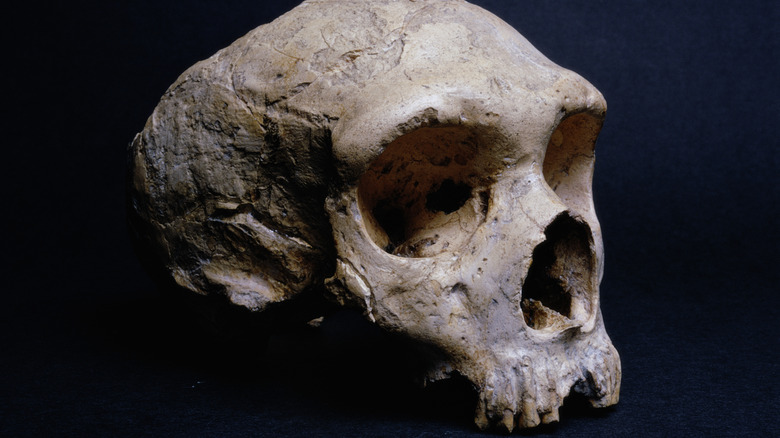
Many assumptions have been made regarding our distant relatives, the Neanderthals. It was once commonly believed that their noses were better adapted to the cold. This idea came from initial examinations of Neanderthal skulls, which revealed a larger nasal aperture than Homo sapiens. This is the opening of our skulls that connects to the nasal cavity. Given this, it was hypothesized that Neanderthals would have larger sinuses as well. Assumedly, this would give them more opportunity to warm the air as it moves toward their lungs. Such an adaptation would aid in temperature regulation while inhabiting cold environments, which is important for maintaining homeostasis.
Neanderthals roamed the Earth around 400,000 to 40,000 years ago, in much more frigid temperatures. They largely lived during glacial periods, and though there were various climates experienced by different populations, cold stress was always a factor. With such varied facial morphology, it makes sense to think that some adaptation would be particularly useful in a colder environment. After all, some arctic mammals have larger nasal cavities with bony structures that help warm air in this way. However, the fragility of bones within the nasal cavity had prevented a detailed structural analysis beyond the nasal opening in the skull.
A well-preserved fossil
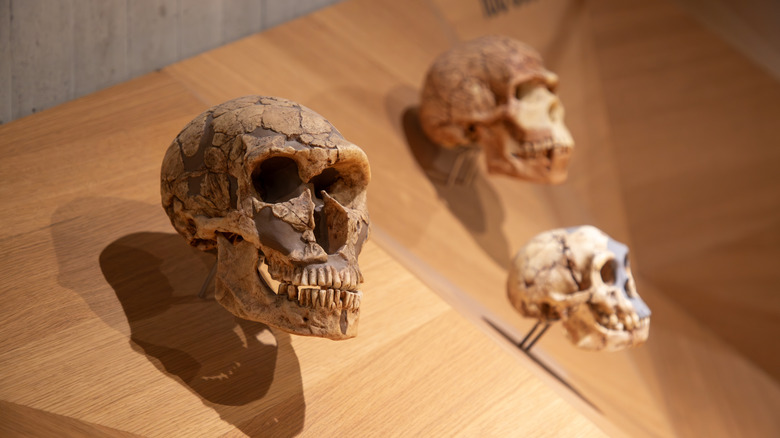
Researchers publishing in the American Journal of Human Biology were able to gain a better picture from a Neanderthal skull referred to as the "Altura Man." This particular skeleton is covered in calcite, which preserves fossils through recrystallization and pre-mineralization. Calcite microcrystals essentially fill in the porous spaces of bone. Since bone tissue is remarkably available to ionic substitutions, its less stable mineral components can transform into calcite. However, while calcite can fill in these structures that would have otherwise degraded, it is fragile, which means moving the skeletal remains would be impossible without incurring damage.
Presented with this challenge of a fossil stuck in a cave wall, researchers were able to investigate the internal bone structure through an endoscope, a camera attached to a thin tube. Finally able to analyze the fragile network of bones within the nasal cavity, they found that the previous assumptions about its structure were false. There were no bony convolutions similar to those found in other arctic mammals.
Answers lead to more questions
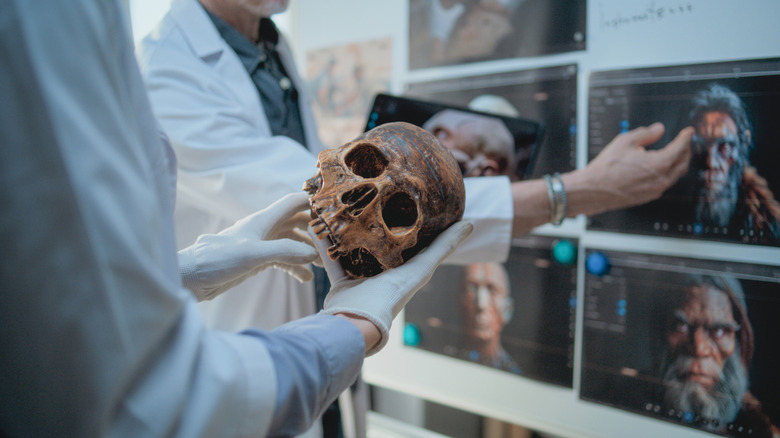
Although this remarkable study was able to shed light on the structure of the Neanderthal nasal cavity, many questions remain. For one thing, this does not reveal how Neanderthal morphology might have been better adapted to the cold. Was there another way that they were better able to process frigid, dry air? If not, how did they thrive in such inhospitably cold temperatures? One suggestion might be a faster metabolism, but until new information emerges, we are left guessing once again.
It might make sense that the further we progress in time, the less we will know about Neanderthals as they become more distant relics of our past. However, continued advances in scientific technology allow for investigations and anatomical analyses that were not possible before. As data collection continues on our close evolutionary relatives, more details will likely be uncovered, and we might find that other long-held assumptions are incorrect.