

This Popular Vegetable Has More Potassium Than A Banana
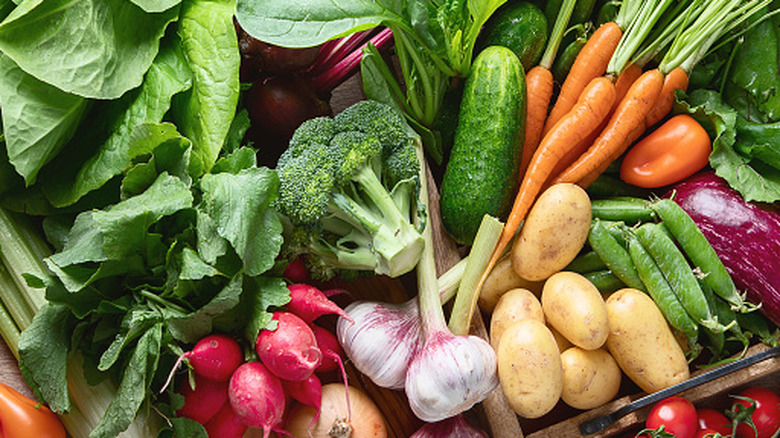
Potassium is a mineral found in the foods people eat that helps with a variety of the body's functions. It helps conduct electrical impulses in the body, making it crucial for muscle contractions, nerve signals, proper digestion, and even a normal heart rhythm. However, many Americans don't get the recommended amount each day, making it all the more important that we include high-potassium foods in our diets. But what many of us consider the gold standard for potassium, the banana, is eclipsed in potassium content by a popular vegetable that grows underground: the potato.
While French fries and potato chips aren't exactly health foods, potatoes themselves are actually a nutritional powerhouse. A medium baked potato with its skin on can contain more than 900 mg of potassium. This is greater than the roughly 360 mg found in a small banana. Granted, dark leafy greens contain as much or more potassium than potatoes. However, since potatoes make up around 20% of the average American's vegetable intake, it's hard to argue about their popularity.
Many Americans get too little potassium

Experts recommend getting between 3,500 and 4,700 mg of potassium per day. However, the average American consumes less than that each day. This shortfall is likely due to overconsumption of ultra-processed food and eating too few fruits and vegetables. On top of that, people with kidney disease, people who sweat a lot like athletes, and those whose bodies are impacted by working in miserably hot and highly humid conditions are more likely to be potassium deficient. Mild shortages of potassium don't usually cause any symptoms, but more severe deficiencies can lead to fatigue, muscle cramps, and, in extreme cases, even heartbeat irregularities.
In addition to helping with nerve and muscle function, potassium plays important roles in balancing your body's fluids and acid-base balance. For the human body to operate correctly, it needs the right balance between acidic and basic compounds in the blood. If your blood becomes too acidic, the body will try to bring things back to normal using minerals like calcium and potassium.
Potassium and bone health
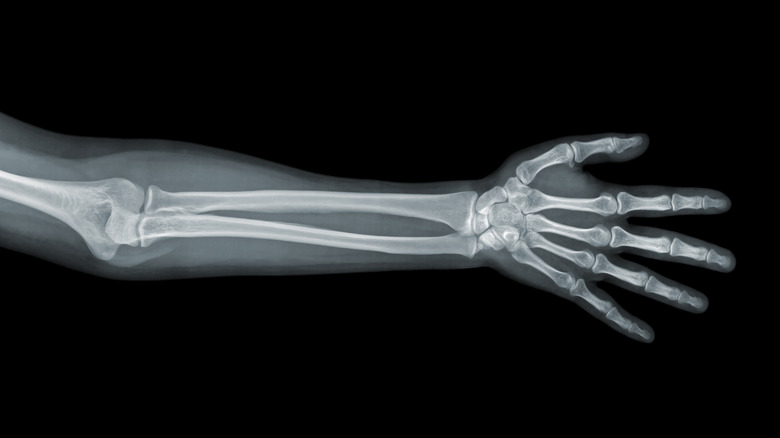
Research has found that diets high in meat and cereal grains lead to a slight acidification of the body known as metabolic acidosis. One way your body's systems can bring things back to a pH balance is using calcium from the major bones in the body. Scientists think that the process of pulling calcium from bones could contribute to osteoporosis. But someone taking in enough potassium in their diet could use that mineral to balance out pH levels, sparing calcium from bones. This could explain why studies find better bone health in people who eat more fruits and vegetables.
A 2021 study looked at the possible role of potassium in bone health more closely. The researchers gave three groups of adult subjects an extra 1,000 mg of potassium per day, with potassium coming from French fries, regular potatoes, and a potassium supplement. They also included a fourth group that didn't get extra potassium as a control. The scientists analyzed calcium content in subjects' urine and found a lower calcium loss for the group taking a calcium supplement than the control or potato groups. However, they noted a need for further research into how potassium affects bone health.
While it isn't fully clear how potassium affects bone health, there are many benefits to getting enough potassium. It's true that supplements may have their place, but the benefits of eating a balanced diet are well documented. And the potato is a potassium powerhouse that you can boil, mash, or stick in a stew.