

The 'Flesh-Eating Disease' That Could Be One Of The Most Disturbing Ways To Die

The world is full of interesting and awful ways to pass away. Sometimes, they can be pretty surprising — for instance, you might not immediately guess that death by rabies or death by mosquito can be some of the worst ways to die, or how the many ways it physically feels to die can vary. There is one particular condition, however, that doesn't need much description for a person to understand its sheer existential terror.
Necrotizing fasciitis is an infection that's perhaps better known by its charming common name: flesh-eating disease. It's caused when you scratch or cut yourself — or are bitten by an insect — and one or more types of bacteria start infecting your body underneath your skin. The infection can also get its start when bacteria enters the body through other, less obvious means. For instance, there have been cases of a person developing necrotizing fasciitis after getting a liposuction, or from a dancing injury.
If the infection is bad enough to cause necrotizing fasciitis, the tissues under the skin of the infected area start dying. When that starts happening, the necrosis spreads quickly, and the patient's life is at legitimate risk. The mortality rate of this terrible condition where parts of your body quite literally starts dying while you're still alive can be as high as 50%, and survivors face arduous intensive care that often involves surgery and possibly even amputation.
What are the symptoms of necrotizing fasciitis and how is it treated?
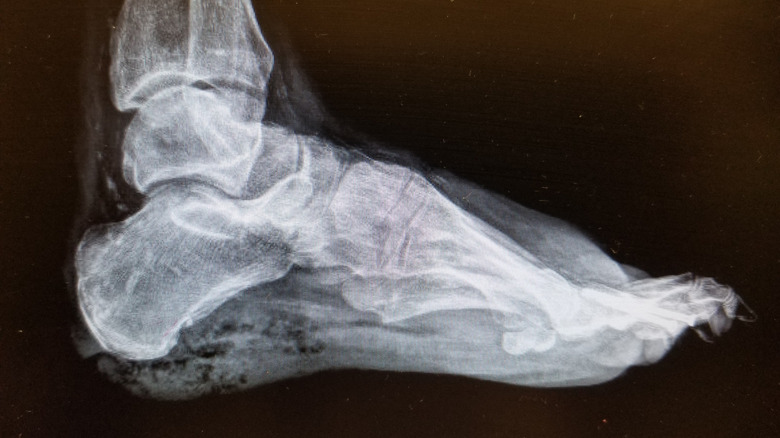
First things first: Only about 1 in 250,000 people in the U.S. have to deal with necrotizing fasciitis during their lives, so it's not like bacteria is waiting around every corner to eat you up. There are also precautions you can take, such as keeping wounds clean and avoiding swimming pools when you know you have a cut or a scrape. Still, this is a nasty enough disease that it's worth knowing what its symptoms are like and how you should seek treatment.
Early on, a person with necrotizing fasciitis might notice a rash and some pain in the infected area, as well as experience flu-like symptoms. After that, the area may start swelling up, changing color, and possibly develop blisters. At this point, the person will start to feel really bad, as their fever gets higher and pain increases. Seeking medical treatment should be an immediate priority at this point, because the infection spreads fast and is genuinely life-threatening; The bacterial infection kills the subcutaneous tissue by releasing toxins, which can also cause problems with your organs, to the point of potentially leading to multiple organ failure.
Primarily (but not solely) caused by group A streptococci bacteria, necrotizing fasciitis is often treated by a combination of antibiotics and surgical removal of all the infected tissue. It may require multiple operations, and possibly plastic surgery afterwards. All in all, not a very nice disease.