

The Shady 1950s Experiment That Tried To Harness The Power Of Mind Control

It was late January in 1973, and the destruction of boxes containing files from the Central Intelligence Agency (CIA) had been ordered. The files largely regarded a series of 149 different projects meant to investigate whether experimental drugs could generate a level of mind control and had taken place nearly 20 years prior. The man who ordered their destruction would go on to become known in United States history as the "Poisoner in Chief."
However, as desperately as the erasure of this salacious history was pursued, information had unknowingly slipped through the cracks. Nestled safely in the Budget and Fiscal Section of the Retired Records Center in Washington, D.C., were the last documents providing details on project MK-ULTRA. The experiments run under this surreptitious umbrella would involve the testing of drugs made from hallucinogenic plants and psychological techniques on unsuspecting, nonconsenting citizens.
From 1953 to 1964, human subjects were tested and analyzed, many without knowing they were being observed, and others were told false information about the nature of these tests. From prisons, to universities, to hospitals, and even people drawn in from the street, the operatives behind MK-ULTRA would search for vulnerable people to use in their nebulous mission. While some affected people have been revealed, many remain unnamed due to a Supreme Court ruling that protected the privacy of the CIA. Therefore, the actual scope of these experiments, as well as many of their downstream consequences, remains a mystery.
Brain warfare
The Cold War was a time marked by a battle for ideological supremacy. Fearing Soviet control, the United States stoked the fires of paranoia within the public by taking advantage of the way that propaganda affects the brain, alleging that the Soviet Union had access to weapons that it never truly did. This logic was used to justify several shady 1950s government experiments. Now, the U.S. claimed that the Soviet Union had developed a way to brainwash individuals.
In 1949, Cardinal Jozsef Mindszenty was placed on trial by the Soviet-influenced Hungarian government. Absurd confessions were issued by Mindszenty, in which he claimed to be in a plot to initiate World War III and that he planned to take over the world. Although we now have a greater understanding of the psychology behind false confessions, at the time, officials in the U.S. government believed this was evidence of the Soviet Union discovering an effective method to elicit brainwashing. Such a conspiracy inspired the director of the CIA, Allen Dulles, to take the Cold War to a new front: "brain warfare."
In 1953, Dulles gave a speech at Princeton University, in which he discussed the unique Soviet ability to brainwash and force confessions from prisoners, asserting that they might have developed a "lie serum." In this speech, he condemned these tactics and suggested that national values had set the U.S. so far behind, saying, "We have no human guinea pigs, ourselves, on which to try out these extraordinary techniques." Three days later, Dulles authorized Project MK-ULTRA.
The human guinea pigs

In 1958, Lana Ponting had run away from her home in Montreal. While this behavior was not unheard of for a 16-year-old, especially one who had just experienced a stressful move, a judge sentenced her to stay at a psychiatric care facility as treatment for her rebellious behavior. There, she was under the care of a Scottish physician, Donald Ewen Cameron.
Cameron was renowned in the field of psychology, serving as the President of the American Psychological Association from 1952 to 1953. Unbeknownst to his patients, he had been funded to work on project MK-ULTRA. While it is debated whether Cameron knew what MK-ULTRA was, he performed experiments on nonconsenting patients to investigate brainwashing techniques, something that was termed "psychic driving." On the record, however, these experiments were described as an attempted cure for schizophrenia. Cameron's experiments in Montreal would involve drug-induced sleep for up to 65 days and powerful electroshock therapy that was up to 75 times more intense than the average amount.
The teenage Lana Ponting was administered a cocktail of drugs, including barbiturates, nitrous oxide (laughing gas), and lysergic acid diethylamide (LSD). While under the influence of these drugs, Cameron would make her listen to recordings of phrases being repeated hundreds of thousands of times for up to 16 hours a day. These phrases would alternate. Some days consisted of repeated positive affirmations, and some days, negative comments would be played over and over again.
Phone a Nazi
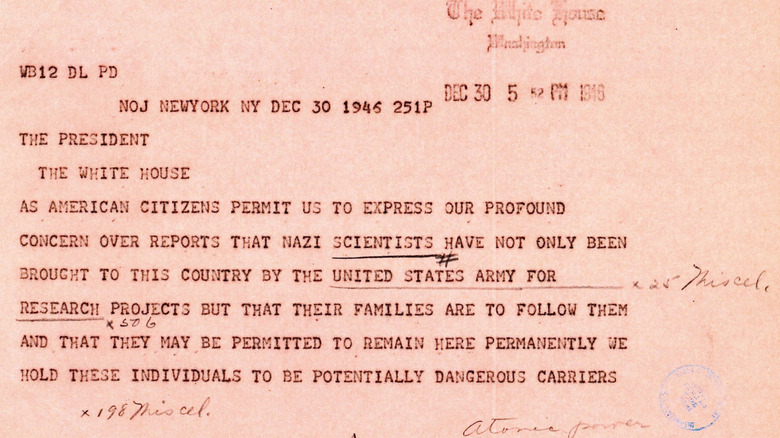
Before Project MK-Ultra, there was Project Bluebird (later referred to as Project Artichoke). These experiments began in 1950 and primarily took place in secretive prisoner-of-war camps. Under these conditions, what regulation of ethics or bioethics would be employed? Although Allen Dulles had alluded to the use of drugs in interrogation techniques as a Soviet invention, the U.S. had intelligence from 1942, which showed that Nazis had been experimenting with hallucinogenic drugs on Holocaust victims and assessing their efficacy in extracting information. These were initially mescaline-based drugs, the compound from which 3,4‐methylenedioxymethamphetamine (colloquially referred to as ecstasy or molly) is derived.
By the time Dulles joined Project Bluebird, the CIA was experimenting on prisoners of war and defectors at Camp King and other prisoner of war facilities throughout Asia. To develop this program, they turned to Nazi doctor Walter Schreiber. The surgeon general of the Nazi army, Schreiber had overseen experiments performed on concentration camp detainees. When a scandal (word of his war crimes) would come for Schreiber, he would leave for Argentina, only to be replaced by another Nazi doctor, Kurt Blome. Considered so valuable to future operations, many assert that the U.S. had even played a role in getting Blome acquitted during the Nuremberg Trials. These initial experiments used hypnosis and electric shock, as well as experimental drugs, to break down prisoners.
Poisoner in Chief
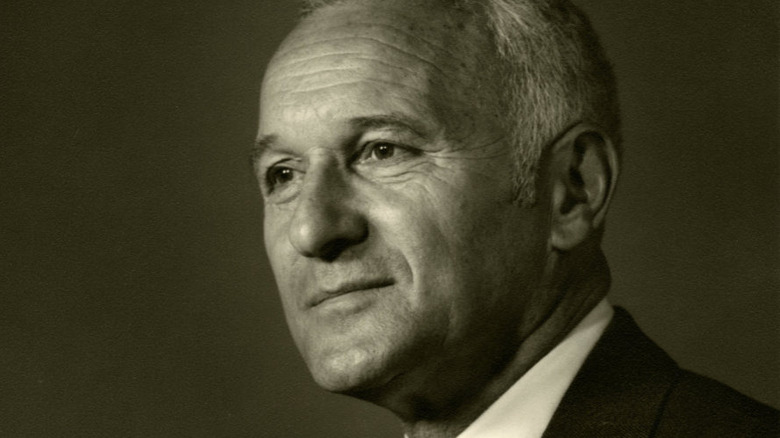
The name most synonymous with MK-ULTRA belongs to its umbrella project lead, the "Poisoner in Chief," Sidney Gottlieb. At the time that Gottlieb joined, the CIA's attempt to uncover mind control through Project Bluebird was already underway, and the results were coming up short. After being appointed by Allen Dulles, Gottlieb ran with the project and appeared to use every opportunity to explore his personal interests, including LSD and sex.
Gottlieb was a strong believer in the many uses of LSD and suggested it had a great ability to loosen someone's tongue. This was his contribution to the sought-after "truth serum." That year, the CIA bought $240,000 worth of LSD for Gottlieb to pursue his projects. He would then send the drug out to many different institutions, including psychiatric facilities and universities, with instructions that those supplied should investigate the drug's effects.
When LSD was not proving to be the promised miracle drug, Operation Midnight Climax was initiated to see whether confessions could be elicited when LSD was combined with sex. For this, the CIA would hire sex workers to bring patrons to secret, CIA-operated brothels. Agents would watch from the other end of a two-way mirror as a sex worker laced drinks with LSD. While these experiments failed to confirm the hypothesis, many CIA operatives appeared to simply enjoy the enormous funding and lack of rules. As agent George White said to Gottlieb, "It was fun, fun, fun" (via History).
The human toll
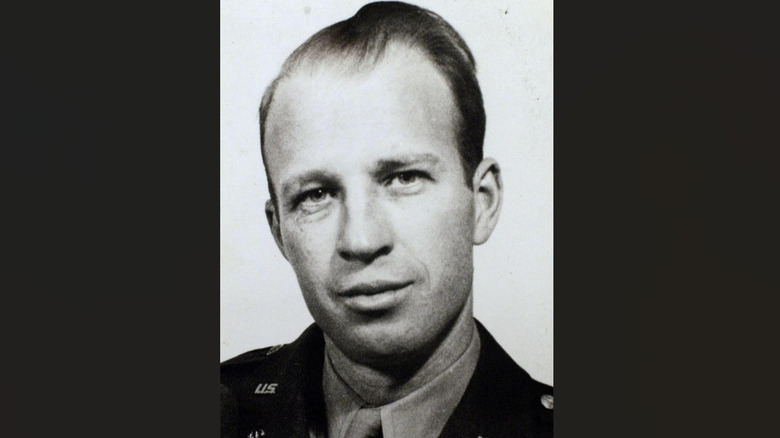
Sidney Gottlieb was no hypocrite. He himself would take LSD and provide it to those in his company as well. On a work retreat with other CIA agents in November of 1953, drinks were served. When the drinking and merriment had been going on for nearly 20 minutes, Gottlieb asked his colleagues how they were feeling. When some admitted to feeling a bit strange, he informed them that their drinks had contained LSD. One of the people unwittingly tested on this retreat was Frank Olson.
A little over a week later, Olson plummeted to his death, bursting from a closed 13th-story window. While ruled a suicide, a later autopsy would reveal an inconsistent head wound, speculated to have occurred before the fall. Tragic as this death was, this was just the beginning, and many would go on to suffer.
Although LSD became a driver of the counterculture movement of the 1960s, the experience was far from leisurely for many who suffered the human experiments authorized by the U.S. government. One prisoner in an East Asian CIA-operated center was given 6 µg/kg (the metric system abbreviation for micrograms per kilogram) of LSD. For perspective, a dosage of 1–3 µg/kg is enough to generate moderate psychedelic effects. According to the report, within two hours, the subject "began moaning he wanted to die." Largely, the experiments of MK-ULTRA targeted vulnerable populations, including people with substance use disorders, prisoners, sex workers, and patients at psychiatric facilities. In doing so, they mostly managed to avoid scrutiny.