

The Bizarre Condition That Explains Why Too Much Meat Could Kill You

Eating meat is undoubtedly among some of the more controversial dietary choices people make. Obviously meat does not fit into vegan or vegetarian diets (which might actually have an effect on energy in trophic levels), and there are also ethical and environmental reasons people choose not to eat meat. Aside from the broad differences between the lifestyles of herbivores, omnivores, and carnivores, eating too much meat can also raise concerns over saturated fat. Some of the most saturated fat-laden sources of meat include beef, pork, and dark meat poultry. Indeed, an unhealthy diet can contribute to a person's risk of early death, and one 2021 meta-analysis in Clinical Nutrition concluded that too many saturated fats were linked with higher mortality rates related to both cardiovascular disease and cancer. But separately, there's another lesser-known health implication that may be linked with eating too many sources of meat: Protein poisoning.
While the name is certainly scary sounding, protein poisoning describes a significant dietary imbalance among the three macronutrients: protein, carbohydrates, and fat. Also known as "rabbit starvation" or "fat starvation," this condition is inherently caused by eating too many high-protein foods like meats while concurrently not getting an adequate amount of fat or carbs. It's most often attributed to diets that mostly consist of very lean meats such as rabbit, caribou, or elk. So while it's not just attributed to meat more generally, protein poisoning is more likely to develop with extremely lean cuts of meat without eating any other of the two macronutrients.
Should you be worried about protein poisoning?
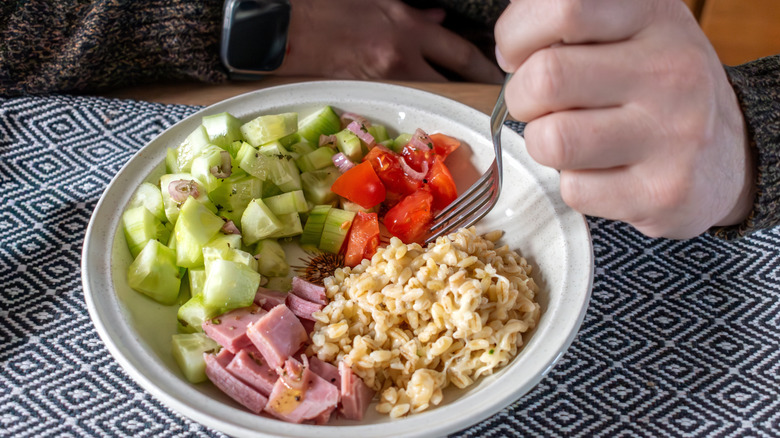
Protein poisoning itself is considered rare, particularly in the U.S. where more fatty meats are the norm among omnivores. Nevertheless, the condition can be fatal in extreme cases. When you consume too much protein, your liver and kidneys cannot metabolize it quickly enough, resulting in harmful ammonia and urea buildup in the bloodstream, along with amino acids. When your body receives too much protein in the absence of other macronutrients, it simply cannot function properly.
Too much protein in any form can cause adverse health effects, but this is less so with plant-based sources such as legumes, grains, and nuts. Protein-containing plants also have high levels of fiber and don't cause inflammation in the body. Thus, protein poisoning is far less likely if you eat whole plant foods versus consuming too many meats. But here's some further food for thought that isn't exactly promising: The American Institute for Cancer Research reports that animal products make up two-thirds of protein intake in the average American diet, with meats contributing the most of this amount.
Aside from eating an unlikely diet of mostly rabbit or elk, it's also a good idea to eat a balanced diet without exceeding your recommended daily protein intake. First, if you know about how many calories you eat per day, protein sources should make up no more than 35% per day. Alternatively, adults can consume 0.8 grams of protein for each kilogram of your body weight per day. More specifically, your exact protein needs can also vary by age, activity levels, and whether you have certain medical conditions such as kidney disease.