

Scientists Simulated The End Of The World And The Results Are Eye-Opening
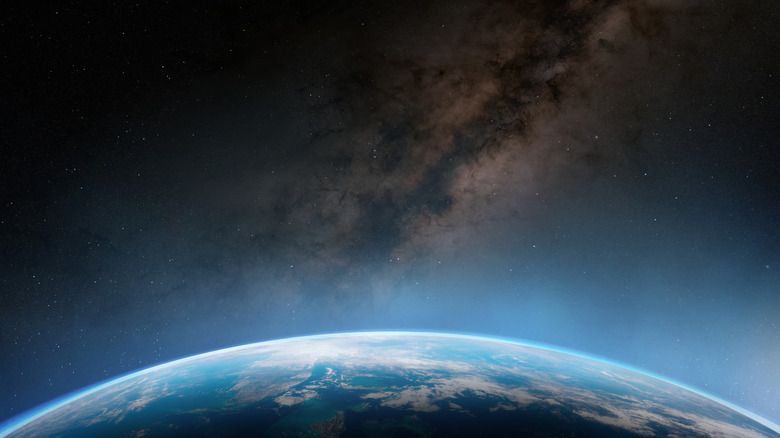
From the Big Bang that allowed for the universe to expand into what it is now, to the 6 million years of evolution that paved the way for Homo sapiens, serendipity appears to be a key factor in our existence on this planet. So, it may not surprise you to learn that there is likely a time when our luck will run out, and the Earth that we call home shall be no more. For many decades, such inevitable planetary doom was hypothesized to come about in nearly 2 billion years. But new estimates, based on the availability of oxygen, suggest that the end is nearer to half that amount of time.
Oxygen is vital to most life on Earth. Our ability to function, down to our very cells, relies on this beautiful element. While something so pervasive and necessary for survival as to be taken for granted, oxygen was not actually always available. During the Archean eon, Earth was mostly underwater, and life was anaerobic, meaning that it did not require oxygen. At this time, Earth's atmosphere largely consisted of methane, carbon dioxide, and water. However, the introduction of cyanobacteria would change everything and lead to what is known as the "Great Oxidation Event."
The origins and future of an oxygen-rich atmosphere
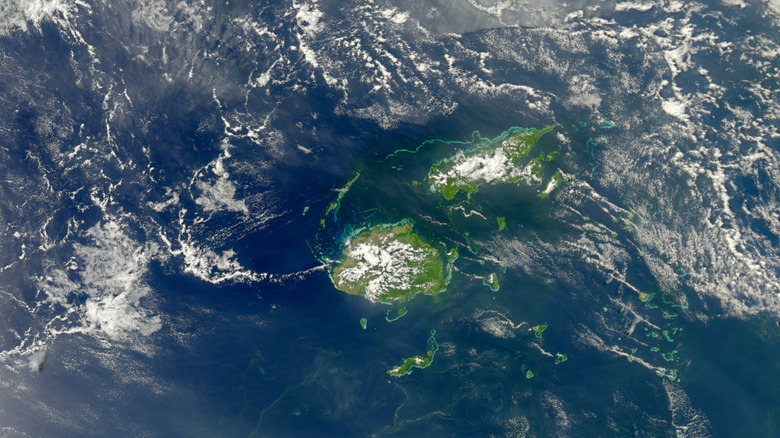
Cyanobacteria are unique microbes that evolved 2.7 billion years ago. Their superpower is that they can photosynthesize, something novel at the time of their first appearance. Using light from the sun, they oxidize water and generate energy. Helpfully, oxygen is created as a byproduct. Little by little, these microbes introduced oxygen into the atmosphere, and methane was removed. Such an enormous shift in the composition of the atmosphere allowed aerobic organisms to evolve and flourish.
As an additional consequence, much of the pre-existing anaerobic life perished. Is it possible that the reverse will occur in the future? While we've long realized that the end of life on Earth as we know it is inevitable, previous predictions were based on the growth of the sun and its potential to swallow our planet. This is expected to take place in roughly 5 billion years. However, it has also been agreed upon that radiation from the sun would be able to completely wipe out Earth's oceans in approximately 2 billion years, thereby ensuring that this planet is uninhabitable for us.
The end is nigh

While these factors are well-supported by existing models, they had not considered the unavailability of atmospheric oxygen that might precede it. A byproduct of these predictions is that carbon dioxide is significantly reduced. That creates a big problem for oxygen, as carbon dioxide is necessary for photosynthesis. Therefore, if carbon dioxide levels become so depleted that plants on Earth perish, this would greatly disrupt the biosphere, leaving oxygen to become less and less available.
With this insight, researchers Kazumi Ozaki and Christopher T. Reinhard ran a model to predict Earth's future biosphere, and published their findings in Nature Geoscience. They ran a model based on climate and the biological, geological, and chemical factors that affect the environment. This model was run 400,000 times, and the results significantly reduced the previously established timeline to 1 billion years. While still a very long time from now, it can be disconcerting to know that the space we inhabit in the universe has an expiration date for accepting our company and that of other aerobic organisms.
This year, the Doomsday Clock was set the closest to midnight that we have ever seen, to metaphorically represent how close we potentially are to global catastrophe. The factors considered in this catastrophic prediction result from human decisions and behavior. Knowing that our ecosystem already exists in a more fragile equilibrium than we might hope, it is important that we maintain the elements of the planet that currently allow us to thrive.