

Not A Tick, Not A Bed Bug: This Destructive Creature Lurks In The Kitchen

The mere sight of a tiny bug in your kitchen pantry can stop you in your tracks. You run through all of the tiny brown bugs you know of trying to figure out what it is. It looks kind of like a tick or a bed bug at first glance, but not after a closer look. Then you see more of them crawling around and find a bunch inside a bag of rice. Then it hits you: they're weevils. While they don't drink blood the way ticks and bed bugs do, these destructive insects can be a persistent problem in the kitchen.
With small dark brown bodies, the weevils in your kitchen might look like ticks or bed bugs at first glance, but weevils and bed bugs are from different insect families and ticks, being arachnids and not insects, are even further removed from weevils. These small beetles eat plants and are most commonly found in rice, corn, and other dry goods. Weevils most often come into your house as eggs or larvae already inside packages of food, though they can spread from infested packages to other foods in your pantry.
All about weevils
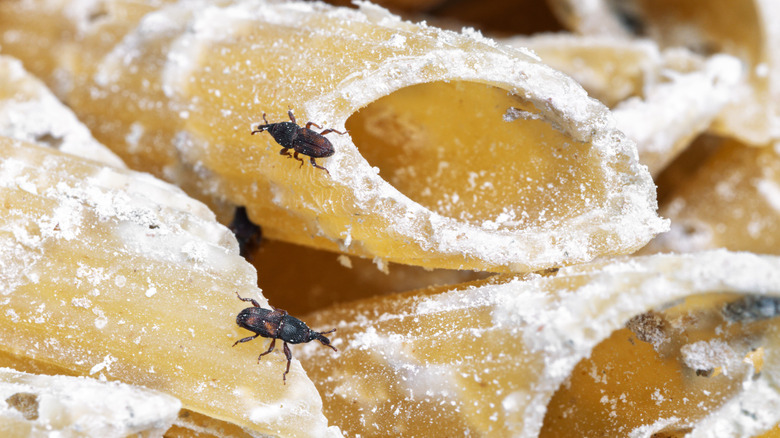
The weevils in your kitchen are small beetles that look somewhat like sesame seeds that are around 0.125 to 0.25 inches long with distinctive proboscis-like heads and oval bodies. There are many species of weevil, though the three you're most likely to find in your pantry are rice weevils, corn weevils, and wheat weevils. These insects are named after the the foods they are most likely to be found in. True weevils are not usually found in flour though. Though they are commonly referred to as weevils, small bugs found in bags of flour are usually a different type of insect known as flour beetles.
Female weevils lay eggs inside kernels of grain or on plants. The eggs hatch into larvae resembling small white or yellowish worms that eat kernels of grain from the inside out. A larva then forms a pupa and later emerges as adult weevils. The adults then lay eggs in other kernels of grain and the cycle continues. A single adult female can lay up to 400 eggs and can survive without food for at least a month. A weevil's life cycle ranges from a few months to one year.
It is difficult to spot a weevil infestation until it has already spread. Signs of a weevil infestation include the presence of small insects in packages of rice, pasta, or corn; grains or pasta that appear to have small holes in them; and packages with small holes or other damage.
Stopping and preventing weevil infestations

If you've spotted weevils in your pantry the damage is already done. So the first step in dealing with a weevil invasion is throwing away packages of food with weevils. Next you'll want to carefully inspect other packages to make sure adult weevils haven't gotten into them and thoroughly clean all pantry shelves, taking care to vacuum where shelves meet walls. In some cases infestations are severe or persistent enough to need professional intervention.
Weevil infestations are unsettling and having to throw food away can be discouraging. There are a few steps you can take to make weevil infestations less likely to happen and limit their spread to other foods. Weevils can chew through plastic bags and cardboard boxes, so to keep them from spreading you should store rice, pasta, and cereal in airtight plastic, metal, or glass containers. You should also carefully inspect food packages to check for holes or signs of moisture before buying. Once you get home from the store, you can toss bags of rice, flour, or pasta into your freezer for a few days to kill any eggs or larvae that might be hidden inside.
Finding tiny bugs crawling in your pantry is certainly unnerving. And while weevils don't spread disease like ticks, they can wreak havoc in your kitchen. However, with some deep cleaning and a little prevention you can minimize the chances of a weevil invasion.