

Neanderthal DNA Has An Unexpected Effect On Your Health

We Homo sapiens once shared the planet with at least seven other human species at varying times, including the short-and-stocky Homo floresiensis and the big-game hunter Homo heidelbergensis. But there was one species that was genetically closer to us than all others: Homo neanderthalensis. Our genetic kinship with H. neanderthalensis can be easily found in our own modern DNA. Virtually every person on Earth with non-African ancestry has around 1–4% Neanderthal DNA, and some of that DNA can help with reproductive success.
Most humans today have genetic traits derived from the Neanderthal genome (some even have a bit of Denisovan genome). The genes, originating in now-extinct human species, continue to influence our health and our lives. For example, in 2020, European scientists identified a Neanderthal gene that improves fertility and the chance of a successful pregnancy. Published in Molecular Biology and Evolution, the research study describes how those with this fertility gene suffer fewer miscarriages, experience less bleeding during pregnancy, and have more siblings than those without the gene.
The Neanderthal gene for fertility success has since evolved into many variants, and it's not active in everyone that carries it. Researchers estimate the gene is active in around 20% of non-African people. Of course, human beings evolved in Africa, though many populations left Africa for other continents. In Europe in particular, these migrant H. sapiens encountered Neanderthals, and began mating with them starting around 50,000 years ago. Many of the genes shared in those early interactions were likely lost, but the ones that survived until today did so through survival of the fittest.
How an ancient gene can help a pregnancy succeed
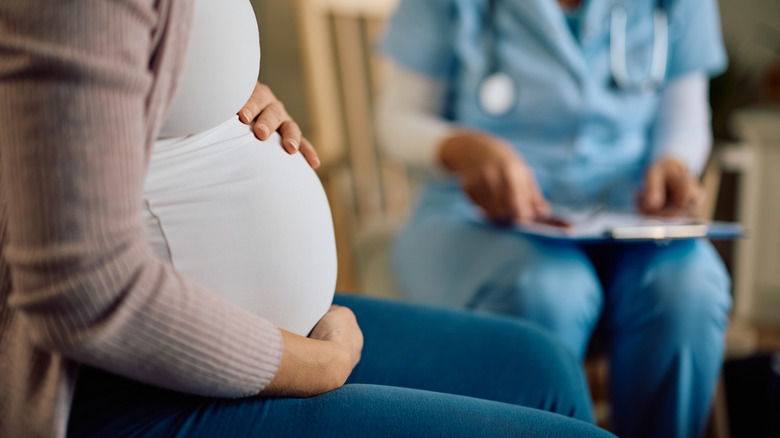
The "fertility gene" helps with fertility by producing extra progesterone receptors during the early stages of pregnancy. Progesterone is a hormone that prepares the uterus for pregnancy, including by thickening the uterine lining. Essentially, the gene helps increase the number of uterine cells. Research has shown that too little progesterone can jeopardize a pregnancy and cause menopause-like symptoms and even miscarriage, so having it can improve pregnancy success rates.
For women without sufficient progesterone levels, there are treatment options to supplement their lack of pregnancy-prepping hormones. But those with an active variant of the "Neanderthal gene" typically experience less bleeding during their early pregnancy, since their progesterone production ensures the uterus is primed for gestation. The hormone also suppresses uterine contractions and ovulation, which aids in preventing preterm labor. It's no wonder why this particular Neanderthal gene hasn't died out yet, even if the original evolutionary line that birthed it is now extinct.
Of course, a fertility gene isn't the only gene we inherited from our human relatives. Neanderthal genes play a role in metabolism and the immune system, and possibly even brain chemistry — we now know that Neanderthals possessed higher intelligence than once believed. But not all Neanderthal genes are beneficial, either. In the 2010s, researchers picked apart the Neanderthal genome and discovered that some variants come with higher risks for depression, addiction, and certain cancers. For now, most Neanderthal genes remain a mystery. After all, the human genome contains up to 25,000 genes, so someone with 4% Neanderthal DNA would possess around 1,000 of them. There's still a lot of history hiding in people's DNA.