

This Prehistoric Climate Was Pure Nightmare Fuel
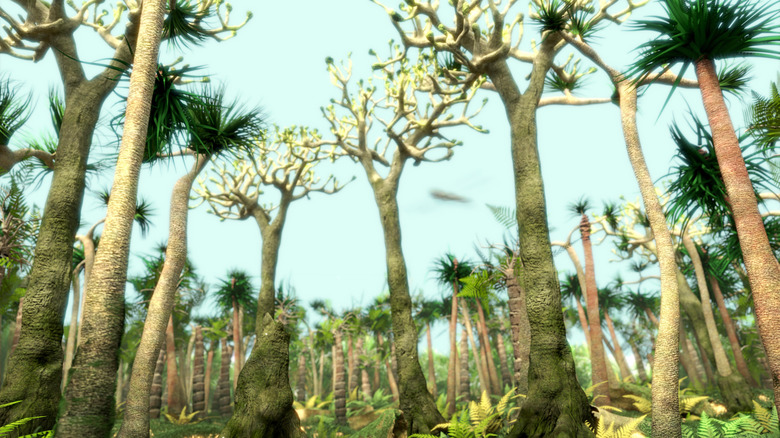
Traveling back to the distant past has long been a staple of science fiction. Many people have imagined themselves crawling out of a time machine to see mastodons roaming the plains or watch giant brachiosaurs munch on treetops. While Earth has been more or less hospitable to humans in the past, the climate of the Carboniferous period around 300 million years ago was the thing of nightmares, with gigantic insects and amphibians and raging wildfires.
During the Carboniferous, global temperatures were fairly cool as Earth was in the middle of an ice age; however, the planet's ice free regions were teeming with life. A large amount of the plant life from this period was buried and transformed into coal, giving the period its name. The explosion of plant life during the Carboniferous helped drive massive increases in the atmosphere's oxygen content. The air we breathe today is about 21% oxygen, but scientists estimate that Earth's atmosphere may have been 30% to 35% oxygen. This extra oxygen made large wildfires more likely to happen and allowed animals to grow to extreme sizes.
As the world burns
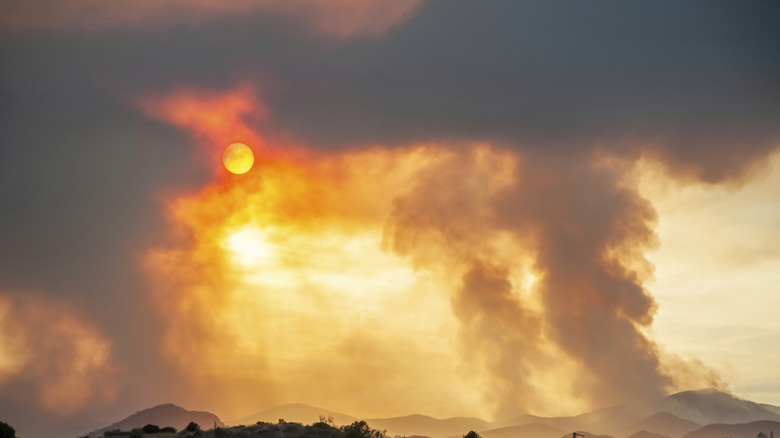
Wildfires play a large role in Earth's systems today, but it was only recently that researchers started focusing on wildfires in the distant past. By studying fossils and biochemical evidence, scientists discovered that wildfires became far more common in the early Carboniferous than in periods immediately before that had similar amounts of vegetation. Extra oxygen is probably the reason for more fires during the Carboniferous.
Fire needs three things to occur: fuel, oxygen, and an ignition source. Hundreds of millions of years ago plants could only grow in areas where it was wet. After plants evolved the ability to make seeds, they could spread to dryer areas. Plants in dryer areas can burn more easily, but increased oxygen can make it so that even wet plants can burn.
Widespread fires in this period would have pumped large volumes of smoke high into the air. This smoke would then spread out, turning skies yellow and brown for many miles. We can see similar effects in the way wildfire smoke affects areas far away. Loss of vegetation would also lead to erosion, causing dust to get blown into the air and sediments to wash into the ocean. More nutrients from plant material and soil in the ocean could cause a drop in dissolved oxygen in seawater.
Come for the fires, stay for the giant bugs
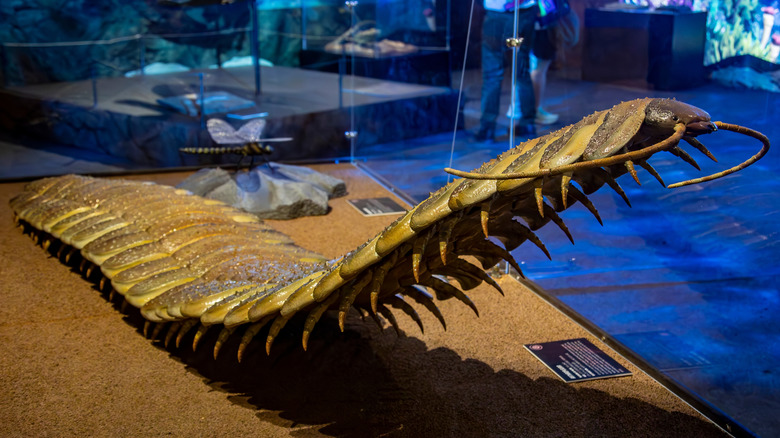
While the yellow-brown tinted skies of the Carboniferous would be bad enough, the prehistoric creatures would be even more terrifying. Despite what you might see in bad science fiction movies, there are strict limits to how big insects and arachnids can get. A main reason for this lies in the way arthropods get oxygen to their bodies. These creatures rely on bunches of tiny passages that allow air to flow in and out as they move. This means that air can only reach a short distance inside the body.
However, with oxygen levels hitting 30% or more, arthropods could get more oxygen into deep tissues. This meant you could encounter dragonflies with wingspans up to 30 inches or 3-foot-long scorpions weighing up to 50 pounds. At the same time, you could also see giant amphibians and reptiles up to 10 feet long.
The notion of traveling back in time to see how the world used to look is attractive to a lot of people. But it's worth remembering that climates were often vastly different from today. With brown, hazy skies, massive wildfires, and giant bugs, the Carboniferous is pure nightmare fuel.